Pinni: the winter sweet of Punjab, what goes into it and how it is made
Pinni is flour roasted slowly in desi ghee, sweetened with gur or shakkar, loaded with nuts and pressed into shape. Here is where it comes from, its many kinds, and how it is made.
Pinni is a sweet from Punjab made by roasting flour slowly in desi ghee, sweetening it with gur or shakkar, mixing in plenty of nuts, and pressing the warm mixture into firm rounds. It is dense, rich and deeply nutty, and for generations it has been the taste of winter in Punjabi homes on both sides of the border.
If you grew up in Lahore, Faisalabad, Gujranwala or any village in between, you probably remember a steel tin of pinni appearing in December, usually made by a mother or grandmother, and usually guarded. This guide explains what pinni is, why it belongs to winter, the many forms it takes, and exactly how it is made.
Pinni in short
- Flour or ground dal, roasted in desi ghee until golden and fragrant.
- Sweetened with gur, shakkar or sugar, and filled with nuts.
- Pressed into balls by hand, or flattened and cut into squares.
- A winter sweet by custom, eaten with chai or warm milk.
- Close cousin of panjiri, which is the same idea left loose.
What pinni is
At its heart, pinni is three things: a roasted base, a fat, and a sweetener. The base is usually whole wheat flour (atta). The fat is desi ghee. The sweetener was traditionally gur or shakkar, although many modern recipes use white sugar or bura.
What makes it pinni and not just sweet flour is the roasting. The flour is cooked in ghee over a low flame for a long time, stirred without a break, until it changes colour and gives off a smell that fills the house. That roasting cooks out the raw taste and builds a deep, toasted flavour. Everything else is added to that base.
The word is used a little differently from place to place. In some families pinni means only the atta version. In others it covers a whole family of winter laddus. Either way, people agree on the essentials: ghee, slow roasting, nuts, and a shape you can hold in your hand.
Why pinni belongs to winter
Pinni is seasonal food, and the reasons are practical as much as traditional.
- The ingredients arrive together. Gur is made from late autumn to early spring, so fresh gur and shakkar are in the bazaar in winter. New-crop nuts come to market around the same time.
- It keeps in cool weather. Before fridges, a food that could sit in a tin for weeks was valuable. Ghee and well-roasted flour hold up well in a Punjabi winter. In June they would not.
- It suits the season. Rich, warm, filling foods are what people want on a foggy January morning. By custom, pinni is counted among the “garam” foods that elders recommend for the cold months.
- It travels. A tin of pinni went to hostels with students, to the fields with farmers, and to married daughters in other cities. It still does.
By long custom, pinni and its cousin panjiri are also made for new mothers, sent by the family in the weeks after a birth. We mention this as tradition, not as medical advice. If you are interested in the foods that go with the season, see our piece on the winter foods of Punjab.
The many kinds of pinni
There is no single recipe. Every household has its own, and the differences are argued over with real feeling. These are the kinds you are most likely to meet in Pakistan.
| Kind | Base | What it is like |
|---|---|---|
| Atta pinni | Whole wheat flour | The classic. Nutty, sandy, golden brown |
| Chawal (rice flour) pinni | Rice flour | Paler, finer and lighter in the mouth, pale golden beige |
| Moong dal pinni | Ground moong dal | Richer and softer, with a distinct dal aroma |
| Besan pinni | Gram flour | Deep yellow, close to besan laddu, very fragrant |
| Alsi pinni | Ground flax seed with atta | Dark, earthy and seedy, a strong winter favourite |
| Urad (maash) dal pinni | Ground urad dal | Heavy and rich, often made with khoya |
| Khoya pinni | Any base plus khoya | Softer and milky, best eaten soon |
On top of the base come the extras, and this is where families show off: almonds, pistachios, cashews, walnuts, chaar maghaz (melon seeds), makhana (fox nuts), coconut, raisins, and gond (edible gum) fried in ghee until it puffs. Some add a little ground cardamom or saunf. Some add nothing but almonds, and say that anything more is showing off.
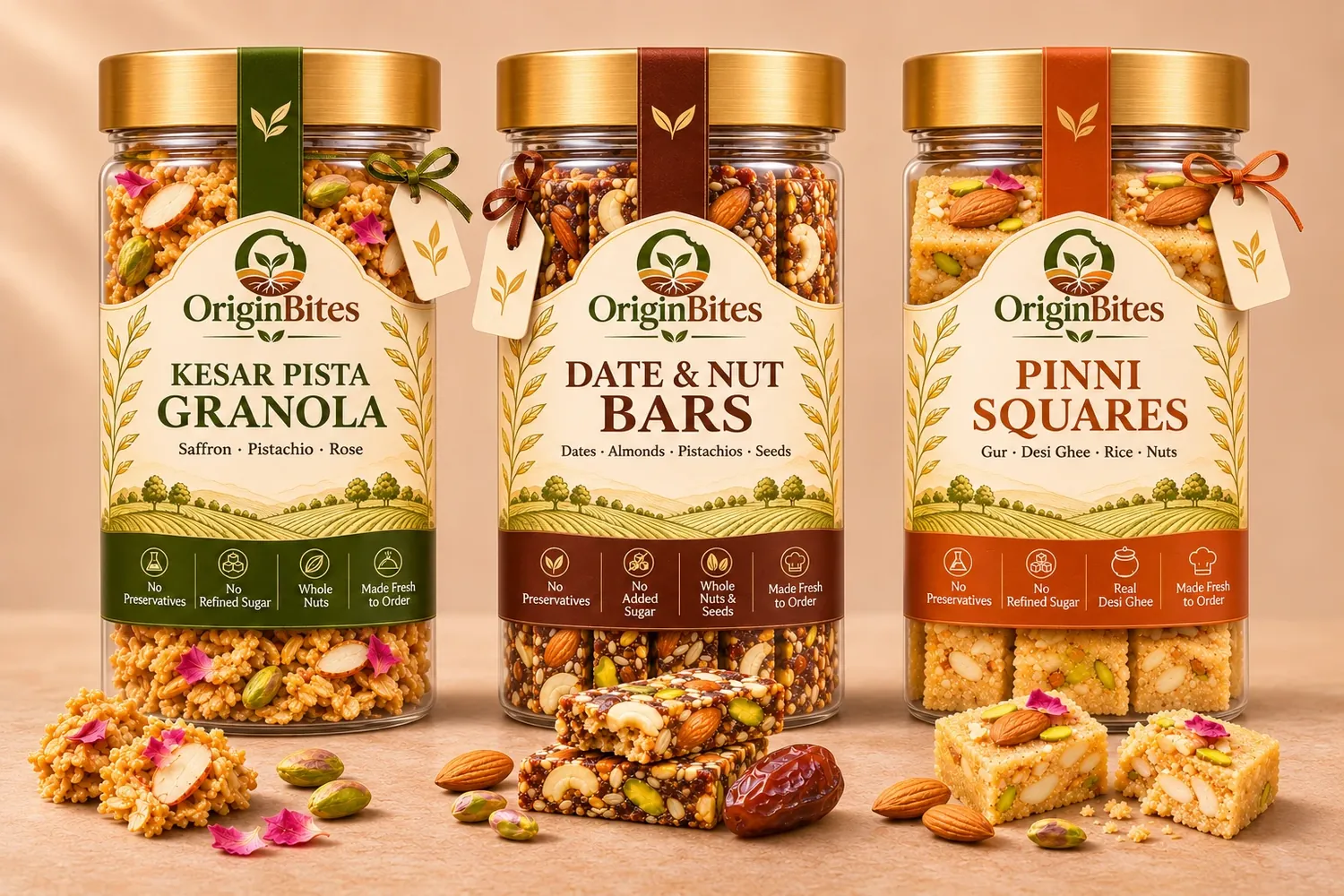
Our own Pinni Squares are a rice flour pinni: rice flour roasted in desi ghee, sweetened with light gur, and packed with four kinds of nuts. That is why they are pale golden and not the darker brown of atta pinni.
How pinni is made, step by step
Making pinni is simple to describe and hard to rush. The whole craft is in the roasting.
1. Roast the flour in ghee
Desi ghee is melted in a heavy karahi and the flour is added. The flame stays low. For the next twenty to forty minutes, depending on the quantity, someone stirs without stopping, scraping the bottom so nothing catches. The flour first clumps, then loosens, then slowly darkens. It is ready when it has turned an even golden shade, the ghee starts to separate at the edges, and the kitchen smells toasted and sweet. Under-roasted flour tastes raw and pasty. Burnt flour is bitter and cannot be rescued.
2. Prepare the nuts and gond
While the flour roasts, or before, the nuts are lightly fried or dry-roasted and chopped. If gond is used, it is fried in hot ghee a little at a time until each piece puffs up and turns white and crisp, then crushed.
3. Add the sweetener
The karahi comes off the heat. This matters: if gur is added to flour that is too hot, it melts into hard toffee and the pinni turns rock solid. The flour is left to cool until it is warm, not hot. Then grated gur or shakkar is mixed in thoroughly, followed by the nuts. Some cooks melt the gur separately with a spoon of water and strain it, which gives a smoother result.
4. Shape while warm
The mixture has to be shaped while it is still warm enough to hold together. A handful is pressed firmly in the palm and rolled into a tight ball. If it crumbles, a spoon of warm ghee is worked in. For squares, the mixture is pressed into a tray, levelled, topped with nuts and left to set before it is cut with a sharp knife.
5. Rest and store
Pinni firms up as the ghee cools. It is left uncovered until completely cold, because warm pinni sealed in a tin will sweat. Then it goes into an airtight container.
What good pinni is like
Because pinni is sold everywhere in winter, from halwai shops to online stores, it helps to know what to look for.
- Smell. It should smell of ghee and roasted grain. A sharp or stale smell means old ghee or old nuts.
- Roast. Break one open. The inside should be evenly coloured, never pale and floury.
- Nuts. You should be able to see whole pieces. Powdered nuts are a way of using less.
- Fat. Real desi ghee sets grainy and melts cleanly in the mouth. Pinni made with banaspati leaves a waxy film on the tongue. We explain the difference in our guide to desi ghee.
- Sweetness. It should be sweet but not so sweet that the grain and nuts disappear.
How to eat and serve it
The traditional way is the simplest: one pinni with a cup of chai in the morning, or with a glass of warm milk at night. One is usually enough, because it is very filling.
- Serve it to guests with Kashmiri chai or doodh patti in winter.
- Crumble one over warm milk or dahi for a quick breakfast.
- Pack it in a lunch box for a long day.
- In cold weather the ghee firms up, so let it sit at room temperature for a few minutes, or warm it very briefly, before eating.
Storing pinni
Keep pinni in an airtight tin or jar, in a cool, dry place away from sunlight and the stove. Use clean, dry hands or a spoon. Do not mix a fresh batch with the last pieces of an old one. Pinni made with khoya or milk is softer and should be eaten sooner and kept in the fridge.
We do not print a “keeps for so many weeks” promise, because that depends on the weather, the recipe and how the tin is treated. Each of our jars carries the date it was made and a best-before date, and we make every batch after you order so it reaches you fresh.
Pinni and panjiri
People often ask whether pinni and panjiri are the same thing. They are siblings, made from the same ingredients by the same roasting, but panjiri is left as a loose crumble while pinni is bound and shaped. We have compared them properly in pinni and panjiri: what is the difference?
Words you will hear
- Atta: whole wheat flour, the classic base.
- Shakkar: gur in soft powder form; it mixes into warm flour more easily than a block.
- Bura: fine powdered sugar, used in many modern recipes in place of gur.
- Gond: edible gum, fried in ghee until it puffs and turns crisp.
- Chaar maghaz: a mix of four kinds of melon and pumpkin seed kernels.
- Makhana: puffed fox nuts, light and crunchy once fried.
- Khoya: milk cooked down to a soft solid; it makes pinni richer and shortens how long it keeps.
- Karahi: the heavy, deep pan in which the flour is roasted. A thin pan burns the flour before it cooks through.
Knowing these words makes any family recipe, and any shop label, much easier to follow.
A food worth keeping
Pinni was never a shop sweet. It was made at home, once a year, by people who knew exactly how their mother had done it. The recipe lived in hands, not on paper: the colour the flour should reach, the moment to take the karahi off, how hard to press.
Fewer homes make it now. It takes time, and time is short. That is one reason we started making it the old way, in small batches, with gur and real ghee. Whether you make it yourself this winter or let someone else do the stirring, it is a food that deserves to stay on the table.
Common questions
What is pinni made of?
The base is a flour or ground dal roasted in desi ghee, sweetened with gur, shakkar or sugar, and mixed with nuts. Wheat flour (atta) is the most common base. Rice flour, moong dal, besan, urad dal and alsi (flax seed) are all used too.
Why is pinni eaten in winter?
By custom it is a cold-weather food in Punjab. It is rich, it keeps well in cool weather without a fridge, and its main ingredients, fresh gur and new-season ghee and nuts, are at their best in winter.
What is the difference between pinni and laddu?
Pinni is a kind of laddu in shape, but the name is used for the ghee-roasted flour sweets of Punjab in particular. Many other laddus, such as boondi or motichoor, are made in a completely different way.
How long does homemade pinni keep?
It depends on the recipe, how well the flour was roasted, and how it is stored, so there is no single answer. Keep it in an airtight tin in a cool, dry place, use clean dry hands, and trust your nose: a stale or sharp smell means the ghee or nuts have turned.
Is pinni the same as panjiri?
No, though they are close relatives. Both start with flour roasted in ghee with nuts. Panjiri is left loose and crumbly and eaten with a spoon. Pinni has enough ghee and sweetener to be pressed into a firm shape.
Why are OriginBites pinni squares and not round?
We press the mixture flat and cut it with a knife into even squares. The taste is the same as a round pinni, but squares pack neatly into a jar and every piece is the same size.
Does pinni contain allergens?
Almost always. Traditional pinni contains nuts and desi ghee, which is a milk product, and wheat-flour pinni contains gluten. Always check the ingredients if you are serving someone with an allergy.
This article is general information about food. It is not medical advice.
Share
Send on WhatsAppKeep reading.

Pinni and panjiri: what is the difference?
Pinni and panjiri start the same way: flour roasted slowly in desi ghee with nuts. Then they part. One is bound and shaped, the other is left as a loose crumble. Here is the full comparison.
Read the article
Winter foods of Punjab: what our elders made, and why
From sarson ka saag at lunch to peanuts in the afternoon sun and pinni at night, Punjab eats differently in winter. Here is the traditional cold-weather table, and the practical reasons behind it.
Read the article
Kheer, firni and sheer khurma: what is the difference?
All three are milk cooked down with something to thicken it, sweetened and scented with cardamom. Kheer uses whole rice, firni ground rice, and sheer khurma vermicelli and dates. Here is the full comparison.
Read the articleFrom our kitchen.
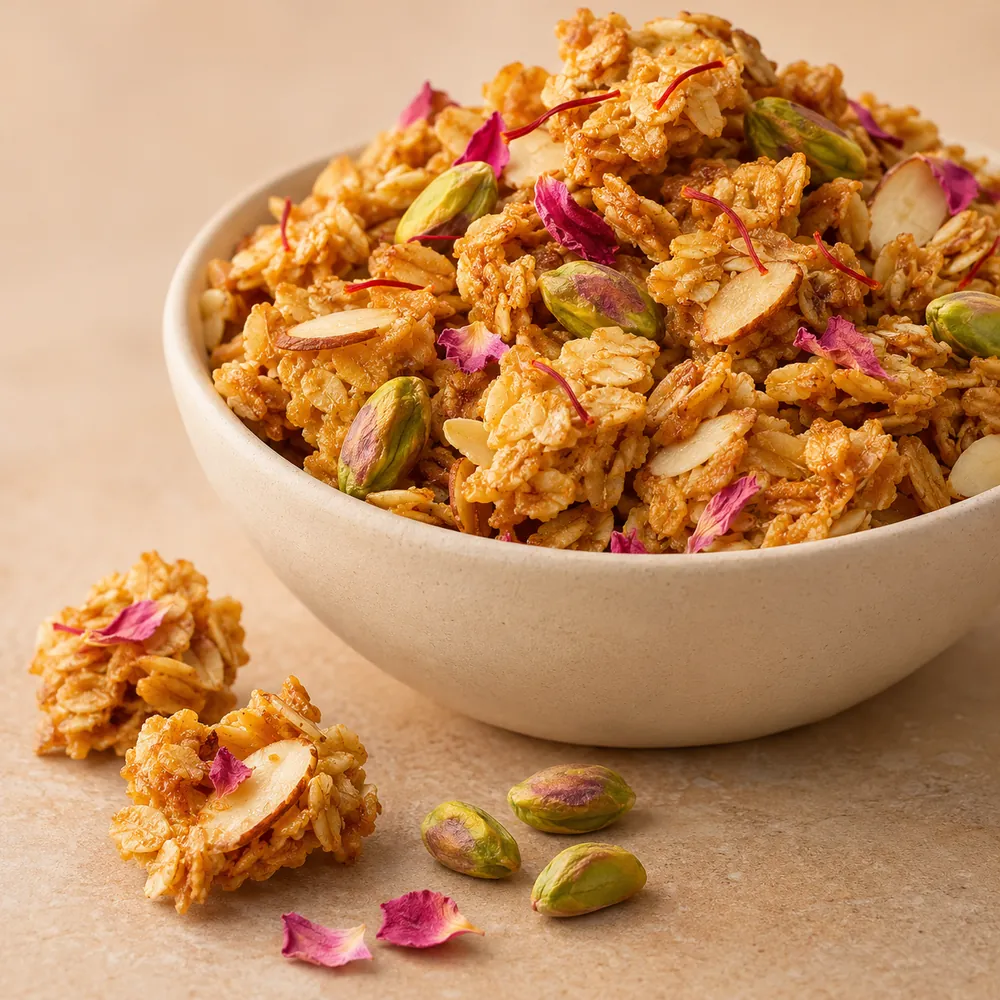
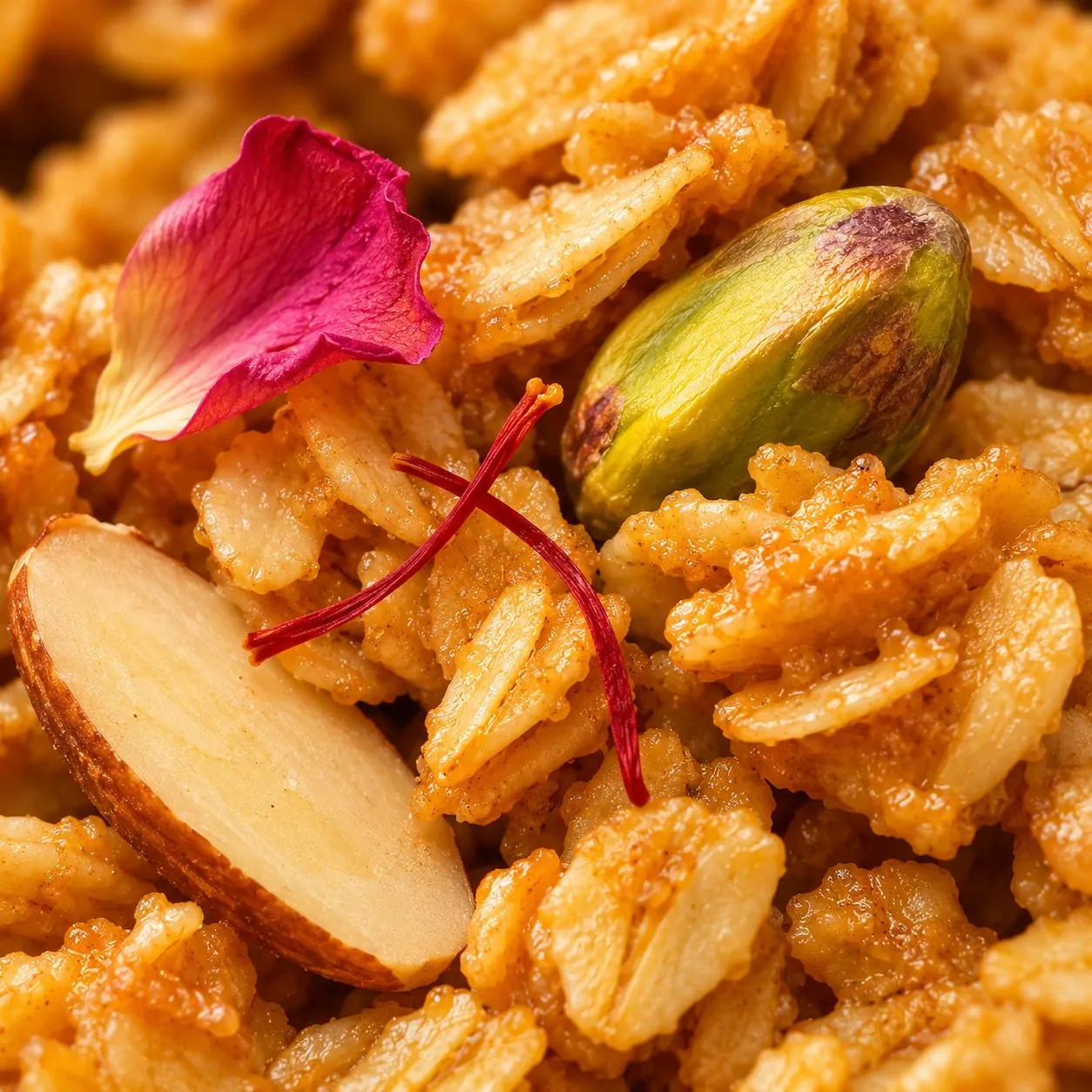
Kesar Pista Granola
Big clusters, not loose oats. Whole pistachios and sliced almonds.


Pinni Squares
Roasted in real desi ghee. Gur, not white sugar.
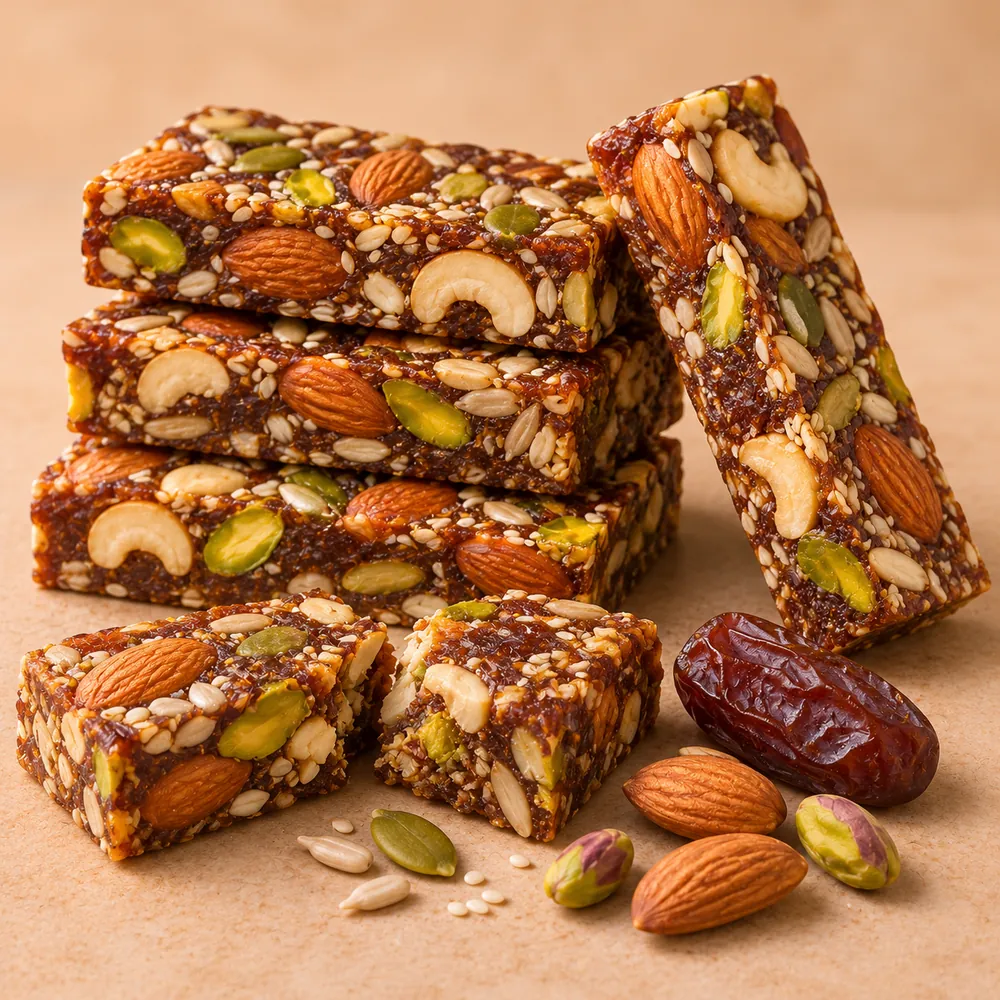
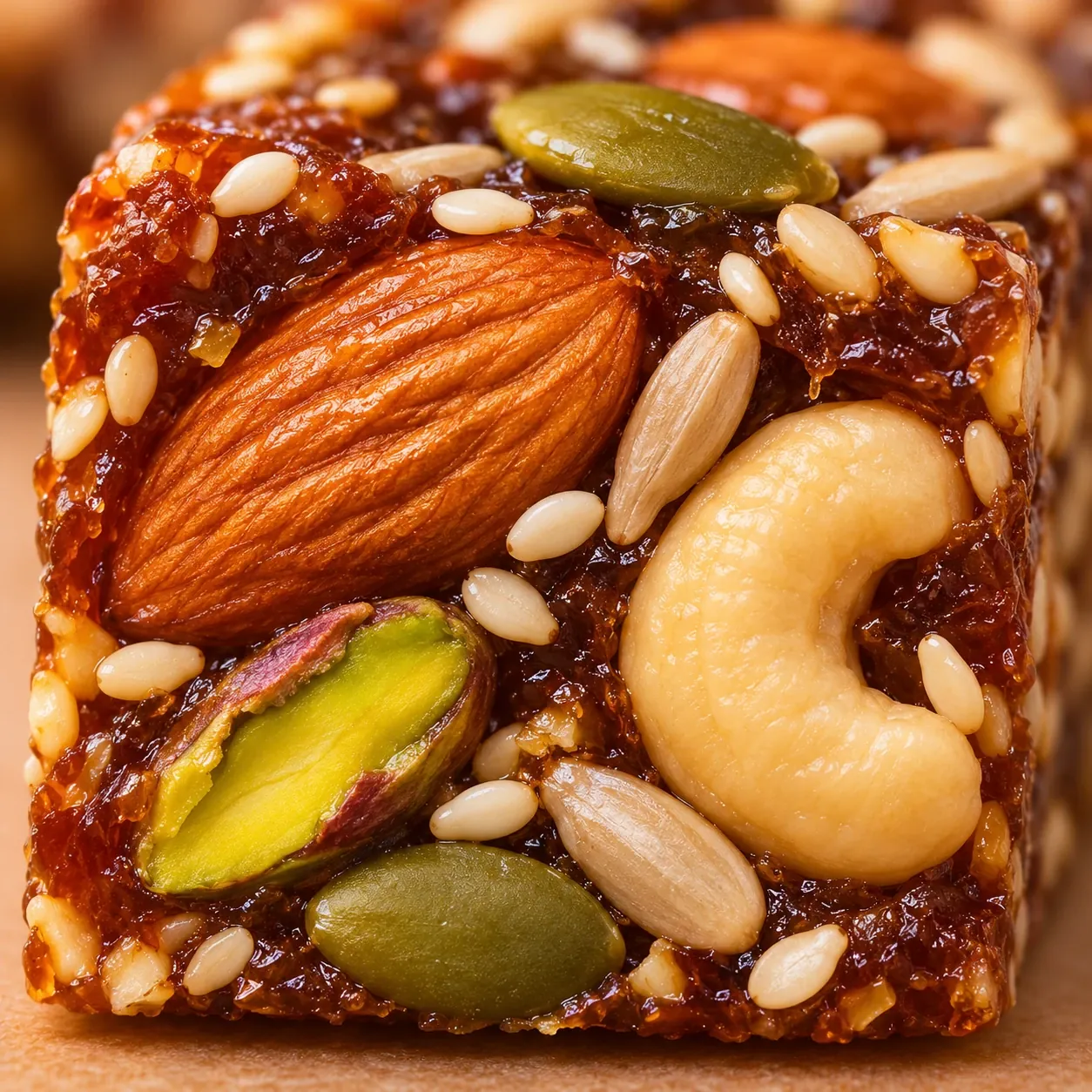
Date & Nut Bars
Held together by dates alone. Whole nuts you can see.