Desi ghee: what it is, how it is made, and how to tell good ghee from bad
Desi ghee is butter cooked until only the clear golden fat is left. Here is how it is made from milk, how cow and buffalo ghee differ, what banaspati is, and how to judge and keep good ghee.
Desi ghee is butter that has been cooked gently until the water has boiled away and the milk solids have separated, leaving only clear, golden fat. It has a deep, nutty smell that nothing else in the kitchen can imitate, and it is the fat that Punjabi cooking was built on.
For something so familiar, ghee causes a lot of confusion. Is the tin in the shop really desi ghee? Why is some yellow and some almost white? What is banaspati? This guide answers those questions in plain words: what ghee is, how it is made from milk, how to judge it, and how to keep and use it.
Desi ghee in short
- Pure milk fat, made by simmering butter and straining out the solids.
- Cow ghee is golden. Buffalo ghee is pale. Both are desi ghee.
- Banaspati is hardened vegetable oil, not ghee made from milk.
- Judge it by smell first, then by how it sets and melts.
- Store airtight, away from heat and light, and keep water out.
What desi ghee is
Milk contains fat, water, protein and milk sugar. Butter is what you get when you gather the fat together, but butter still holds a good deal of water and some milk solids. That is why butter sputters in a hot pan and burns quickly.
Ghee goes one step further. The butter is simmered until every drop of water has evaporated. The milk solids sink, turn golden and are strained off. What is left is almost entirely fat. Because the water and solids are gone, ghee can be heated much higher than butter without burning, and it keeps far longer.
The word “desi” simply means local or traditional. People use it to separate real ghee, made from milk, from the vegetable product sold as banaspati ghee. In English, ghee is sometimes called clarified butter, though desi ghee is cooked a little longer than French clarified butter, which is what gives it its toasted, nutty flavour.
How desi ghee is made from milk
There are two main routes from milk to ghee. Both are used in Pakistan, in homes and in dairies.
The dahi route (the old way)
This is the method our grandmothers used, sometimes called the bilona or madhani method after the wooden churn.
- Milk is boiled and set into dahi. Whole milk is boiled, cooled until just warm, and a spoon of old dahi is stirred in. It is left overnight to set.
- The dahi is churned. Next morning the dahi is churned with a madhani, by hand or with a small motor, with some cold water added. After a while, soft white butter, called makhan, floats to the top. The thin liquid left behind is lassi.
- The makhan is collected. It is lifted out, washed in cold water and gathered over several days.
- The makhan is simmered. It goes into a heavy pan on a low flame. It melts, foams, crackles as the water boils off, and then goes quiet. The solids sink and turn golden brown.
- The ghee is strained. The clear fat is poured through a fine cloth into a clean, dry jar.
Ghee made this way has a slightly tangy, complex aroma, because the dahi has cultured the cream before churning.
The cream route (malai)
The quicker way is to skim the thick malai from boiled milk every day, collect it in the fridge, and either churn it into butter or cook it down directly. Most commercial dairies work from cream or butter in the same way, in large steam-heated pans. The result is milder and sweeter in smell than dahi-route ghee.
The golden-brown bits left in the pan are loved in many homes. Mixed with a little sugar or rubbed on a hot roti, they are a treat that only ghee-making households know.
Cow ghee and buffalo ghee
Most milk sold in Pakistan comes from buffaloes, with cow milk a smaller share. The two give ghee that looks and tastes different.
| Point | Cow ghee | Buffalo ghee |
|---|---|---|
| Colour when melted | Clear golden yellow | Pale, almost colourless to light straw |
| Colour when set | Yellow | Creamy white |
| Texture when set | Softer, often grainy | Firmer, sets harder |
| Aroma | Lighter, slightly sweet | Richer and heavier |
| How common here | Less common, usually costs more | Very common across Punjab and Sindh |
Neither is “the real one”. They are simply ghee from different animals. A very bright yellow ghee that claims to be buffalo ghee should make you curious, because colour can be added.
Desi ghee and banaspati are not the same thing
Banaspati ghee, sometimes just called “ghee” on shop shelves, is made from vegetable oils such as palm oil. In a factory the liquid oil is hardened so that it becomes semi-solid and grainy at room temperature, and it is often flavoured and coloured to resemble ghee. It became popular because it is much cheaper.
It is useful to know the difference when you read a label or a menu. If a sweet says only “ghee”, ask which kind. If a tin says “banaspati” or lists vegetable oil in its ingredients, it is not desi ghee, whatever picture is on the front. Our guide to reading food labels in Pakistan shows where to look.
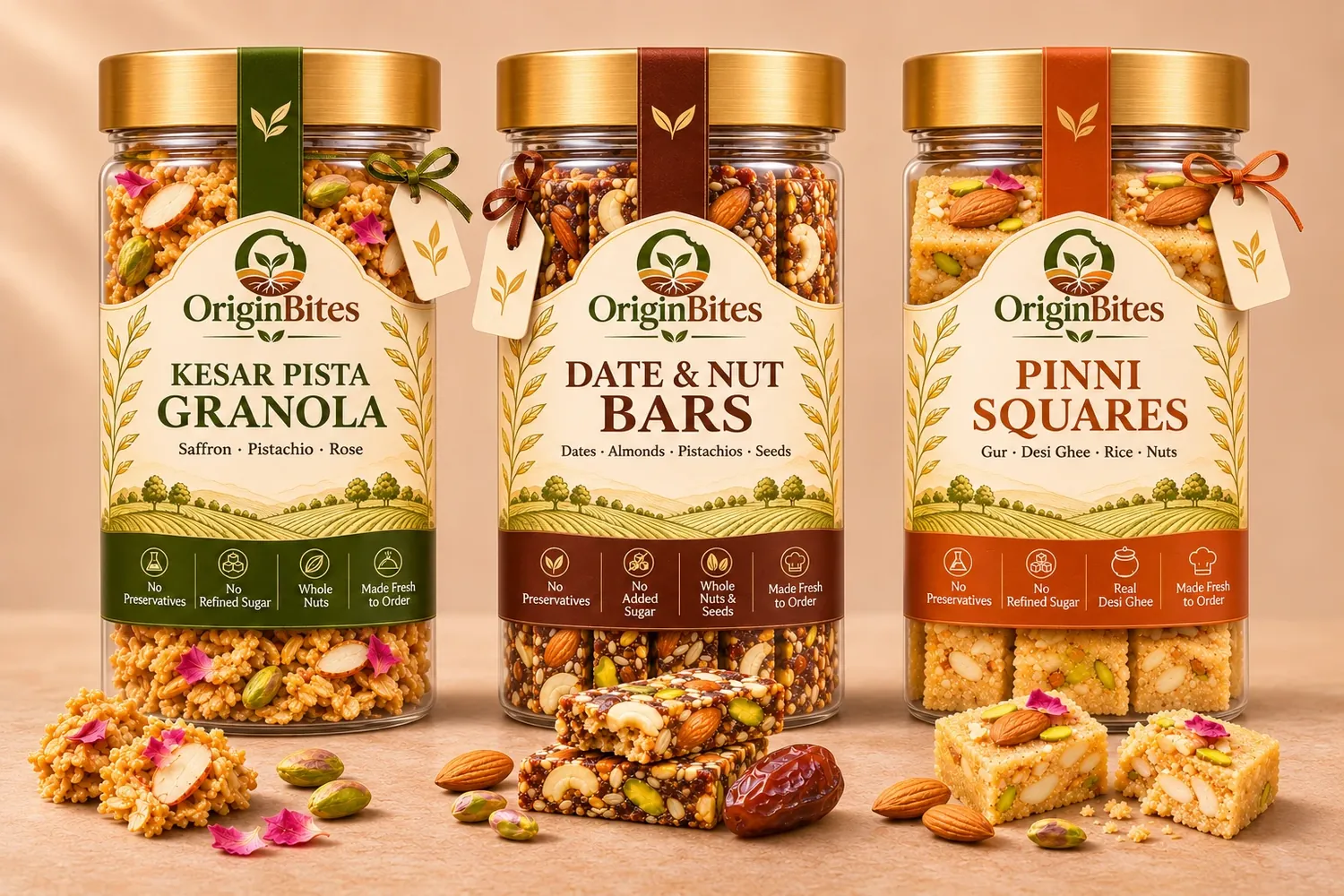
In our own kitchen the only fat we cook with for Pinni Squares is desi ghee, and it is named on the label.
How to judge good ghee
Ghee is expensive, so it is sometimes stretched with cheaper fats. No kitchen test can prove that a ghee is pure. Laboratory analysis is the only proof. But your senses can tell you a great deal, and they are what careful buyers have always relied on.
- Smell it warm. Melt a spoonful. Real ghee has a strong, pleasant, nutty and slightly caramel smell that fills the room. A flat, oily, waxy or perfumed smell is a warning.
- Look at how it sets. Pure ghee cooled slowly often sets danedar: soft grains in a little liquid fat. A perfectly smooth, uniform, waxy block is more typical of hardened vegetable fat. Temperature affects this too, so treat it as a hint.
- Watch it melt. A little ghee on your palm should begin to melt quickly from the warmth of your skin and leave no sticky or waxy film.
- Taste it. It should coat the mouth lightly and then clear, leaving a clean, sweet, milky taste. A greasy feeling that stays on the tongue suggests another fat.
- Check for water. Drops of water at the bottom of the jar, or sputtering when the ghee is heated, mean it was not cooked out properly and will not keep.
- Know the source. A dairy or a family you trust is worth more than any test. Very cheap “desi ghee” is cheap for a reason.
How to store ghee
Ghee keeps well because it has almost no water in it. The two things that spoil it are water and air, helped along by heat and light.
- Store it in a clean, completely dry glass jar or steel tin with a tight lid.
- Keep it in a cupboard away from the stove and out of direct sunlight.
- Always use a dry spoon. A wet spoon is the fastest way to ruin a jar.
- Keep a small jar for daily use and refill it from a larger one, so the main stock is opened less often.
- In a very hot kitchen, or if you will not use it for months, the fridge is fine. It will set hard and soften again at room temperature.
Ghee that has gone off smells sharp, sour or like old paint. If it smells wrong, do not use it.
Cooking with desi ghee
Ghee is at its best where its flavour is meant to be noticed.
- Tarka. Cumin, garlic or whole red chillies sizzled in ghee and poured over dal is one of the great smells of a Pakistani kitchen.
- On bread. Brushed on a hot roti or folded into a paratha with shakkar.
- In rice. A spoonful in pulao or over plain boiled rice.
- In sweets. Halwa, pinni, panjiri, besan laddu and suji all depend on it. The slow roasting of flour in ghee is the foundation of the whole family of winter sweets.
- For frying. Because the milk solids are gone, ghee can be heated higher than butter before it smokes, which is why it was the traditional frying fat.
A little goes a long way. Ghee is pure fat, so it is rich, and it is meant to be used with a light hand, the way our elders used it: a spoon for flavour, not a ladle.
A word on health claims
You will find strong claims about ghee in both directions, from people who call it a cure-all to people who say it should never be touched. We make neither claim. Desi ghee is a traditional cooking fat with a wonderful taste. How much of it suits you is a question for your own doctor, especially if you have been advised to watch fats. What we can tell you is what it is, how it is made, and how to recognise a good one.
Words you will hear
- Makhan: soft white butter churned from dahi or cream, before it is cooked into ghee.
- Malai: the thick layer of cream that forms on boiled milk as it cools.
- Madhani: the wooden churn, turned by a rope or a small motor.
- Bilona: the method of making ghee from churned dahi, not directly from cream.
- Danedar: grainy; how good ghee often looks when it sets slowly.
- Banaspati: hardened vegetable oil made to look like ghee. Not a milk product.
- Tarka (baghar): spices sizzled in hot ghee and poured over a dish at the end.
- Lassi (chaach): the thin, sour liquid left after the butter has been taken out of churned dahi.
These terms appear on labels, in recipes and in every conversation with a dairy shop, so they are worth knowing before you buy.
Why we still cook with it
There are cheaper fats, and there are fats that are easier to work with. We use desi ghee because certain foods simply are not themselves without it. Pinni made with anything else is a different sweet. The smell of rice flour slowly turning gold in ghee is the smell of the recipe being done properly.
You can see every ingredient we use, and why, on our ingredients page.
Common questions
What is the difference between desi ghee and banaspati ghee?
Desi ghee is made from milk: butter is cooked until only the clear fat remains. Banaspati is made from vegetable oils that have been hardened in a factory so that they look and set like ghee. They are different foods with different tastes.
Is desi ghee the same as butter?
No. Butter still contains water and milk solids. Desi ghee is butter that has been simmered until the water has boiled away and the milk solids have been strained out, leaving pure fat with a nutty taste.
Why is some ghee yellow and some white?
Cow ghee is naturally golden yellow. Buffalo ghee is much paler, close to white when set. Both are real desi ghee. Most milk in Pakistan is buffalo milk, so pale ghee is common here.
What does 'danedar' ghee mean?
Danedar means grainy. When pure ghee cools slowly it sets with small soft grains sitting in a little liquid fat. Many people look for this texture, but it depends on temperature too, so it is a sign and not proof.
Can I test ghee for purity at home?
Home tests such as melting, freezing or rubbing a little on the palm can raise a doubt, but none of them can prove purity. Only a laboratory can. Your best protection is a trusted source and your own nose.
Does desi ghee need to be kept in the fridge?
Not usually. Kept in a clean, dry, airtight jar away from heat and sunlight, it stays good at room temperature for a long time. Always use a dry spoon, because water is what spoils it.
Is desi ghee a milk product for allergy purposes?
Yes. Desi ghee is made from milk, so it is a dairy product. Anyone with a milk allergy should treat it as one and ask a doctor before eating it.
This article is general information about food. It is not medical advice.
Share
Send on WhatsAppKeep reading.

Saffron (kesar): how it is grown, why it costs so much, and how to identify real saffron
Saffron is the dried threads of a small purple flower, picked by hand. Here is why it is the most expensive spice, how fakes are made, what real kesar looks and smells like, and how to use it well.
Read the article
Gur and white sugar: how they differ in making, taste and cooking
Gur and white sugar begin as the same cane juice and end as two very different foods. Here is an honest comparison of how each is made, how it tastes, how it cooks, and what the difference does and does not mean.
Read the article
Almonds, pistachios, cashews and walnuts: a dry fruit buying guide for Pakistan
Dry fruit is expensive and quality varies widely. Here is how to judge almonds, pistachios, cashews, walnuts and chilgoza in a Pakistani bazaar: the kinds, the grades, the tricks, and five checks that work on all of them.
Read the articleFrom our kitchen.
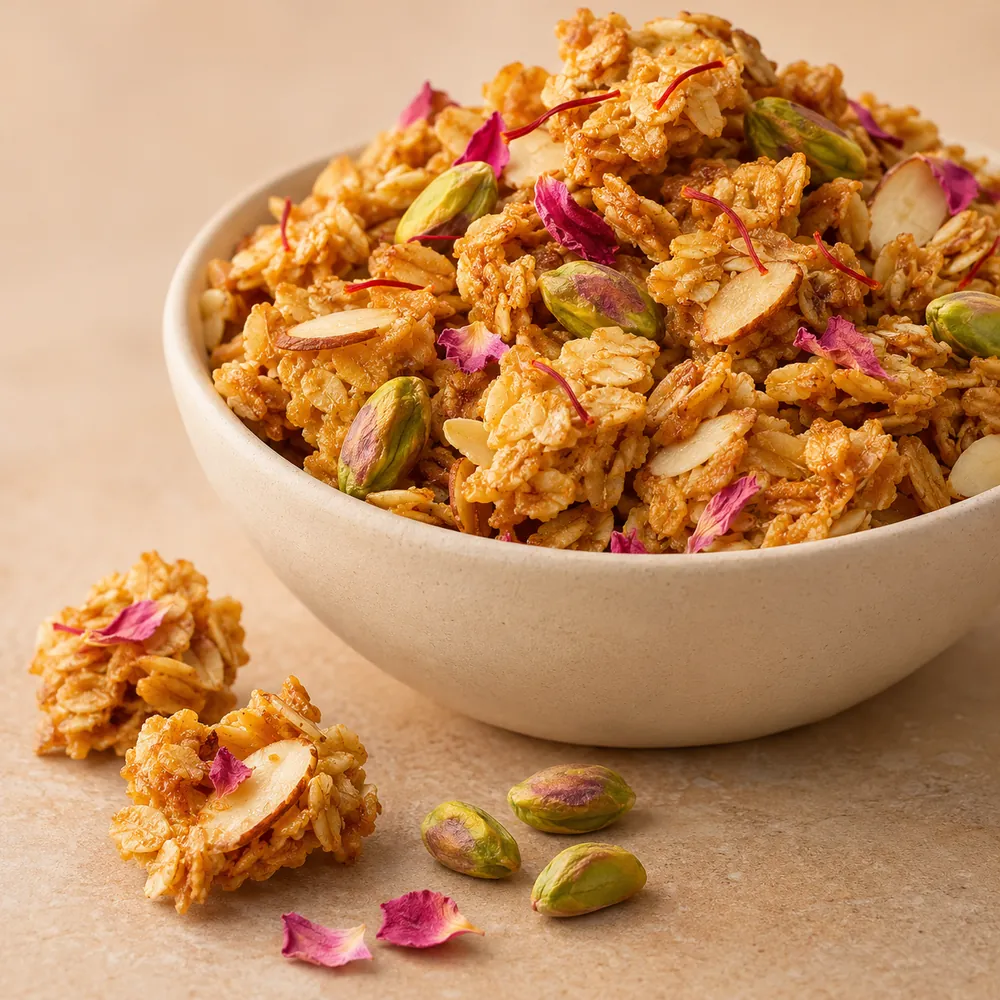
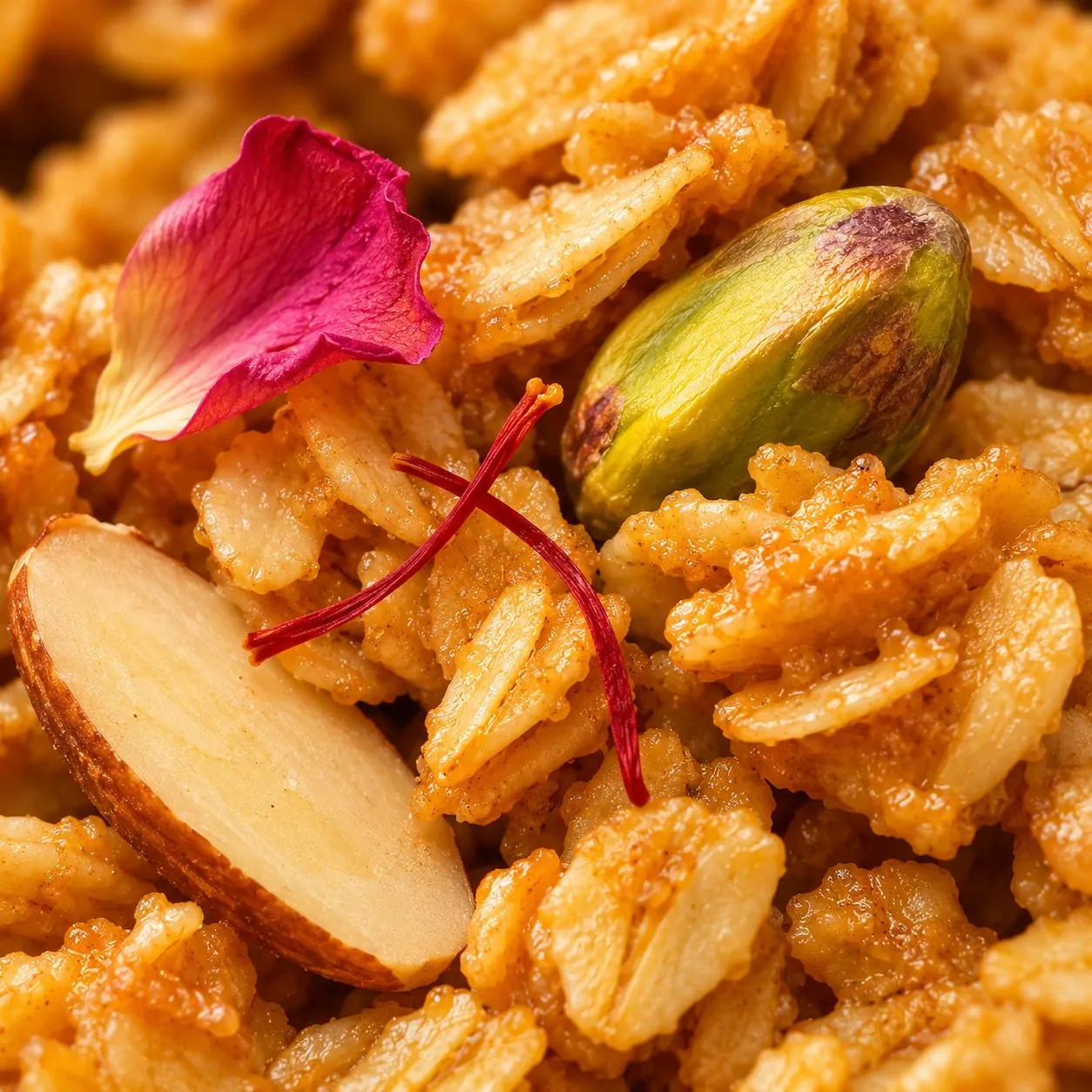
Kesar Pista Granola
Big clusters, not loose oats. Whole pistachios and sliced almonds.


Pinni Squares
Roasted in real desi ghee. Gur, not white sugar.
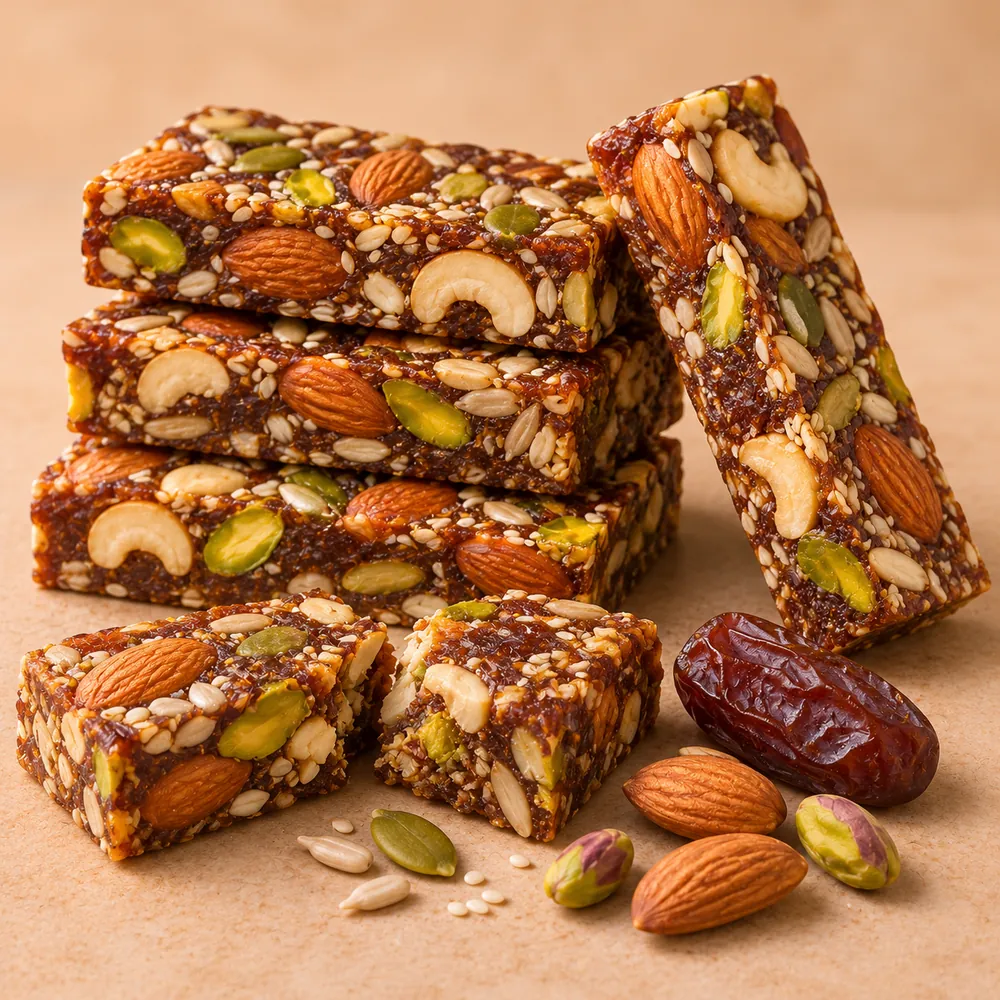
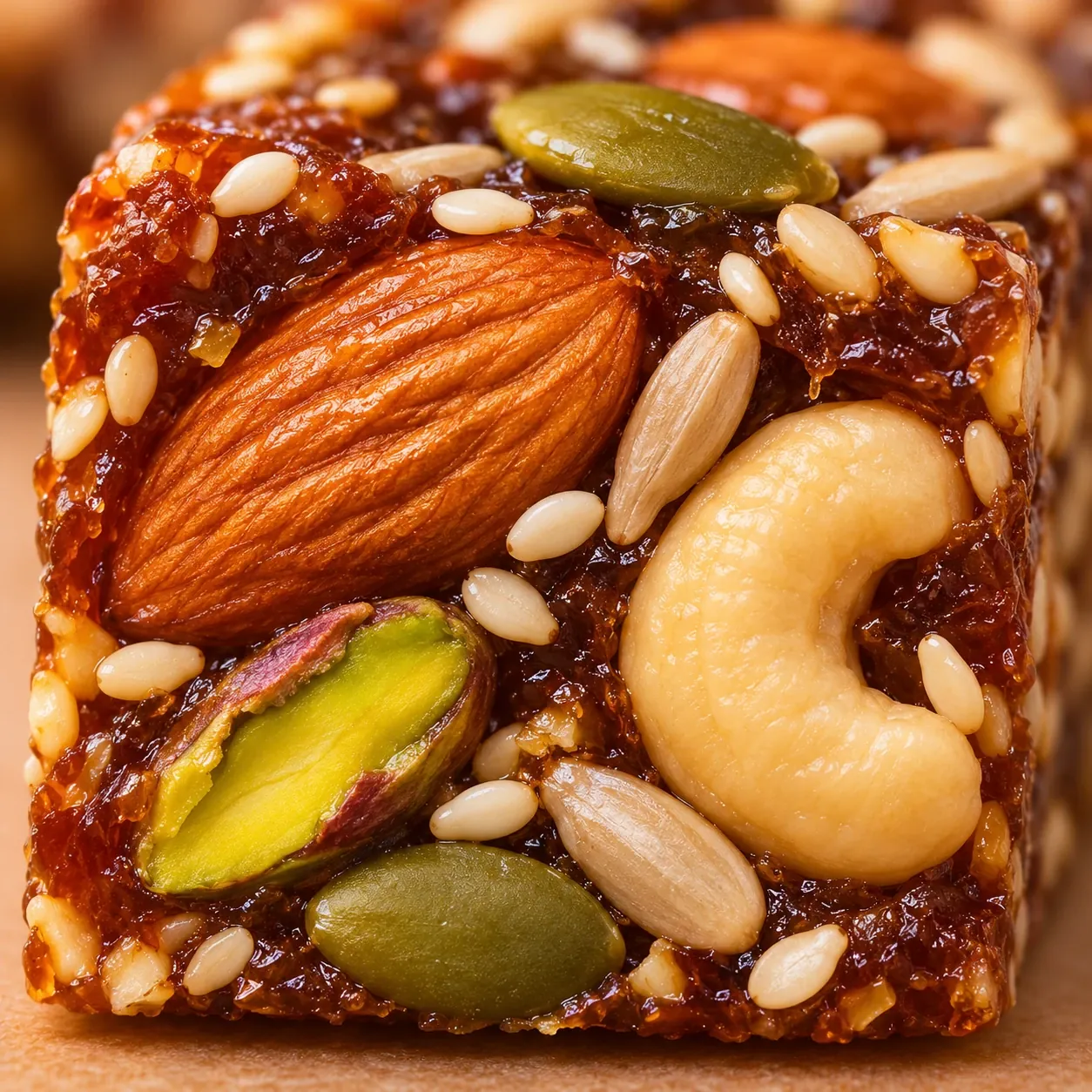
Date & Nut Bars
Held together by dates alone. Whole nuts you can see.