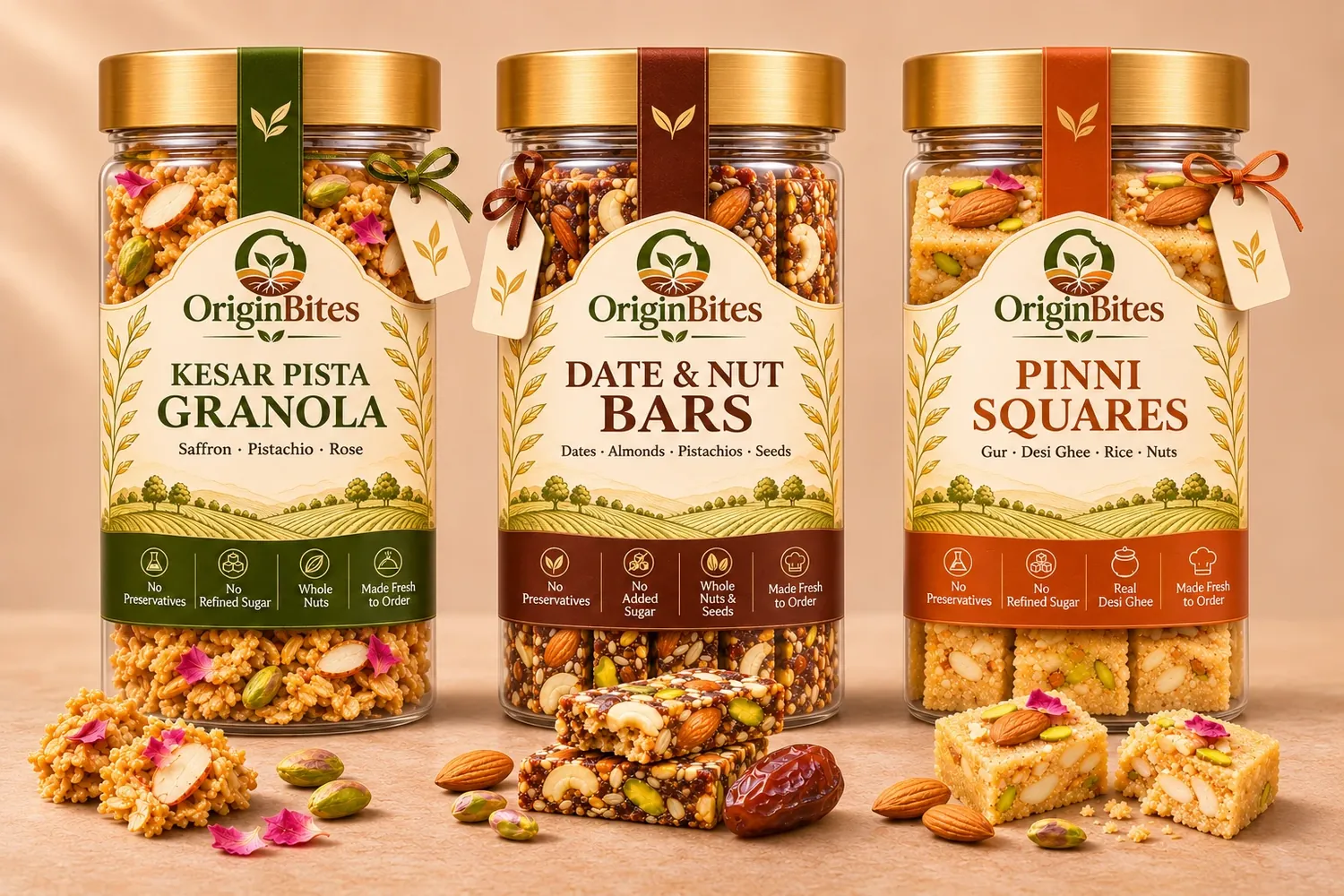
Date and nut bars: what goes in them and how to make them at home
A date and nut bar is soft dates pressed around nuts and seeds, with nothing else needed to hold it together. Here is how it works, which Pakistani dates to use, and a simple recipe for home.
A date and nut bar is exactly what its name says: soft dates pressed around whole or chopped nuts and seeds, then cut into pieces. The dates are both the sweetener and the glue. A good bar needs no sugar, no syrup, no flour and no baking.
They have become popular as a snack to keep in a bag or a desk drawer, and many packaged versions are now sold in Pakistan. But the idea is as old as dates themselves, and it is one of the easiest things to make at home. This guide explains how the bars work, which dates and nuts to choose, how to make them step by step, and what goes wrong and why.
Date and nut bars in short
- Soft dates, mashed to a paste, hold everything together.
- Nuts and seeds give crunch, richness and variety.
- No baking: mix, press, chill, cut.
- No added sugar, but dates are naturally very sweet.
- Keep them airtight and cool.
Why dates work as a binder
A ripe date is mostly natural sugar, fibre and a little water. Mash it and you get a dense, sticky paste, something like a very thick jam. When nuts are worked into that paste and the mixture is pressed hard, the paste fills every gap and grips each piece. Chilling firms it up, and it can then be cut cleanly.
This is why date bars do not need the syrups and binders listed on many snack bar packets. It is also why the choice of date matters so much. A soft, fleshy date makes a paste easily. A hard, dry one does not.
An old idea
People in date-growing regions have been mixing dates with nuts, seeds and grains for a very long time. Stuffed dates, date and sesame sweets, and date pastes pressed into cakes for travellers are found from Arabia to Sindh. In Pakistan, dates stuffed with an almond or a walnut are a familiar iftar plate, and khajoor mixed with dry fruit is a winter standby.
The modern “bar” is simply that old pairing in a convenient shape.
Choosing the dates
You do not need imported dates. Pakistan grows excellent ones, and several are ideal for bars.
| Date | Texture | For bars |
|---|---|---|
| Mozawati | Very soft, moist, dark | Excellent; mashes at once, gives a dark, rich bar |
| Begum Jangi | Soft, fleshy, syrupy | Excellent |
| Soft Aseel | Semi-soft, clean sweetness | Very good and affordable; pick the softer ones |
| Dhakki | Firm and chewy | Soak first, or mix with a softer date |
| Medjool (imported) | Large, soft, caramel-like | Excellent but costly |
| Chuhara (dried dates) | Hard | Not suitable unless soaked for a long time |
Whichever you choose, open each date as you remove the seed and look inside. Dates can hide insects near the stone. Discard any that are dusty, sour-smelling or mouldy. There is more on the varieties in dates in Pakistan: the main kinds.
Choosing the nuts and seeds
Almost any nut works. What you want is a mix of textures and flavours, and nuts that are fresh. One rancid walnut will spoil a whole tray.
- Almonds give firm crunch and a mild taste. Use them whole or halved.
- Cashews are soft and buttery and make the bar feel richer.
- Pistachios add colour and a distinct flavour.
- Walnuts are slightly bitter, which balances the sweetness of the dates well.
- Peanuts are the economical choice and taste very good with dates.
- Pumpkin seeds, sunflower seeds and sesame add a different kind of crunch. Sesame toasted until golden is especially good.
- Desiccated coconut is useful in the mix or for rolling.
Toasting the nuts and seeds first, in a dry pan over low heat for a few minutes, makes a real difference to flavour. Let them cool before mixing. How to buy and keep them is covered in our dry fruit buying guide and in how to store nuts and dry fruit.
A simple recipe
This makes about twelve small bars. Quantities are forgiving.
You need
- 2 cups soft dates, seeds removed (about 300 g)
- 1½ cups mixed nuts and seeds (about 200 g), lightly toasted
- A pinch of salt
- Optional: a pinch of ground cardamom or cinnamon; 2 tablespoons toasted sesame or coconut for the top
Method
- Prepare the dates. Remove the seeds and check each date. If the dates are at all firm, soak them in warm water for ten minutes, then drain and pat them completely dry.
- Chop the nuts. Roughly chop about two-thirds of the nuts. Leave the rest whole or halved so that they show when the bars are cut.
- Make the paste. In a food processor, blend the dates with the salt and spice until they form a sticky ball. By hand, chop them finely and then mash and knead until smooth.
- Combine. Work the nuts and seeds into the date paste with your hands or a strong spoon until evenly spread. It should hold together firmly when squeezed. If it crumbles, add two or three more mashed dates.
- Press. Line a small tray or box with butter paper. Tip the mixture in and press it down very firmly with the flat base of a glass or katori, into an even slab about 1.5 cm thick. Scatter sesame or coconut on top and press again.
- Chill. Put the tray in the fridge for at least two hours, or the freezer for thirty minutes.
- Cut. Lift the slab out by the paper and cut into bars or squares with a sharp knife. Wipe the blade between cuts.
What goes wrong, and why
- The bars crumble. Too little date paste, dates too dry, or not pressed hard enough. Add more mashed dates and press with real force.
- The bars are too soft and sticky. Very moist dates, or dates not dried after soaking. Add more nuts or a spoonful of desiccated coconut and chill longer.
- They taste flat. You forgot the salt, or did not toast the nuts. A pinch of salt makes the sweetness taste rounder.
- They taste bitter or stale. The nuts were old. Taste nuts before using them.
- Everything turned to paste. The nuts were blended too long. Add them at the end and pulse briefly, or stir them in by hand.
- The knife drags. The slab is too warm. Chill it more, and use a long sharp knife.
Variations
- Sesame and date. Use mostly toasted sesame, in the spirit of til ke laddu.
- Coconut and cashew. Cashews, desiccated coconut and a little cardamom.
- Peanut and date. Roasted peanuts and a spoon of peanut butter in the paste.
- Cocoa. A tablespoon of unsweetened cocoa powder turns it into something close to a truffle.
- Balls instead of bars. Roll the mixture into small balls and coat in coconut or sesame. Children can help.
How to store them
- Layer the bars in an airtight box with butter paper between the layers so they do not stick.
- Keep the box in the fridge, particularly in warm weather.
- For longer keeping, freeze them. They soften again within a few minutes.
- Take out only what you will eat, and keep the box closed.
How long they last depends on the dates and nuts you used, so trust your senses. A sour smell means the dates have begun to ferment. A paint-like smell means the nuts have turned.
Shop-bought bars: reading the pack
Not everything sold as a “date bar” or “energy bar” is dates and nuts. Turn the pack over. If dates and named nuts come first on the ingredient list, good. If glucose syrup, sugar, rice crisps or “vegetable fat” come first, it is a different product wearing the same clothes. We explain how to check in how to read a food label in Pakistan.
Also look at the nuts. “Contains nuts” can mean a dusting. You should be able to see real pieces.
How we make ours
Our Date & Nut Bars follow the same principle as the recipe above, done carefully and in small batches. Soft dates are pressed around whole almonds, cashews, pistachios, pumpkin seeds and sesame. There are no oats in them and no syrup. The dates are the only thing holding them together.
They are pressed flat, left to set and cut with a knife, then sealed in a jar with the date they were made on the label. Like everything we make, they are prepared after you order. The full list of what we use is on our ingredients page.
A word about sweetness and allergies
Date bars are often described as “healthy snacks”. We prefer to describe them accurately. They are made of whole foods, with nothing added, and they are also sweet and rich. A small bar goes a long way. If you have been advised to limit sugar, remember that dates count.
They also contain tree nuts, and usually sesame, both of which are common allergens. Always tell guests what is in them, and check before giving them to children.
When to serve them
- At iftar. A date and nut bar is a natural extension of breaking the fast with a date. Cut small squares and set them beside the fruit.
- With chai. In place of biscuits for guests who prefer something less processed.
- In a lunch box. They do not crumble, melt or need a fridge for a few hours. Check the school’s rules on nuts first.
- On a journey. Wrapped individually in butter paper, they are tidy to carry and eat.
- After exercise or a long day. They are compact and filling.
- As a gift. A tin of homemade bars, labelled with what is in them, is a thoughtful present. See how to choose and send food as a gift.
Because they are so compact, it is easy to eat more than you meant to. Cutting the slab into small squares, and putting out only a few at a time, is the simplest way to keep portions sensible. A small piece with a cup of chai is usually all anyone wants.
Bars, laddus and stuffed dates
The same mixture takes several traditional shapes, and it is worth knowing them all.
| Form | How it is made | Good for |
|---|---|---|
| Bars or squares | Pressed flat in a tray, chilled and cut | Even portions, packing, gifting |
| Balls (laddu) | Rolled by hand, often coated in coconut or sesame | Quick to make, good with children |
| Rolls | Shaped into a log, chilled and sliced into coins | Neat slices that show the nuts |
| Stuffed dates | Whole dates slit and filled with a nut | Iftar plates, no equipment at all |
Whichever you choose, the rules do not change: soft dates, fresh nuts, firm pressing and a cool, airtight place to keep them. Start with whole foods and you need nothing else.
Worth making once
Even if you usually buy your bars, make a batch yourself at least once. It takes twenty minutes, it shows you exactly what a good bar is made of, and it will change the way you read the back of every packet afterwards.
Common questions
What holds a date and nut bar together?
The dates themselves. Soft dates mash into a thick, sticky paste that grips the nuts and seeds. No syrup, sugar or flour is needed.
Which dates are best for bars?
Soft, fleshy dates that mash easily: soft Aseel, Mozawati, Begum Jangi or imported Medjool. Firm, dry dates need soaking in warm water first.
Do date bars need baking?
No. They are pressed and chilled, not baked. Toasting the nuts beforehand is the only heat involved, and that is optional.
Are date bars sugar-free?
They have no added sugar, but dates are naturally very sweet. Anyone limiting sugar should count them like any other sweet food.
How long do homemade date bars keep?
That depends on how soft the dates were and how they are stored. Keep them in an airtight box in the fridge, separated by paper, and eat them while they smell and taste fresh.
Why are my date bars falling apart?
Usually the dates were too dry, there were too many nuts for the amount of paste, or the mixture was not pressed firmly enough. Add a few more mashed dates and press hard.
Can I make them without a food processor?
Yes. Chop the dates finely, mash them with the back of a spoon or knead them by hand until they form a paste, then work in chopped nuts.
This article is general information about food. It is not medical advice.
Share
Send on WhatsAppKeep reading.
How to store nuts and dry fruit at home so they stay fresh
Nuts go stale because of heat, light, air and damp. Here is how to keep almonds, pistachios, walnuts, cashews and dates fresh through a Pakistani summer and monsoon, and how to tell when they have turned.
Read the article
Ten ways to eat granola that are not a bowl of milk
Granola is not only for a bowl of cold milk. Here are ten ways to eat it that suit a Pakistani kitchen, from thick dahi and seasonal fruit to kheer, lassi and a paratha roll, with tips to keep the crunch.
Read the article
Edible gifts: how to choose and send food as a gift in Pakistan
We rarely visit anyone empty-handed, and food is the gift most often carried. Here is how to choose an edible gift that suits the person and the occasion, travels safely, and arrives in good condition.
Read the articleFrom our kitchen.
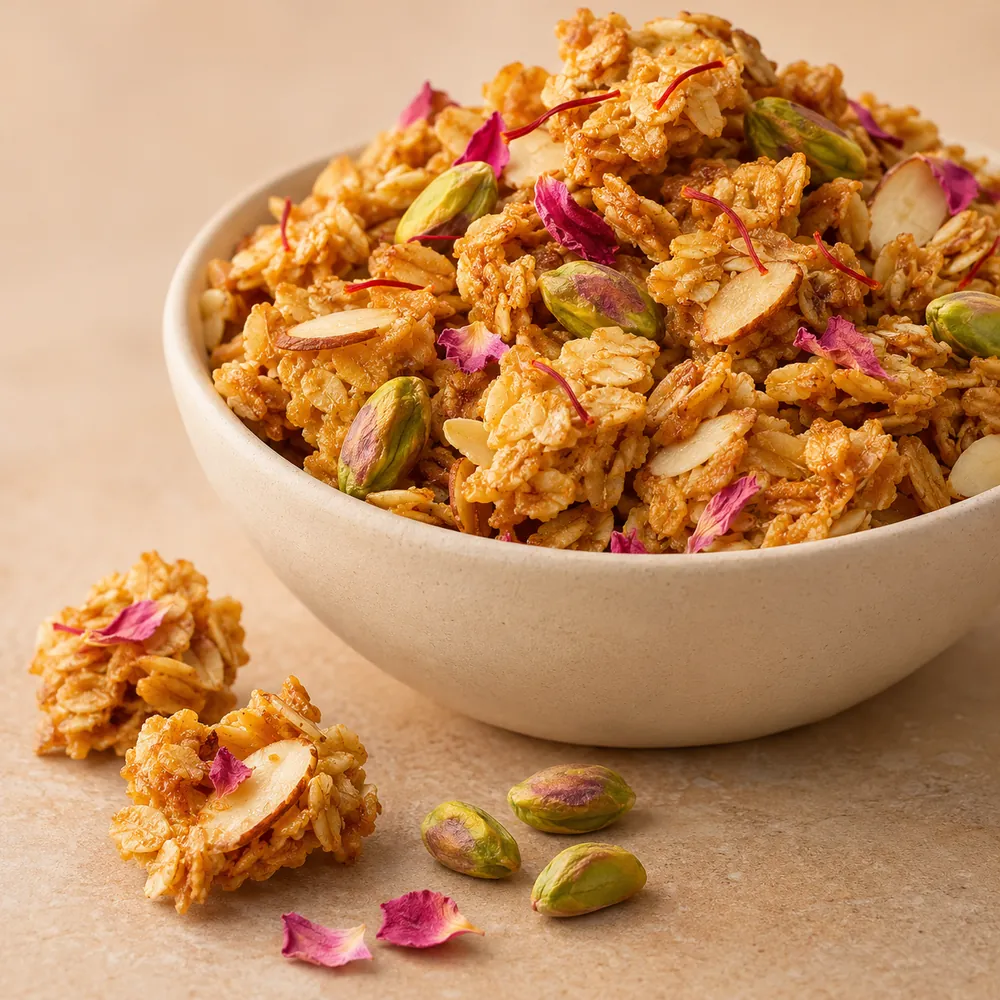
Kesar Pista Granola
Big clusters, not loose oats. Whole pistachios and sliced almonds.


Pinni Squares
Roasted in real desi ghee. Gur, not white sugar.
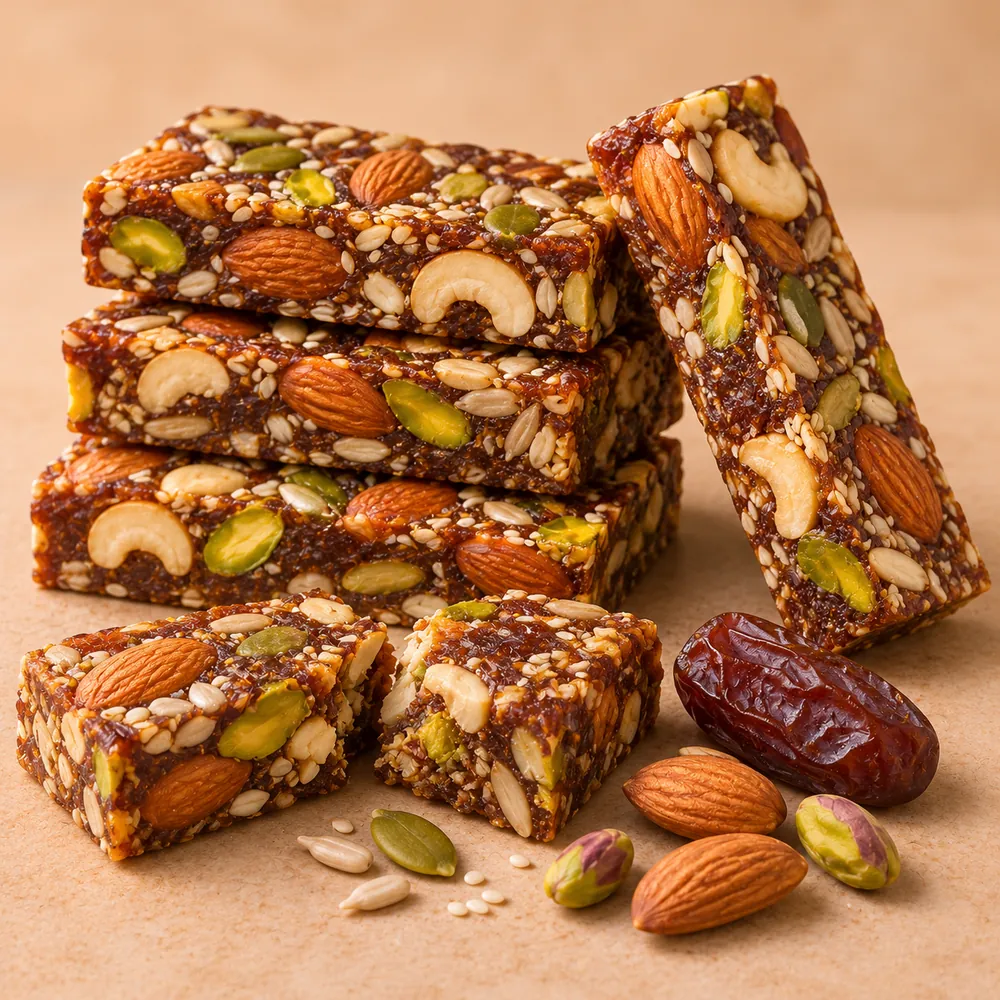
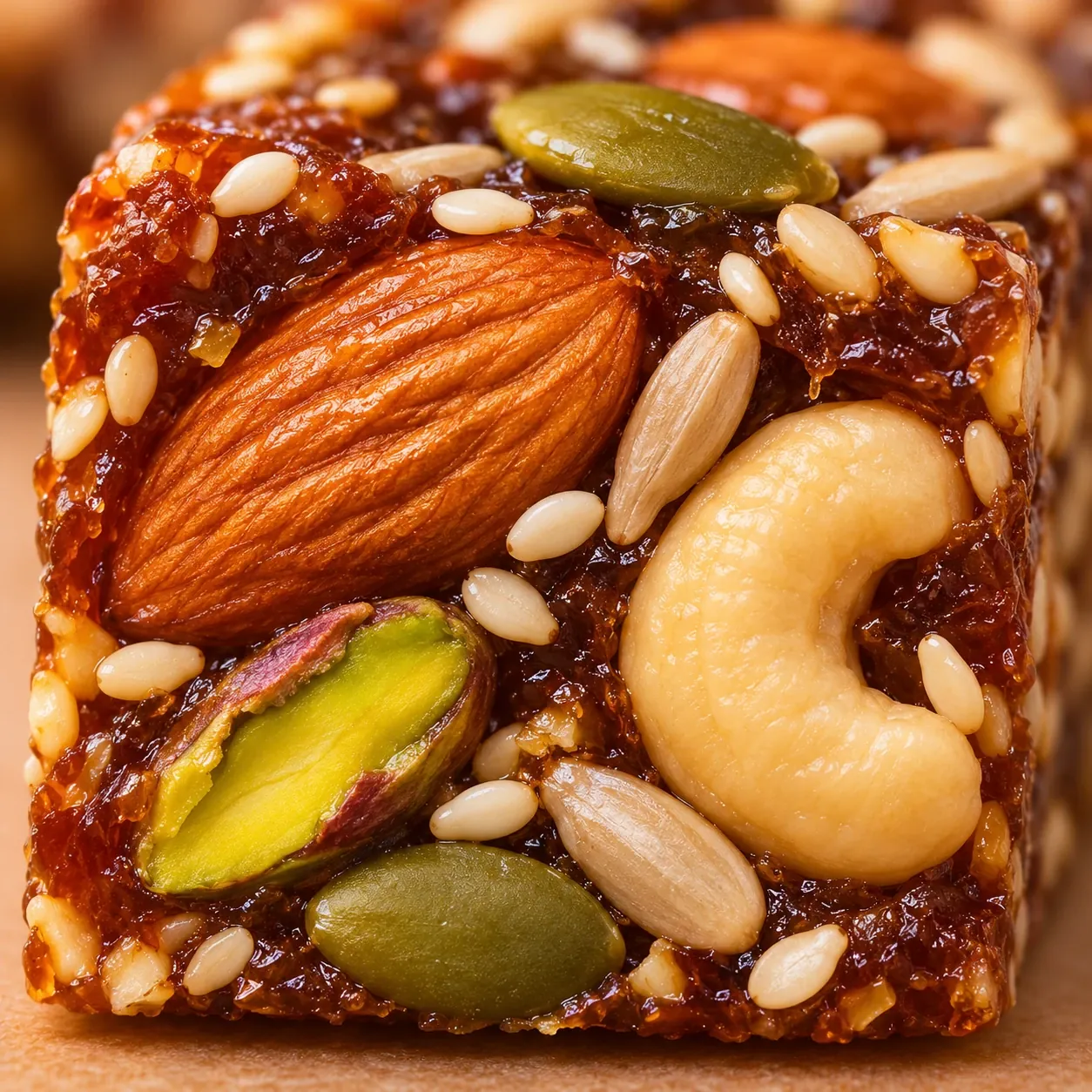
Date & Nut Bars
Held together by dates alone. Whole nuts you can see.