Almonds, pistachios, cashews and walnuts: a dry fruit buying guide for Pakistan
Dry fruit is expensive and quality varies widely. Here is how to judge almonds, pistachios, cashews, walnuts and chilgoza in a Pakistani bazaar: the kinds, the grades, the tricks, and five checks that work on all of them.
To buy good dry fruit, use five checks on whatever is in front of you: look at the colour and size, smell it, snap one, taste one, and ask when the stock arrived. Fresh nuts are plump, even in colour, crisp when broken and sweet on the tongue. Stale nuts are dull, bendy and bitter, and no price makes them a bargain.
Dry fruit is one of the most expensive things in a Pakistani kitchen, and quality varies enormously from one shop, and one sack, to the next. This guide walks through the main nuts one by one, almonds, pistachios, cashews, walnuts and pine nuts, explaining the kinds and grades you will meet, what a good one looks like, and the tricks to watch for.
Buying dry fruit in short
- Buy in autumn and early winter, when the new crop arrives.
- Always smell and taste before buying in quantity.
- Bigger is not always better; freshness beats size.
- Raw and whole keeps longest and shows its quality most honestly.
- Take it home and store it properly the same day.
Where Pakistan’s dry fruit comes from
Some of what is sold here is grown at home, and a great deal is imported.
- Balochistan grows almonds, pistachios in small quantities, apricots, grapes for raisins, and dates. Quetta is the country’s historic dry fruit trading city.
- Gilgit-Baltistan, Chitral and Swat are known for walnuts, dried apricots, apricot kernels and mulberries.
- The Suleiman range, Zhob, Waziristan and parts of Gilgit-Baltistan and Chitral produce chilgoza pine nuts from wild forests.
- Afghanistan sends almonds, pistachios, raisins, figs and pine nuts across the border.
- Iran is the main source of pistachios.
- The United States supplies most of the large, uniform almonds and many walnuts and pistachios.
- Cashews are not grown in Pakistan at all. They come from countries such as Vietnam, India and parts of Africa.
The big wholesale markets, Akbari Mandi in Lahore, Jodia Bazaar in Karachi, the dry fruit markets of Quetta and Peshawar’s Qissa Khwani area, are where most of it changes hands. Retail shops in every city buy from them.
Five checks that work on every nut
- Look. Even colour, plump shape, intact skin. Avoid nuts that are shrivelled, darkened, spotted or greasy-looking, and sacks with a lot of broken pieces and dust.
- Smell. Take a handful and smell it. Fresh nuts smell faintly sweet. A smell of old oil, paint or mustiness means walk on.
- Snap. Break one. It should snap cleanly. If it bends, it has absorbed moisture.
- Taste. Chew one slowly. It should be sweet and clean, with no bitterness or catch in the throat.
- Ask. When did this stock come in? Is it this year’s crop? Where is it from? A good shopkeeper answers plainly.
Almonds (badam)
The kinds
- American (California) almonds. Large, smooth, uniform, light brown, mild and sweet. This is what most shops sell as standard badam.
- Kaghzi badam. A thin, paper-like shell that cracks between the fingers. Grown in Balochistan and Afghanistan. Sold in the shell, especially in winter.
- Local and Afghan shelled almonds. Often smaller, slimmer and less even, with a darker skin and a stronger almond flavour.
- Mamra-type almonds. A prized, concave, oil-rich almond from Iran and Afghanistan, sold at a high price.
What to look for
The skin should be an even brown, not patchy or very dark. Break one: the inside should be creamy white right through. Yellowing or a honeycomb look means age. Almonds should taste sweet. A very bitter one now and then is a different, bitter variety that has slipped in; spit it out.
Watch for
Old stock mixed with new, shrivelled kernels hidden at the bottom of the bag, and almonds polished or dusted to look fresher.
Pistachios (pista)
The kinds
- Iranian pistachios. Sold by shape: round (Fandoghi), long (Akbari, Ahmad Aghaei) and jumbo (Kalleh Ghouchi). Known for rich flavour.
- American pistachios. Evenly sized, with a wide natural split, usually sold roasted and salted.
- Shelled kernels (pista magaz). Used for cooking and sweets. Greener kernels cost more.
What to look for
Shells that have split open naturally and widely show a ripe nut. Kernels should be green to yellow-green with a purple-brown skin. For sweets and garnish, a deep green kernel is prized. They should be crisp, never rubbery.
Watch for
Closed shells, which usually hold unripe kernels. Shells bleached very white. Kernels dyed green: rub one with a damp finger and see if colour comes off. Heavy salt on roasted nuts, which can hide staleness.
Cashews (kaju)
The grades
Cashews are graded by size and wholeness, and the codes are often printed on the tin.
| Grade | Meaning | Use |
|---|---|---|
| W180 | Whole, very large (“king”) | Gifting, serving whole |
| W240 | Whole, large | Serving, premium snacks |
| W320 | Whole, medium; the most common | Everyday eating and cooking |
| W450 | Whole, small | Cooking, sweets |
| Splits, butts, pieces | Halves and broken kernels | Gravies, baking, grinding; much cheaper |
The number is roughly the count of kernels in a pound, so a smaller number means a bigger nut.
What to look for
Whole, ivory to pale cream kernels with a smooth surface. They should be firm and break with a clean snap. Dark spots, a yellow or grey cast, or a soft, bendy feel mean poor quality or damp storage.
Watch for
A lower grade sold as a higher one, and whole cashews padded with pieces. If you are going to grind them into a korma, buy pieces on purpose and save money.
Walnuts (akhrot)
The kinds
- Kaghzi akhrot. Thin-shelled walnuts from the northern areas, Swat, Chitral, Gilgit-Baltistan and Kashmir. Easy to crack and much loved.
- Hard-shelled local walnuts. Cheaper, harder to open, with a smaller kernel.
- Imported walnuts. Large, light-coloured halves, usually sold shelled.
What to look for
In the shell: heavy for its size, with no rattle, cracks or holes. Shelled: light golden to amber halves. Pale kernels are generally milder; darker ones are stronger and slightly more bitter. Walnuts spoil faster than any other common nut, so taste before you buy, every time.
Watch for
Dark, shrivelled or oily kernels, and any sharp bitterness. Last year’s walnuts are frequently sold alongside the new crop.
Pine nuts (chilgoza)
Chilgoza is the luxury of the Pakistani dry fruit shop. The long, slender nuts come from wild pine forests in the mountains, are collected by hand, and are sold roasted in their thin brown shell.
- Choose shells that are an even dark brown, slightly glossy, and full.
- Crack a few. The kernel should be ivory, plump and sweet, with a resinous note.
- Avoid many empty or shrivelled shells, and any rancid taste. Pine nuts turn quickly.
- Buy small amounts. They are very expensive and do not keep well once shelled.
Others worth knowing
- Raisins (kishmish) and sultanas. Plump, not rock-hard or sticky-wet; no fermented smell.
- Dried apricots (khubani). Bright orange ones have usually been treated with sulphur to hold their colour. The brown, sun-dried ones are plainer to look at and deeper in flavour.
- Dried figs (anjeer). Soft and pliable, with no sour smell. Open one to check for insects.
- Peanuts (moong phali). Even colour, no shrivelled or mouldy kernels. Discard any that taste bitter or musty.
- Dates. See dates in Pakistan: the main kinds.
Loose or packed, raw or roasted
Loose dry fruit lets you examine and taste it. Its weakness is exposure: open sacks collect dust, moisture and insects. Buy from shops that keep stock covered and clean.
Sealed packs are cleaner and should carry a packing date, a weight and the packer’s name. Check those, as you would on any label. Our guide to reading food labels shows what to look for.
Raw nuts keep longest and are right for cooking, baking and sweets. Roasted and salted nuts are for eating straight away. Buy them in small quantities.
Price, and when to buy
Dry fruit prices in Pakistan move with the exchange rate, the harvest, border trade and the season. Demand rises sharply in winter and before Ramzan and Eid. We will not quote prices, because they would be wrong within weeks.
Some principles hold in any year. New-crop stock arrives from autumn. Buying a sensible amount then, and storing it properly, is better than buying tired stock in June. Compare like with like: grade, size and origin, not only the price per kilo. And remember that the cheapest lot in the market is cheap for a reason.
Take it home and store it
Good buying is wasted by bad storage. As soon as you are home, check your purchases, pack them into airtight jars, keep a little out for the week and put the rest in the fridge or freezer. The full method is in how to store nuts and dry fruit at home.
The common tricks, in one table
| Trick | How to catch it |
|---|---|
| Old stock mixed with new | Taste several pieces from different parts of the sack, not only the top |
| Good nuts on top, poor ones beneath | Ask for your order to be scooped from the middle, and watch it weighed |
| Dyed pistachio kernels | Rub with a damp finger; colour should not transfer |
| Bleached shells | Very white pistachio shells are not natural |
| A lower cashew grade sold as a higher one | Compare sizes; ask to see the grade on the tin |
| Damp nuts to add weight | Snap one; it should break cleanly, not bend |
| Heavy salt or spice on roasted nuts | Buy raw, or taste carefully for bitterness beneath the seasoning |
| Short weight | Watch the scale, and check sealed packs for a printed net weight |
How much to buy
Dry fruit is costly, and it does not improve with keeping. Buy for a purpose.
- For daily eating. A small handful of mixed nuts per person is a common habit. For a family of four that is roughly a kilo a month in total, bought in two or three kinds.
- For winter sweets. Add up the nuts in your recipe before you go, and buy that amount plus a little.
- For guests and Eid. Buy closer to the day, so it is fresh when served.
- For the year. Only if you have freezer space. Otherwise buy every month or two.
Smaller, more frequent purchases from a shop you trust will nearly always taste better than one large bargain.
How we choose ours
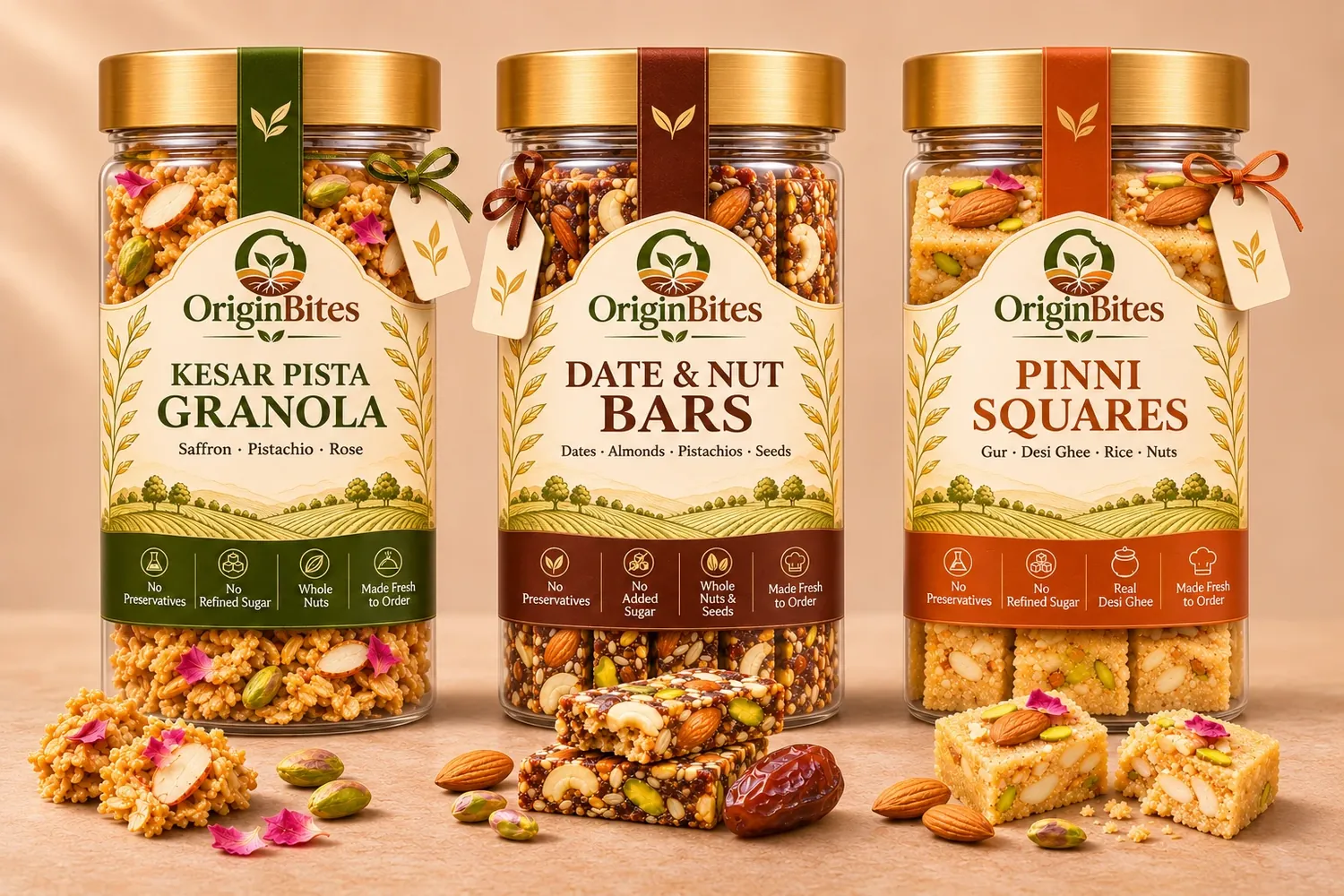
Nuts are the heart of what we make. Our Kesar Pista Granola, Pinni Squares and Date & Nut Bars are full of whole almonds, pistachios, cashews and walnuts that you can see and count. We buy them the way this guide describes, and we pick through every batch by hand, removing broken, small or dull pieces before cooking.
It is slow work, and it is the only way to be sure of what ends up in the jar. You can see everything we use on our ingredients page.
Common questions
When is the best time to buy dry fruit in Pakistan?
From autumn into early winter, when the new crop arrives. Stock is freshest, choice is widest and it has not yet spent a summer in storage.
What does W240 or W320 mean on cashews?
It is a size grade. W means whole, and the number is roughly how many kernels make up a pound. A lower number means bigger cashews: W180 is very large, W240 large, W320 the common everyday size.
Are Pakistani almonds different from American almonds?
Yes. Local and Afghan almonds, including the thin-shelled kaghzi type, tend to be smaller, sometimes more uneven, and often more intense in flavour. American (California) almonds are larger, uniform and milder.
Why are pine nuts (chilgoza) so expensive?
They are gathered by hand from wild pine forests in mountain areas, the trees fruit unevenly, and each cone gives a small amount. Supply is limited and demand is high.
How can I tell if nuts are stale before buying?
Smell and taste one. Stale nuts smell of old oil or paint and taste bitter. Also avoid nuts that look dull, shrivelled, darkened or oily.
Is it better to buy loose or packed dry fruit?
Loose lets you see, smell and taste before buying, but it has been exposed to air and dust. Sealed packs are cleaner and should show a packing date. Either can be good; freshness is what matters.
Should I buy salted or roasted nuts?
For cooking and keeping, buy raw. Roasted and salted nuts are ready to eat and delicious, but they go stale faster and the roast can hide older stock.
This article is general information about food. It is not medical advice.
Share
Send on WhatsAppKeep reading.

Saffron (kesar): how it is grown, why it costs so much, and how to identify real saffron
Saffron is the dried threads of a small purple flower, picked by hand. Here is why it is the most expensive spice, how fakes are made, what real kesar looks and smells like, and how to use it well.
Read the article
Gur and white sugar: how they differ in making, taste and cooking
Gur and white sugar begin as the same cane juice and end as two very different foods. Here is an honest comparison of how each is made, how it tastes, how it cooks, and what the difference does and does not mean.
Read the article
How to identify pure honey in Pakistan: kinds, labels and what home tests can and cannot tell you
Honey is one of the most commonly adulterated foods, and most home tests for it do not work. Here is what honey is, the kinds made in Pakistan, why it crystallises, and how to buy it with more confidence.
Read the articleFrom our kitchen.
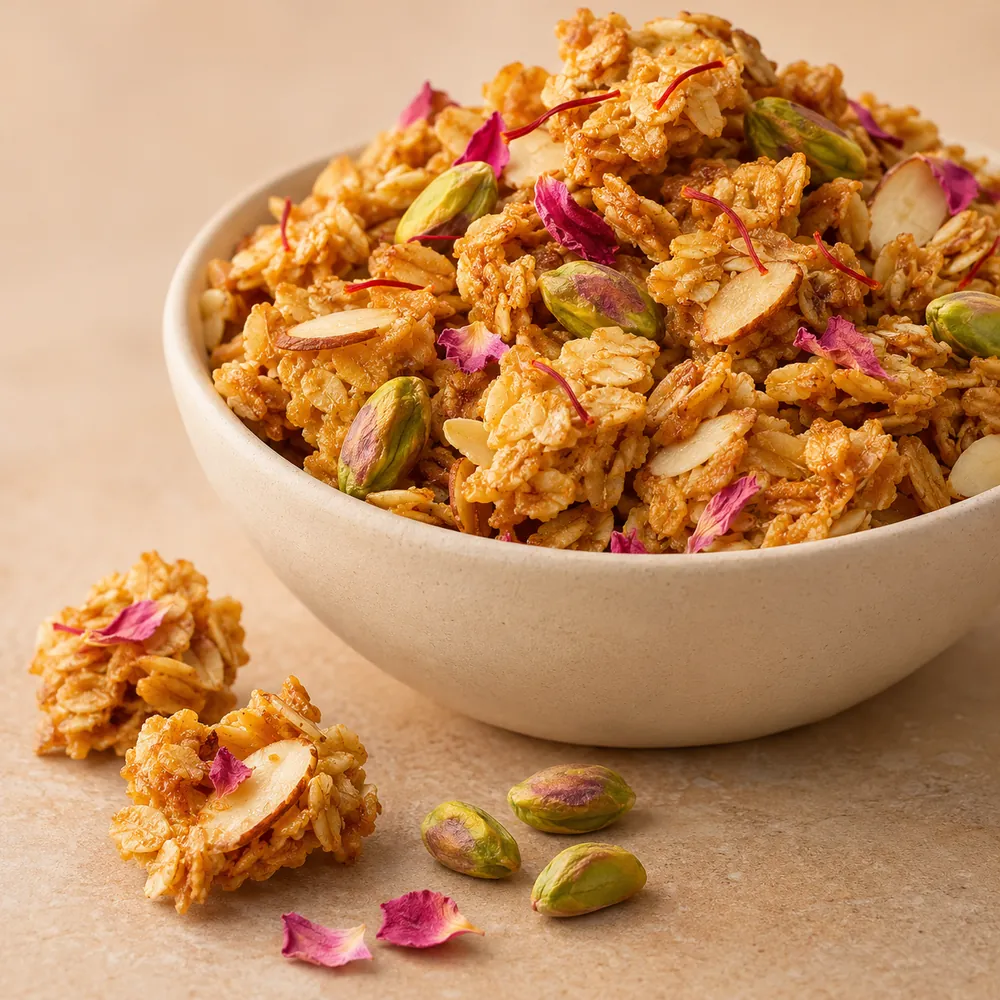
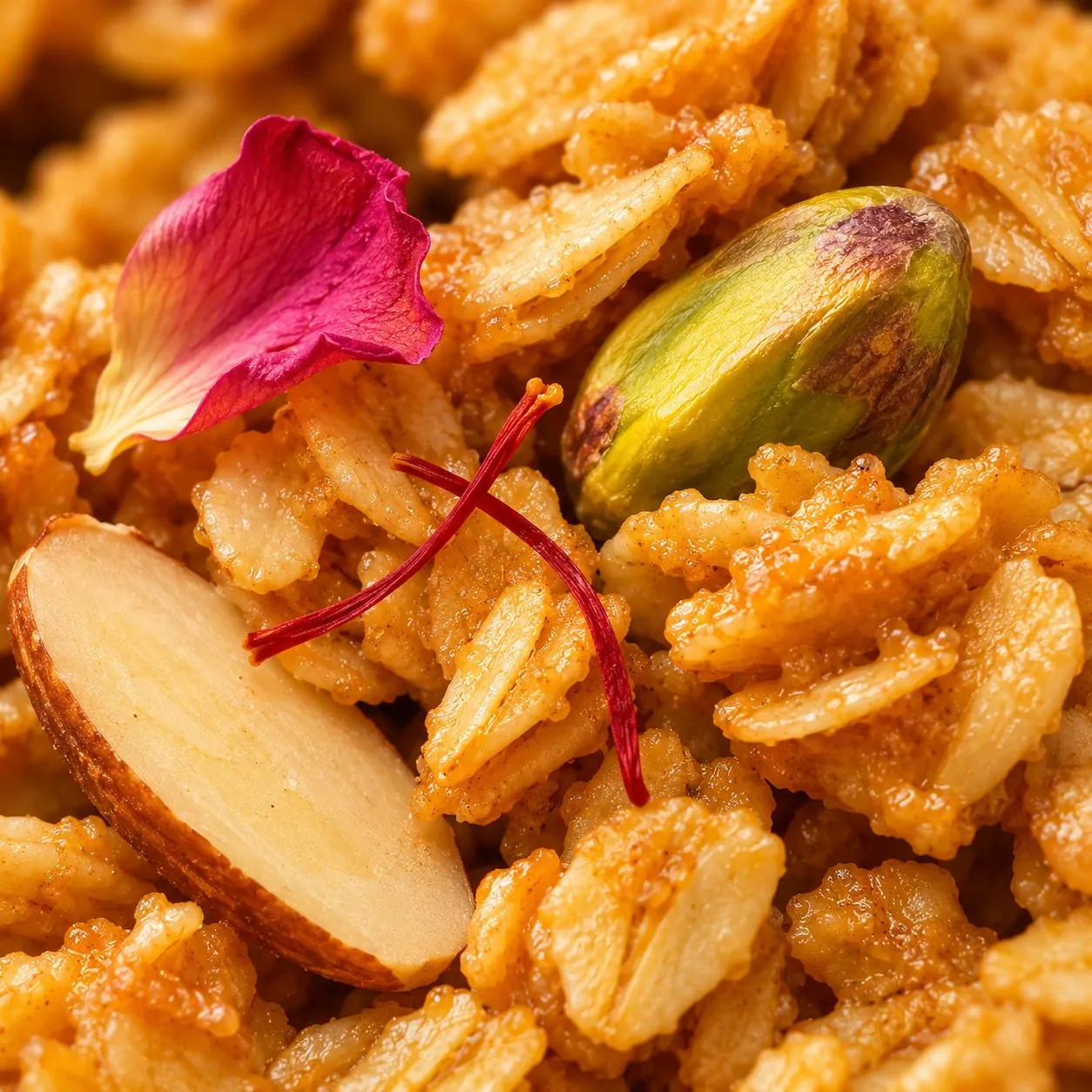
Kesar Pista Granola
Big clusters, not loose oats. Whole pistachios and sliced almonds.


Pinni Squares
Roasted in real desi ghee. Gur, not white sugar.
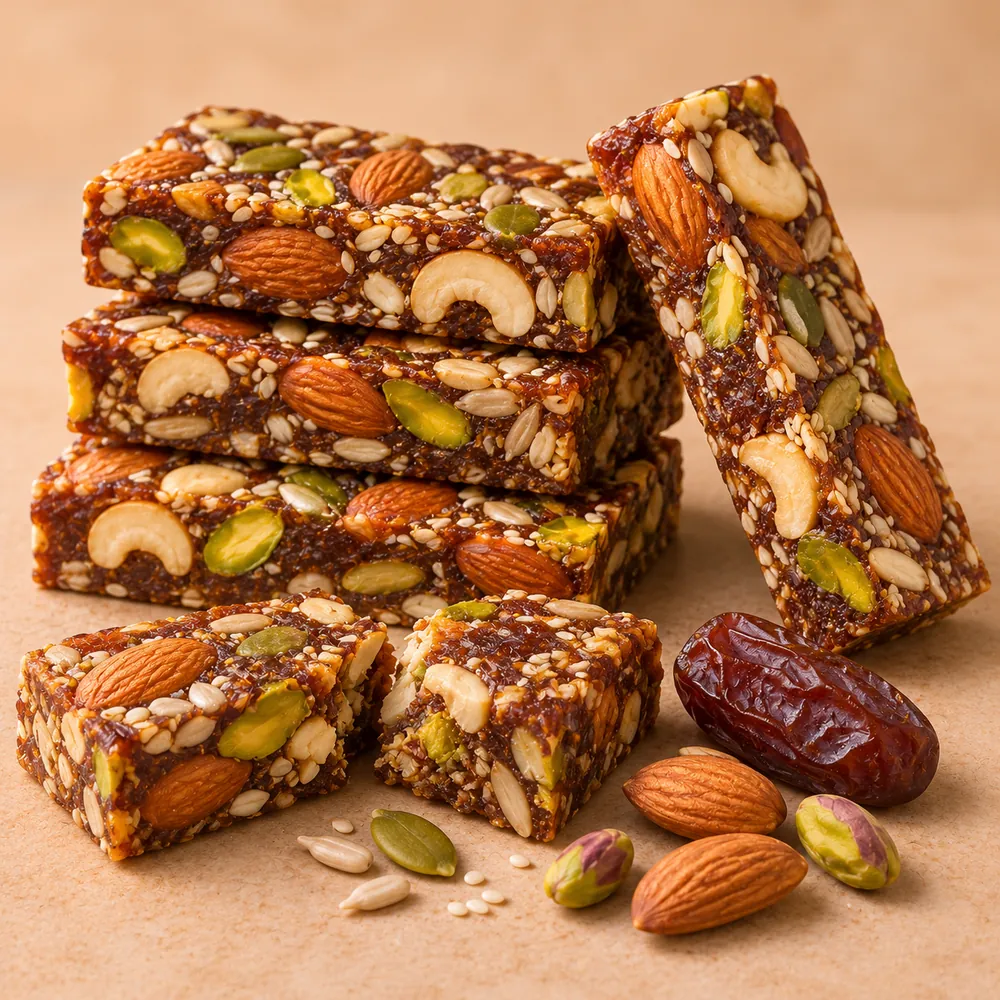
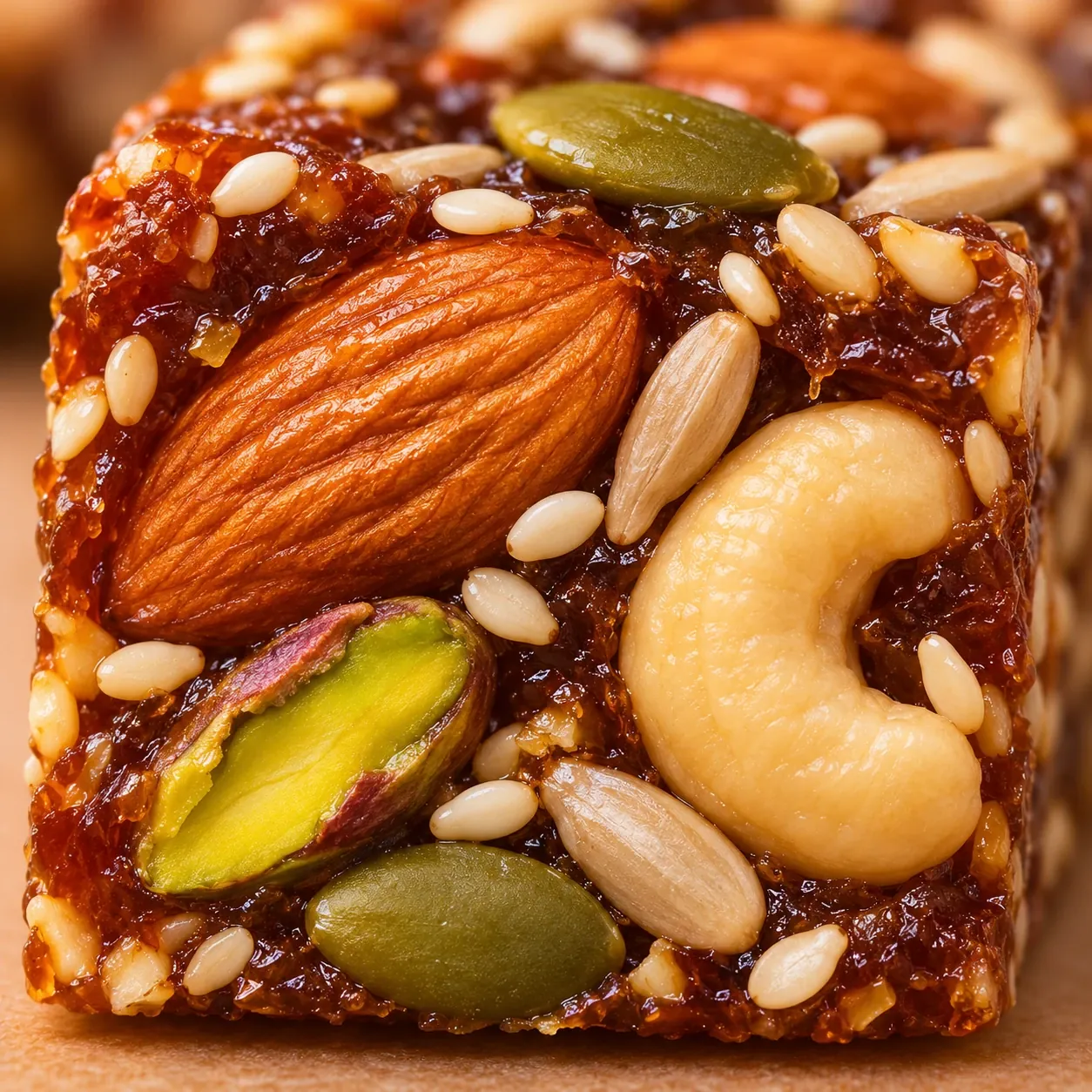
Date & Nut Bars
Held together by dates alone. Whole nuts you can see.