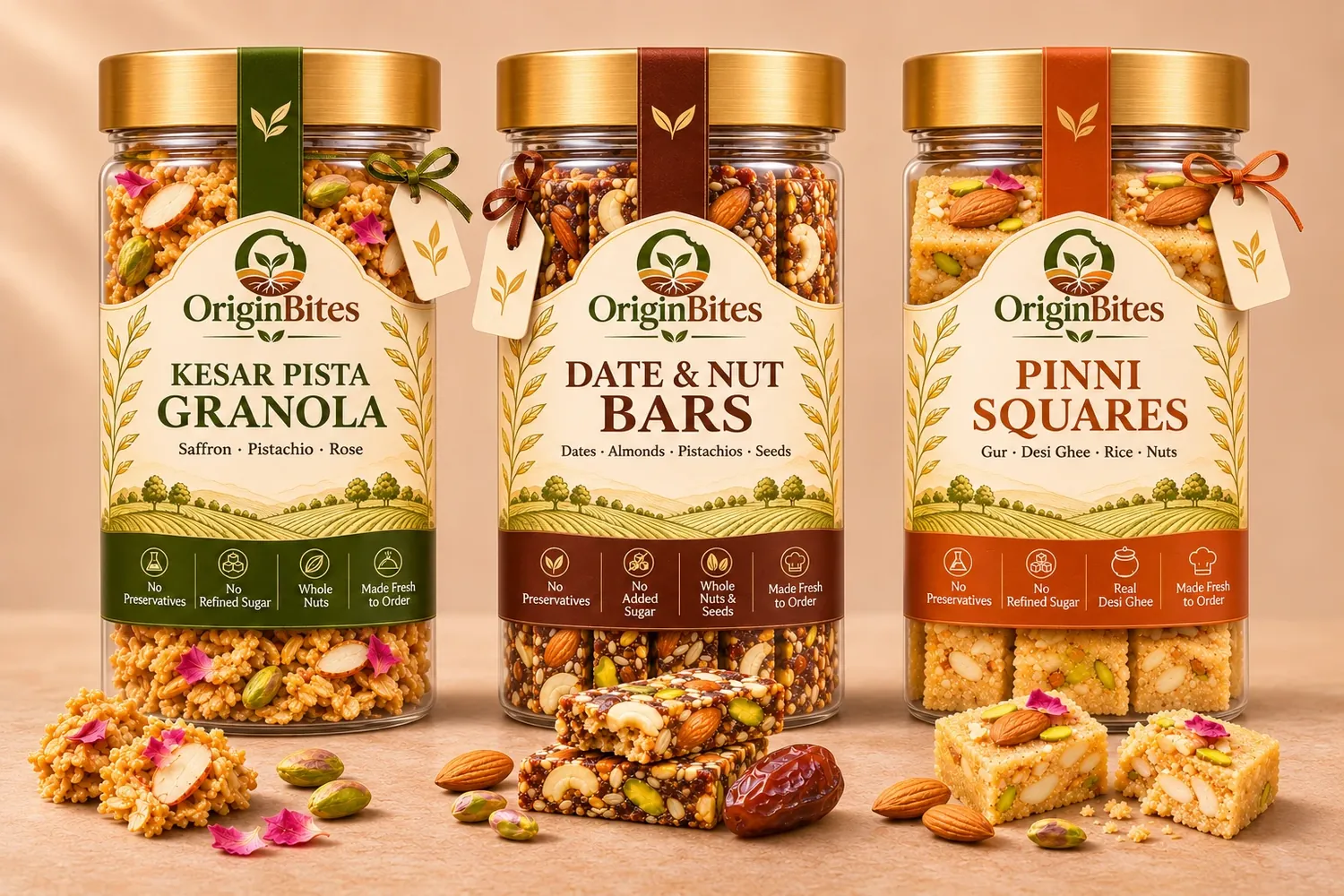
Why food made to order is different from food made for a shelf
Most packaged food is designed to wait: in a warehouse, on a lorry, on a shelf. Food made to order is cooked after you ask for it. Here is what that changes, what it costs, and why we chose it.
Food made to order is cooked after you have asked for it. Food made for a shelf is cooked first, in large quantities, and then waits, in a warehouse, on a lorry, in a shop, until someone buys it. That one difference in timing changes what goes into the food, how it is made, how fresh it is when you eat it, and what it costs.
This article is partly an explanation and partly our own view. We run a made-to-order kitchen, so we are not neutral, and we will say clearly where we are giving an opinion. But the logic of the two systems is worth understanding whichever one you buy from.
The difference in short
- Shelf food is made in bulk, ahead of demand, and must survive months of waiting.
- Made to order is cooked after the order and eaten within days or weeks.
- Shelf life drives many of the ingredients in packaged food.
- Made to order means waiting a few days and, usually, paying in advance.
- Neither is “good” or “bad”; they are built for different purposes.
How shelf food works
A factory makes a product in a large run, perhaps a whole season’s supply at once. The packs go to a warehouse, then to distributors, then to shops in every city. In each place they wait. A biscuit may be many months old on the day it is opened, and that is by design.
This system has real strengths. It is efficient. It keeps prices low. It puts food within reach of nearly everyone, in every town, on any day. Nobody should sneer at that.
But a food that must wait for months has to be designed for waiting. That requirement shapes almost every decision the maker takes.
What a long shelf life asks of food
- Protection against spoilage. Preservatives, or very low moisture, or high sugar or salt, or sealing under special gas.
- Stable fats. Fats that do not turn rancid quickly are preferred, which is one reason hardened and refined fats are so common.
- Flavour that lasts. Real flavours fade. Added flavourings hold steady for the whole life of the pack.
- Colour that lasts. Natural colours dull with time and light. Added colours do not.
- Texture that survives transport. Emulsifiers, stabilisers and thickeners keep things from separating, clumping or going hard.
- Uniformity. Every pack must be identical to the last, so ingredients are standardised and variation is engineered out.
None of this is hidden. It is all on the back of the pack, if you know how to read it. We explain how in how to read a food label in Pakistan. And none of it means the food is unsafe. It means the food was built to last.
How made to order works
In a made-to-order kitchen the sequence is reversed. Nothing is cooked until an order arrives and is confirmed. Then that batch is made, cooled, packed and sent. It reaches the customer within days of being cooked.
Because the food does not have to wait, it does not have to be designed for waiting. That frees the cook to make different choices.
- No need for preservatives. Freshness does the job instead.
- Traditional fats and sweeteners.Desi ghee and gur can be used for their flavour, without worrying how they will behave in a hot warehouse in July.
- Real flavour and colour. Saffron, rose, pistachio and roasted nuts are at their best when fresh.
- Small batches. A cook can watch a single karahi. Nobody can watch a production line the same way.
- Natural variation. One batch may be a shade darker than the last. That is what handmade food is like.
This is how our grandmothers cooked, of course. Nobody made pinni in March for next January. The “new” idea is a very old one.
Side by side
| Made for a shelf | Made to order | |
|---|---|---|
| When it is cooked | Before anyone has bought it | After the order is confirmed |
| Batch size | Very large | Small |
| Age when eaten | Weeks to many months | Days to a few weeks |
| Designed for | Long storage and transport | Eating soon |
| Typical additives | Often preservatives, stabilisers, added flavour and colour | Usually few or none |
| Consistency | Identical every time | Small natural differences |
| Availability | Immediate, everywhere | After a few days, by delivery |
| Price per unit | Lower | Higher |
| Waste | Unsold stock is written off | Very little; only what is ordered is made |
What made to order asks of you
It would be dishonest to present this as all advantage. Made to order asks three things of the customer.
Patience
You cannot have it today. Our own orders reach customers a few days after they are placed, because that time includes making the batch, letting it cool and set, packing it and the courier journey. Pinni and bars need time to set before they can be cut. Granola must cool fully before it is sealed, or it loses its crunch. These steps cannot be hurried without spoiling the food.
Payment in advance
Cash on delivery is the norm in Pakistan, so this needs explaining. If a made-to-order parcel is refused at the door, the food inside cannot be sold to anyone else. It was made for one person. A kitchen that absorbed those losses would either have to raise its prices for everyone or start keeping stock, at which point it is no longer making to order.
Advance payment is what lets a small kitchen cook fresh, in small batches, and waste nothing. We have set out how it works in practice on our how it works page.
A higher price
Small batches, hand work and good ingredients cost more per jar than a factory run. Shelf food spends its money on scale, storage and distribution. Made to order spends it on ingredients and labour. Which is better value depends on what you are looking for.
Waste, and why it matters
There is one more difference that rarely gets mentioned. When food is made ahead of demand, some of it is never sold. It expires on a shelf or in a warehouse and is thrown away. That cost is built into the price of everything else.
When food is made only after it is ordered, there is almost nothing left over. The nuts that go into the karahi are the nuts someone has already asked for. In a country where food is precious, we think that matters.
How to tell how fresh food really is
Whatever you buy, a few habits help.
- Look for the making date. An expiry date alone tells you how long is left, not how old the food already is. The two dates together tell the real story.
- Read the ingredients. A long list of preservatives, stabilisers and flavourings is a sign of a product designed to wait.
- Ask. A small maker should be able to tell you when your food was cooked. If they cannot, it was probably cooked some time ago.
- Use your senses. Fresh nuts and grains smell sweet and taste clean. Stale ones smell of old oil. See how to store nuts and dry fruit for the signs.
- Be wary of the word “fresh”. On a sealed pack made months ago, it means very little.
Where shelf food is the right answer
We want to be fair. There are many situations where long-life food is exactly what is needed: staples such as rice, flour, dal, sugar and tea; food for emergencies and for remote places; anything a family needs to keep in the cupboard for the month. Much of it has a short, simple ingredient list. Tinned tomatoes and dried pasta are shelf foods too.
The question is not “packaged or not?” It is “what was done to this food to make it last, and am I happy with that?” Sometimes the answer is nothing at all. Sometimes it is a great deal.
Why we chose made to order
This part is our opinion. When we began, we could have followed the usual route: make large batches, seal them, and sell them through shops. To do that, our recipes would have needed changing. Gur and ghee would have had to share the jar with things that keep them stable for a year. The saffron’s scent would have faded on the shelf, and we would have been tempted to replace it.
We did not want to make that food. We wanted to make pinni the way it was made at home, and granola that still smells of saffron when the jar is opened. The only way to do that was to cook it shortly before it is eaten.
So every jar of Pinni Squares, Kesar Pista Granola and Date & Nut Bars is made after the order is confirmed. It carries the date it was made. It contains no preservatives, because it does not need them. And it asks you to wait a few days, and to pay first.
That is the trade. We think it is a fair one. You can read more about why we started on our about page, and see everything we cook with on our ingredients page.
Questions to ask any small food maker
“Homemade” and “small batch” are easy words to print. If you are buying from a small business, online or in person, a few questions will tell you how they really work.
- When will my order be made? A true made-to-order kitchen can answer in days.
- Is the making date on the label? If only an expiry date is shown, ask why.
- What exactly is in it? Every ingredient should be named, including the kind of fat and sweetener.
- What allergens does it contain, and what else is made in the same kitchen?
- How should I store it, and what should I do if something is wrong when it arrives?
- Where are you, and how can I reach you? A real address and a way to complain matter.
A maker who answers these plainly is worth supporting. One who avoids them is telling you something as well. We have tried to answer all of them for our own kitchen on our questions page and our delivery and returns page.
An old way of eating
For nearly all of human history, food was made close to the time it was eaten. Preserving was a skill, drying, pickling, salting, and it was used where it was needed. The idea that most of what we eat should be manufactured months in advance is very recent.
Made to order is not a rejection of modern food. It is simply a reminder that there is another way to do it, one our elders would have recognised at once.
Common questions
What does 'made to order' mean?
It means the food is cooked after a customer has placed and confirmed an order, not made in advance and kept in stock. What you receive was made for you, days ago, not months ago.
Is made to order food always better?
Not automatically. It depends on the maker, the ingredients and the care taken. What it does guarantee is that the food has not been sitting in storage, and that it did not need to be designed for a long shelf life.
Why does made to order food take longer to arrive?
Because the cooking happens after you order. The delivery time includes making the batch, letting it cool and set, packing it, and the courier journey.
Why do made to order businesses ask for advance payment?
Food cooked for one customer cannot be sold to another if the parcel is refused. Payment in advance is what makes cooking in small, fresh batches possible without waste.
Does made to order food contain preservatives?
It does not need them in the way long-life food does, though every maker decides for themselves. Read the ingredient list. Ours contain no preservatives.
Is made to order food more expensive?
Often, yes. Small batches, hand work and fresh ingredients cost more per jar than factory production at scale. You are paying for freshness and labour instead of storage and distribution.
How do I know when my food was made?
Look for a making date on the label, not only an expiry date. If it is not shown, ask the seller.
This article is general information about food. It is not medical advice.
Share
Send on WhatsAppKeep reading.
How to read a food label in Pakistan: ingredients, E numbers and dates explained
The back of a food packet tells you far more than the front. Here is how to read the ingredient list, what E numbers really are, how to understand the dates, and which front-of-pack words mean little.
Read the article
What are preservatives, and how was food kept before them?
Preservatives slow the spoiling of food. Some are factory additives with E numbers; others are salt, sugar, oil and sunshine. Here is how they work, which ones you will see on labels, and how our elders kept food without them.
Read the article
The traditional Pakistani breakfast: halwa puri, paratha, nihari and what each region eats
From a quick chai and paratha on a weekday to halwa puri or nihari on a Sunday, breakfast in Pakistan is generous and regional. Here are the classic dishes, where they come from, and how the morning table differs across the country.
Read the articleFrom our kitchen.
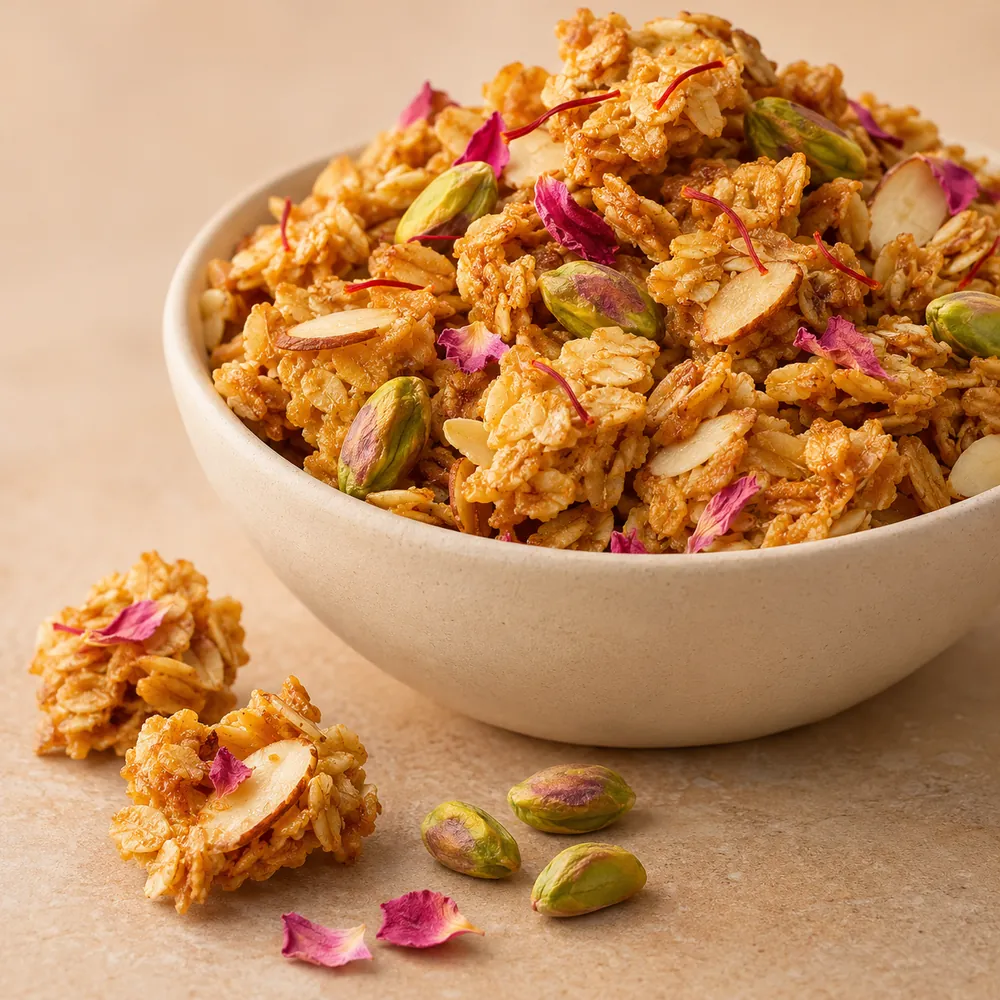
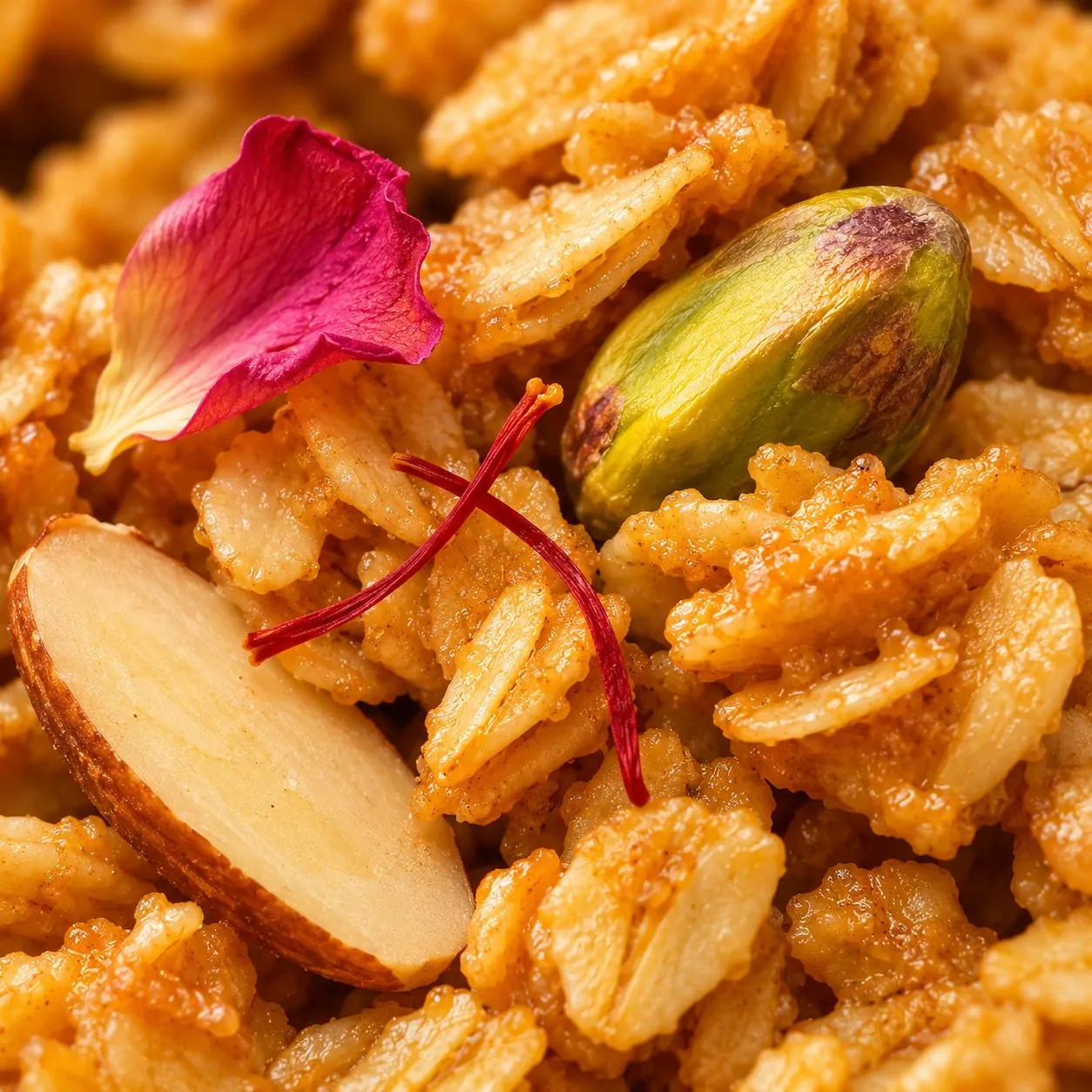
Kesar Pista Granola
Big clusters, not loose oats. Whole pistachios and sliced almonds.


Pinni Squares
Roasted in real desi ghee. Gur, not white sugar.
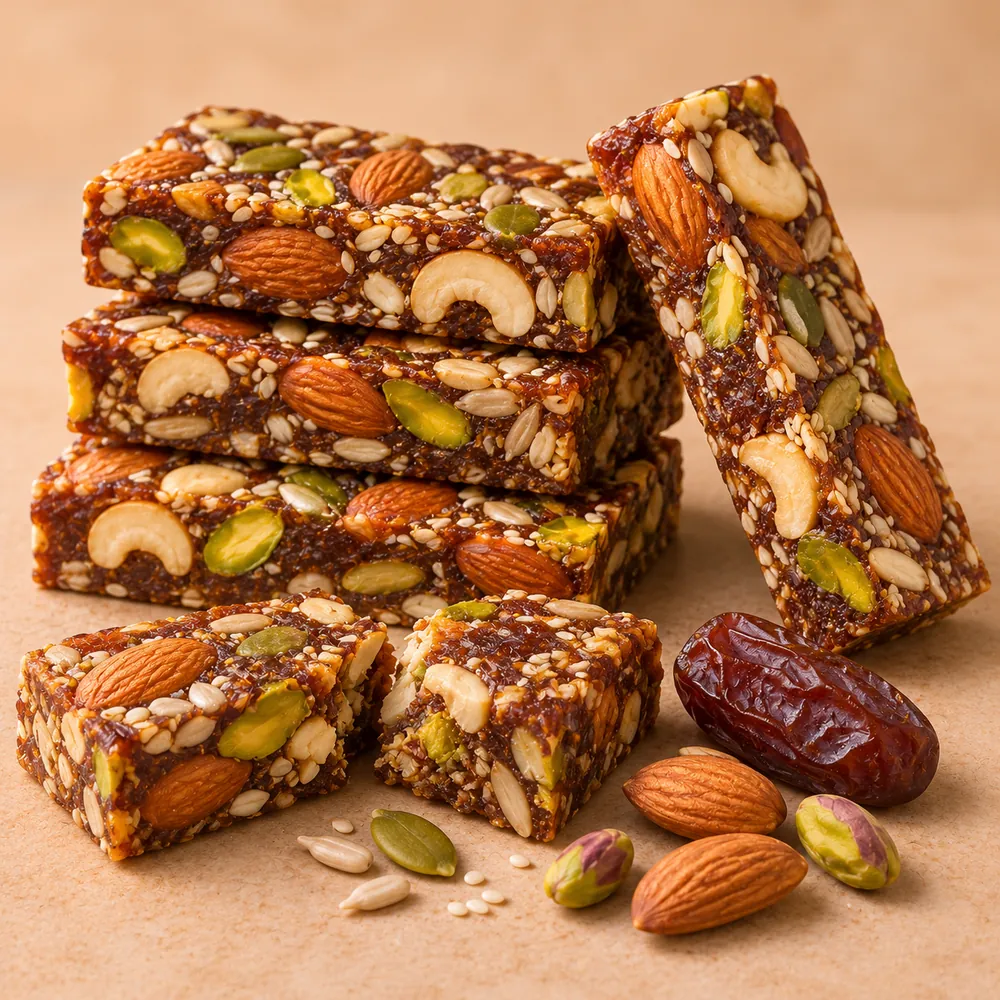
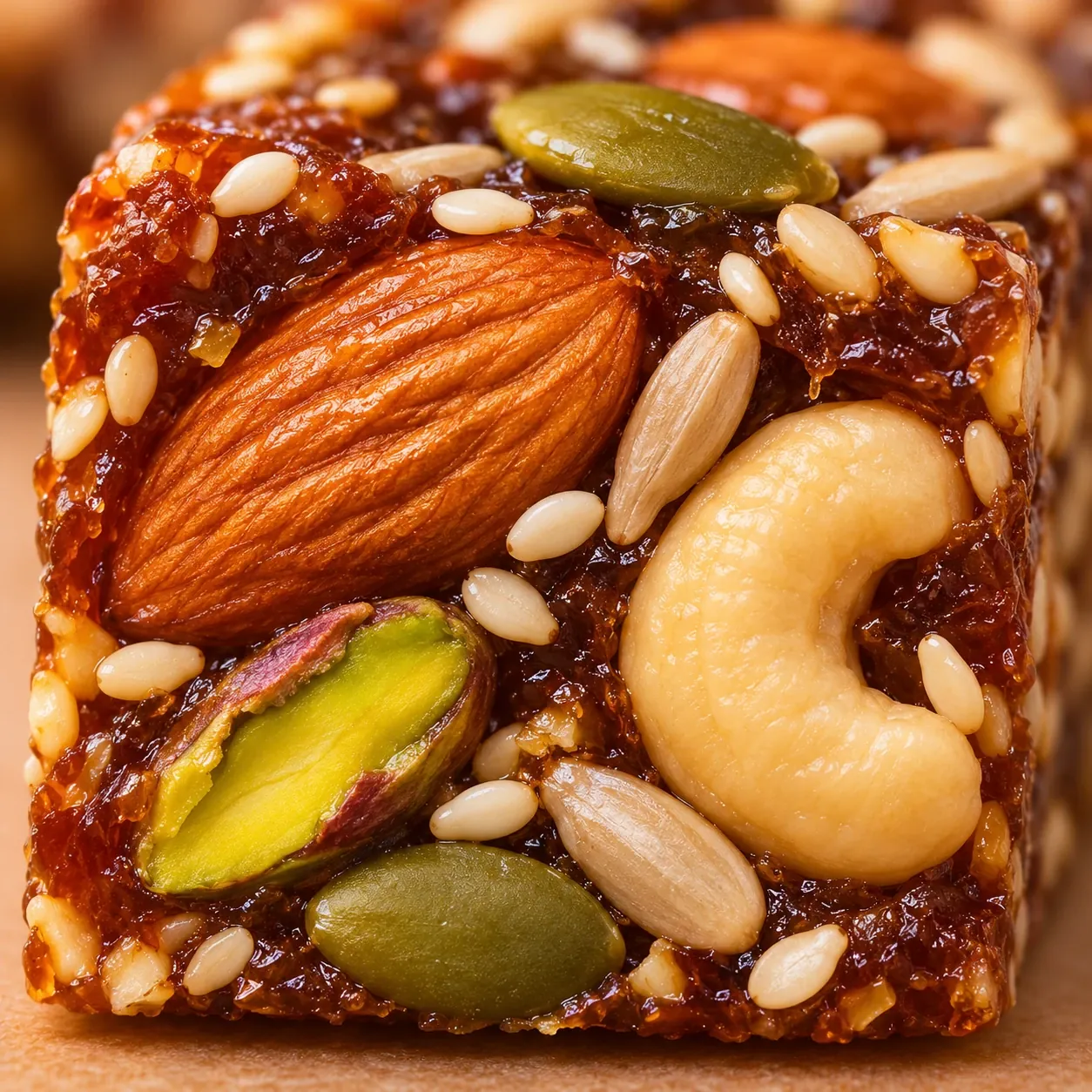
Date & Nut Bars
Held together by dates alone. Whole nuts you can see.