Granola explained: what it is, how it is baked, and how to choose a good one in Pakistan
Granola is oats, nuts and a sweetener baked until crisp. Here is how it is made, why some granola forms clusters, how it differs from muesli, and what to look for on the label.
Granola is a mix of rolled oats, nuts and a sweetener that has been baked until it is golden and crisp. It is eaten for breakfast with milk or dahi, sprinkled over fruit, or simply by the handful. Good granola is crunchy, lightly sweet and full of things you can recognise.
Granola has become common on shop shelves in Lahore, Karachi and Islamabad over the past few years, but most people buying it have never been told what it actually is or how to judge one pack against another. This guide covers what granola is, how it is baked, how it differs from muesli and breakfast cereal, and what to look for when you buy it in Pakistan.
Granola in short
- Rolled oats and nuts, coated in a sweetener and a little fat, then baked.
- The sweetener is also the glue that makes clusters.
- Muesli is the unbaked version. Cereal flakes are a factory product.
- Read the ingredient list: oats and nuts should come first.
- Keep it airtight and dry. Moisture is its only real enemy.
What granola is
Every granola has four parts.
- A grain. Nearly always rolled oats: oat grains that have been steamed and pressed flat. They toast well and hold their shape.
- A sweet binder. Honey, gur, maple syrup, sugar syrup or date syrup. This sweetens the oats and, as it bakes and cools, sticks them together.
- A fat. A little oil, butter or ghee helps the oats crisp and brown evenly.
- The good bits. Nuts, seeds, coconut, spices and, after baking, dried fruit or petals.
The oats are tossed with the warm binder and fat, spread on a tray and baked at a low temperature until dry and golden. As the tray cools, the sugar hardens and the granola turns crunchy.
A short history
Granola began in the United States in the 1860s. A doctor named James Caleb Jackson made a baked, broken-up graham flour food and called it Granula. A few years later John Harvey Kellogg made something similar and, after a dispute over the name, called his version Granola. It faded for decades and came back strongly in the 1960s and 70s as a “natural” breakfast made with oats, honey and nuts. That oat-based version is the one the world knows today.
So granola is not a desi food. But the idea behind it, grain toasted with a sweetener, fat and nuts, is very familiar to anyone who has eaten panjiri. That is why flavours from our own kitchens, saffron, pistachio, cardamom, rose and gur, sit so naturally in it.
How granola is baked
Mixing
The dry ingredients, oats, chopped nuts and seeds, go into a large bowl. The binder and fat are warmed together until runny. This matters with gur and honey in particular: warm, they coat every oat thinly and evenly. The liquid is poured over and everything is turned until no dry oats remain.
Spreading
The mixture is spread on a lined tray. For loose granola it is spread thin. For clusters it is pressed down firmly into an even slab, so the oats are touching and can stick to each other.
Baking low and slow
Granola is dried as much as it is baked. A low oven for a longer time gives an even golden colour right through. A hot oven burns the edges and the sugars before the middle is dry. Honey and gur both brown quickly, so they need watching.
Cooling without touching
This is the step that makes or breaks clusters. Granola comes out of the oven still soft. It only becomes crisp as it cools, because the melted sugar sets hard. If the tray is left completely alone until cold, the slab can be broken into large pieces. If it is stirred while warm, it falls into loose crumbs.
Adding the delicate things
Dried fruit, rose petals and saffron-soaked liquid do not like long baking. Fruit turns hard and bitter. So they are usually added in the last minutes or after the granola has cooled.
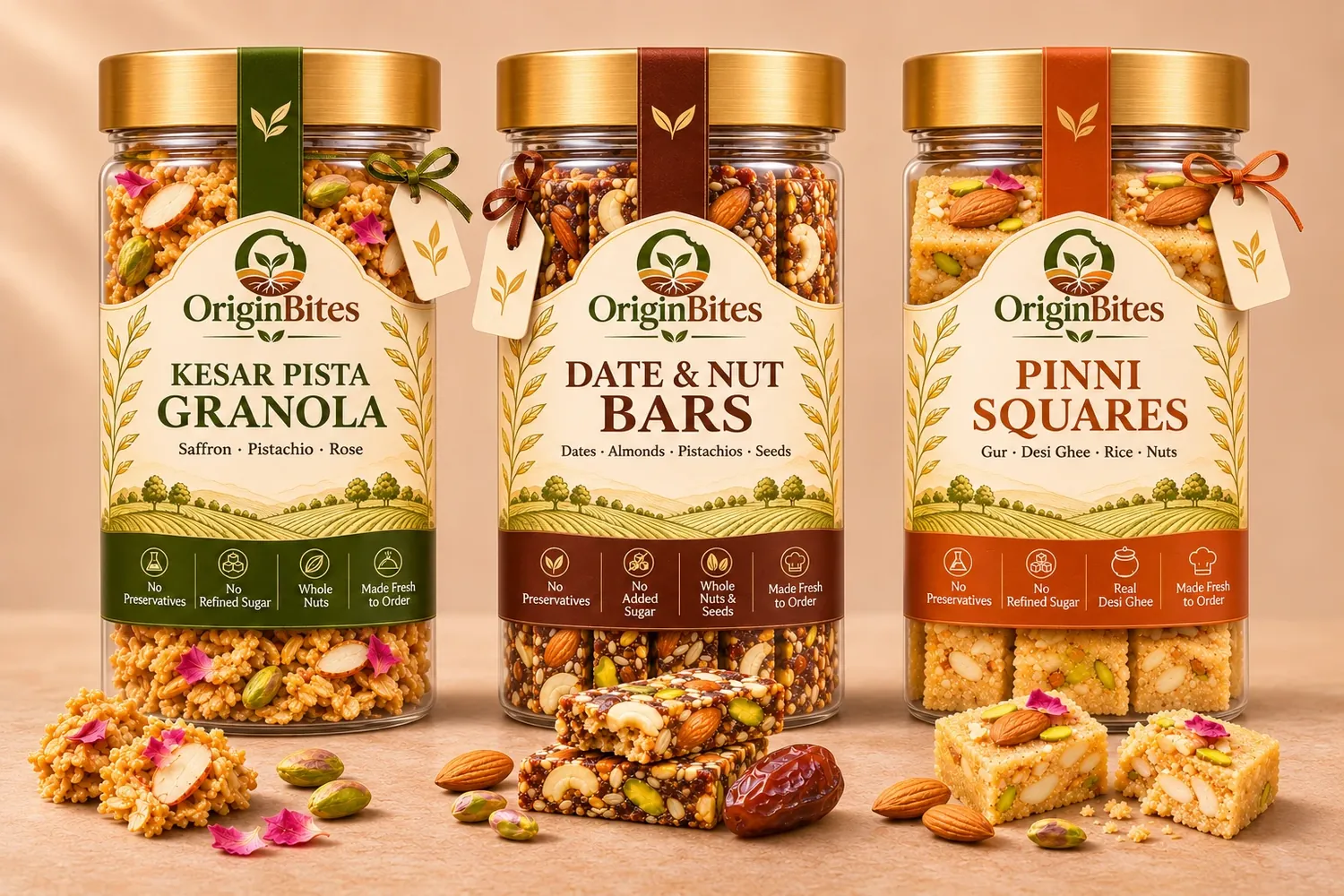
This is how we make our own Kesar Pista Granola: oats mixed with melted gur and honey, baked low, left alone to set into big clusters, then finished with real saffron, whole pistachios, sliced almonds and rose petals.
Granola, muesli and cereal: the difference
| Granola | Muesli | Breakfast cereal flakes | |
|---|---|---|---|
| Main grain | Rolled oats | Rolled oats and other raw grains | Corn, wheat or rice, milled and shaped |
| Cooked? | Baked with sweetener and fat | Not baked | Cooked, rolled or extruded in a factory |
| Texture | Crisp, often in clusters | Loose and chewy | Thin and crisp, softens fast in milk |
| Sweetness | From the binder | Mostly from dried fruit | Varies widely |
| Usual way to eat | With milk or dahi, or dry | Soaked in milk or dahi | With milk |
None of these is “better” in itself. They are different foods. Granola is the richest of the three, because of the nuts, fat and binder, which is also why a small bowl is filling.
How to choose granola in Pakistan
Packs look similar from the front. Turn them over. Ingredients are normally listed from the largest amount to the smallest, so the first three or four tell you most of what you need to know. Our guide to reading food labels explains this in detail.
- Oats and nuts first. If sugar or glucose syrup is the first or second ingredient, you are buying mostly sweetener.
- Named nuts, in real amounts. “Nuts” tells you nothing. Almonds, pistachios and walnuts, visible through the pack, tell you a lot. Tiny chopped specks are a way of using very little.
- A short list. Oats, nuts, sweetener, fat, spices. Long lists with flavourings, colours and preservatives mean the product was designed for a long shelf life.
- The kind of fat. Look for which oil or fat is used and decide whether you are happy with it.
- Freshness. Nuts and oats go stale. Check the manufacturing date, not only the expiry date. Granola made recently simply tastes better.
- Clusters or loose. This is preference. Clusters are better for eating by hand and stay crisp longer in milk.
Much of the granola in Pakistani supermarkets is imported, which means it was made months before you open it. Small local makers are a good alternative because their batches are fresher. We go a step further and bake only after you order.
How to store it
Granola goes soft when it meets moisture, and it goes stale when the fats in the nuts and oats are exposed to air, heat and light for too long.
- Keep it in an airtight jar, not an open or loosely folded bag.
- Store the jar in a cool, dry cupboard away from the stove, the kettle and the window.
- Use a dry spoon and close the lid straight away. This matters most in the monsoon months.
- Granola does not need a fridge. A fridge can add moisture each time the jar is opened.
- If it has softened but smells fine, a few minutes in a low oven will crisp it again. If it smells like old oil or paint, the nuts have turned and it should be thrown away.
The same rules apply to all nuts and dry fruit. See how to store nuts and dry fruit at home.
How to eat granola
The classic bowl is granola with cold milk, poured at the last moment so the clusters stay crisp. But in a Pakistani kitchen there are better ideas.
- A few spoons over thick, cold dahi with a thin line of honey.
- Scattered over sliced banana, mango, apple or chikoo.
- Layered in a glass with dahi and fruit for guests.
- Over warm kheer or firni for crunch.
- By the handful with evening chai.
There are more ideas in ten ways to eat granola that are not a bowl of milk.
Making granola at home
Granola is one of the easiest things to bake. For a first batch, mix three cups of rolled oats with one cup of roughly chopped nuts and a pinch of salt. Warm about a third of a cup of honey or melted gur with three tablespoons of oil or ghee until runny, and stir it through the oats. Press the mixture onto a lined tray and bake in a low oven, turning the tray once, until evenly golden. Leave it on the tray until completely cold, then break it up.
The first batch teaches you your oven. If the edges darken too fast, lower the heat next time. If it will not hold together, use a little more binder and press harder. Everything else is a matter of taste.
Common mistakes with granola
- Judging by the front of the pack. Pictures of nuts and fruit do not tell you how much is inside. The ingredient list does.
- Pouring it like cornflakes. Granola is far denser than puffed or flaked cereal. Start with a few tablespoons.
- Adding milk too early. Pour at the table and eat at once.
- Leaving the bag open. A folded bag is not airtight. Move granola to a jar the day you open it.
- Baking too hot at home. The outside burns while the middle stays soft. Low heat and patience give an even colour.
- Stirring while it cools. This is the usual reason homemade granola has no clusters.
- Adding dried fruit before baking. It turns hard and bitter. Add it afterwards.
- Using old oats or nuts. Baking does not hide staleness; it makes it more obvious.
Most of these mistakes come from treating granola like ordinary cereal. Once you think of it as a baked mix of oats and nuts that must be kept dry and eaten in small amounts, nearly all of them disappear.
A few words explained
- Rolled oats: whole oat grains steamed and pressed flat. The standard oat for granola.
- Instant or quick oats: rolled thinner and cut smaller. They go powdery in granola.
- Steel-cut oats: chopped, not rolled. Too hard for granola; they are for porridge.
- Binder: the sticky sweetener that holds the oats together.
- Clusters: the large pieces that form when granola is pressed, baked and cooled undisturbed.
Granola with a Pakistani accent
Most granola sold here follows foreign flavours: cranberry, maple, chocolate chip. They are fine, but they are not ours. Kheer, kulfi and zarda already taught us which flavours belong with grain and milk. Saffron, pistachio, cardamom and rose are not exotic additions in a Pakistani breakfast bowl. They are the obvious ones.
That thought is the whole reason our granola exists. If you would like to know more about the saffron in it, read how saffron is grown and how to spot a fake.
Common questions
What is granola made of?
Rolled oats, a sweetener that also acts as glue (honey, gur or syrup), a little fat, and nuts or seeds. Dried fruit, spices and flavours are added after or during baking.
What is the difference between granola and muesli?
Granola is baked with a sweetener and fat, so it is crisp and golden and often forms clusters. Muesli is a loose, unbaked mix of raw oats, nuts and dried fruit, usually soaked or eaten with milk.
Is granola a healthy breakfast?
That depends on the recipe and the portion, and it is not a claim we make. Granola is an energy-dense food made of oats, nuts and a sweetener. Read the ingredient list and eat an amount that suits you.
Why does my granola not form clusters?
Clusters need enough sticky binder, firm pressing on the tray, a low oven, and no stirring at the end. Most importantly, the granola must cool completely on the tray before it is broken up.
How do I keep granola crisp?
Let it cool fully, then store it in an airtight jar in a cool, dry cupboard. Moisture is what makes it soft, so keep the lid closed and use a dry spoon. It does not need a fridge.
Is granola gluten-free?
Not unless the pack says so and names certified gluten-free oats. Ordinary oats are often handled alongside wheat. Our own granola is made in a kitchen that also handles other grains, so we do not call it gluten-free.
Can I eat granola without milk?
Yes. It is good on dahi, over fruit, layered in a glass, or eaten by the handful as a snack.
This article is general information about food. It is not medical advice.
Share
Send on WhatsAppKeep reading.
How to store nuts and dry fruit at home so they stay fresh
Nuts go stale because of heat, light, air and damp. Here is how to keep almonds, pistachios, walnuts, cashews and dates fresh through a Pakistani summer and monsoon, and how to tell when they have turned.
Read the article
Date and nut bars: what goes in them and how to make them at home
A date and nut bar is soft dates pressed around nuts and seeds, with nothing else needed to hold it together. Here is how it works, which Pakistani dates to use, and a simple recipe for home.
Read the article
Ten ways to eat granola that are not a bowl of milk
Granola is not only for a bowl of cold milk. Here are ten ways to eat it that suit a Pakistani kitchen, from thick dahi and seasonal fruit to kheer, lassi and a paratha roll, with tips to keep the crunch.
Read the articleFrom our kitchen.
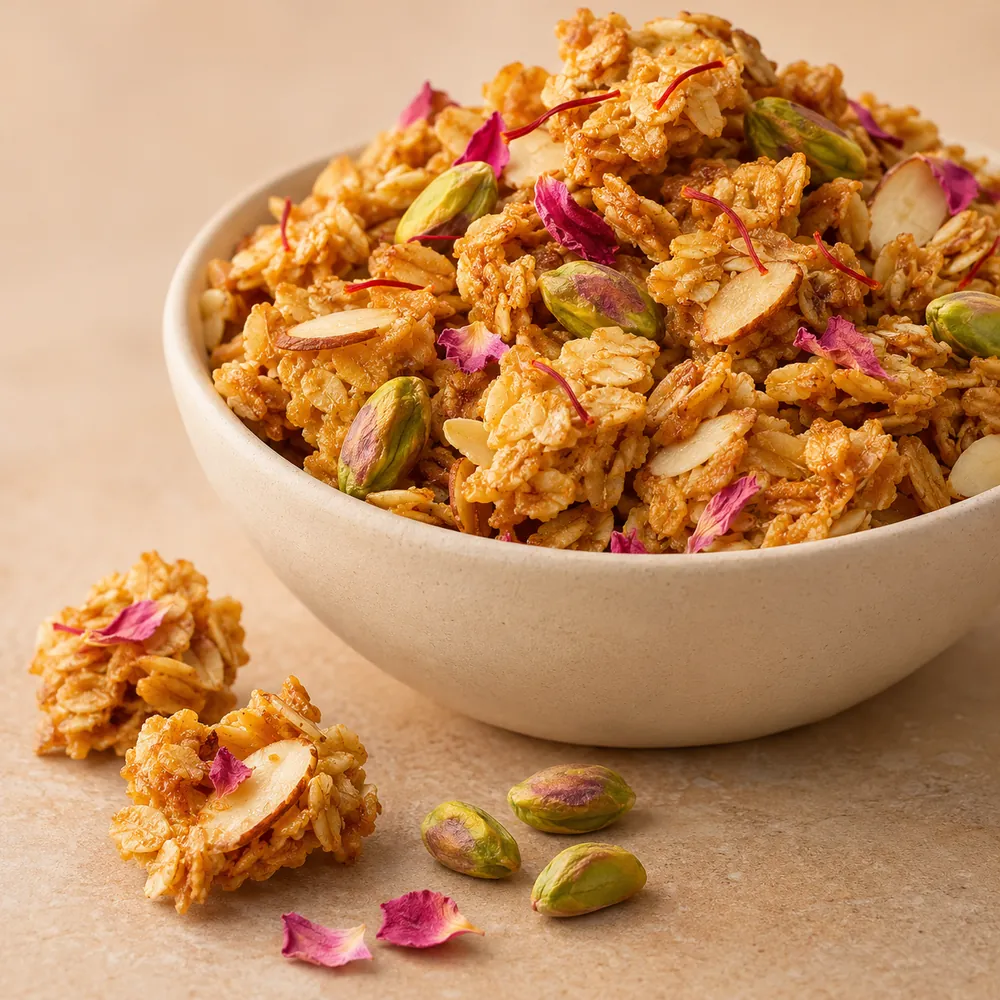
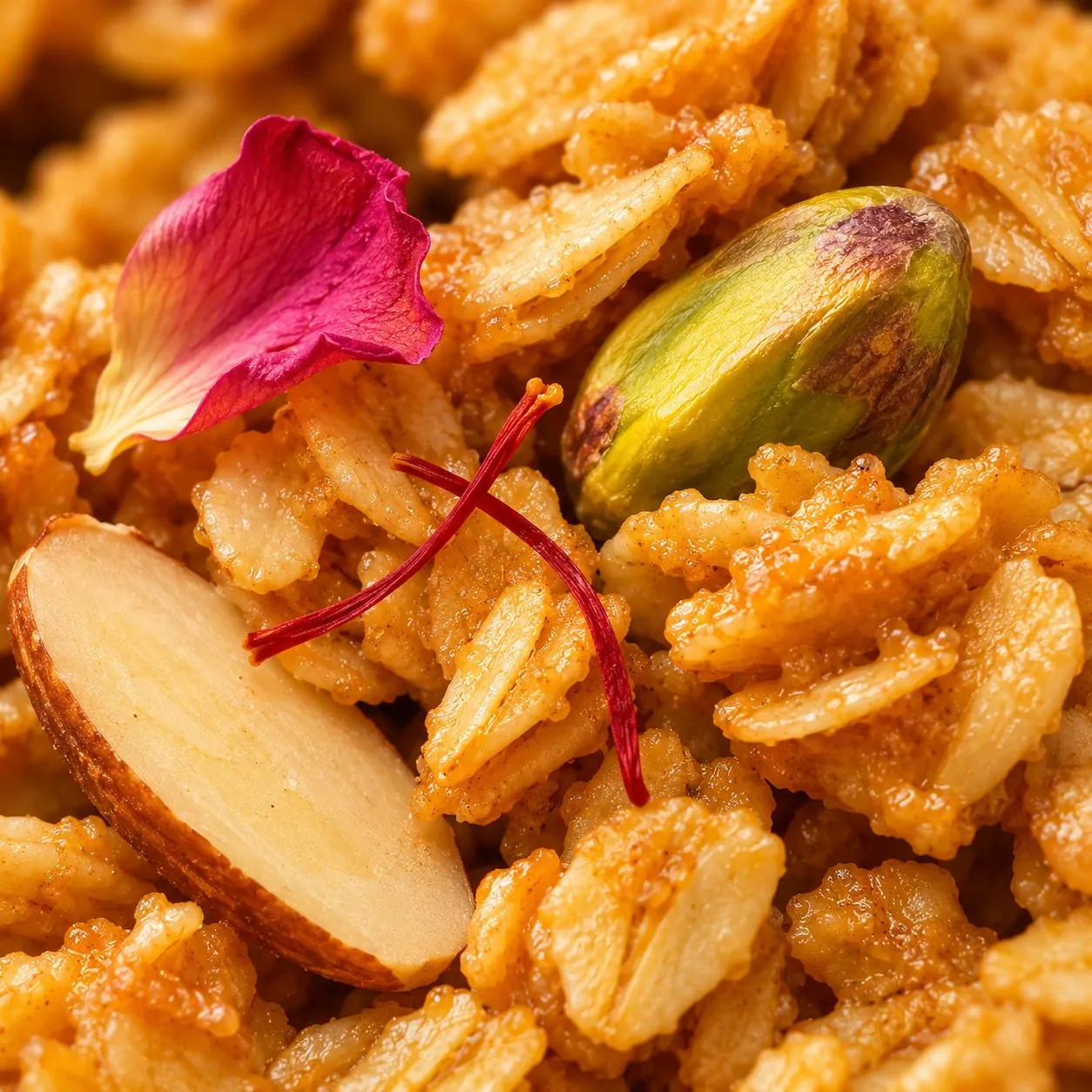
Kesar Pista Granola
Big clusters, not loose oats. Whole pistachios and sliced almonds.


Pinni Squares
Roasted in real desi ghee. Gur, not white sugar.
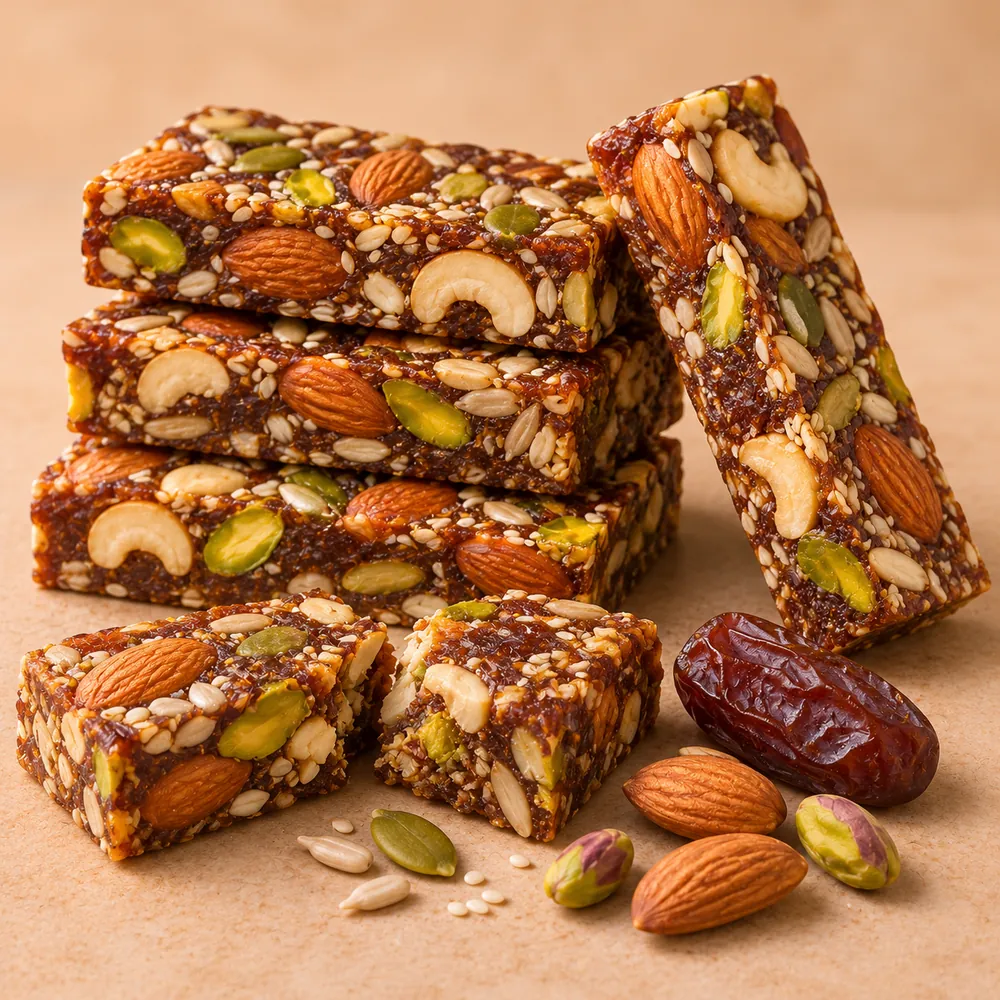
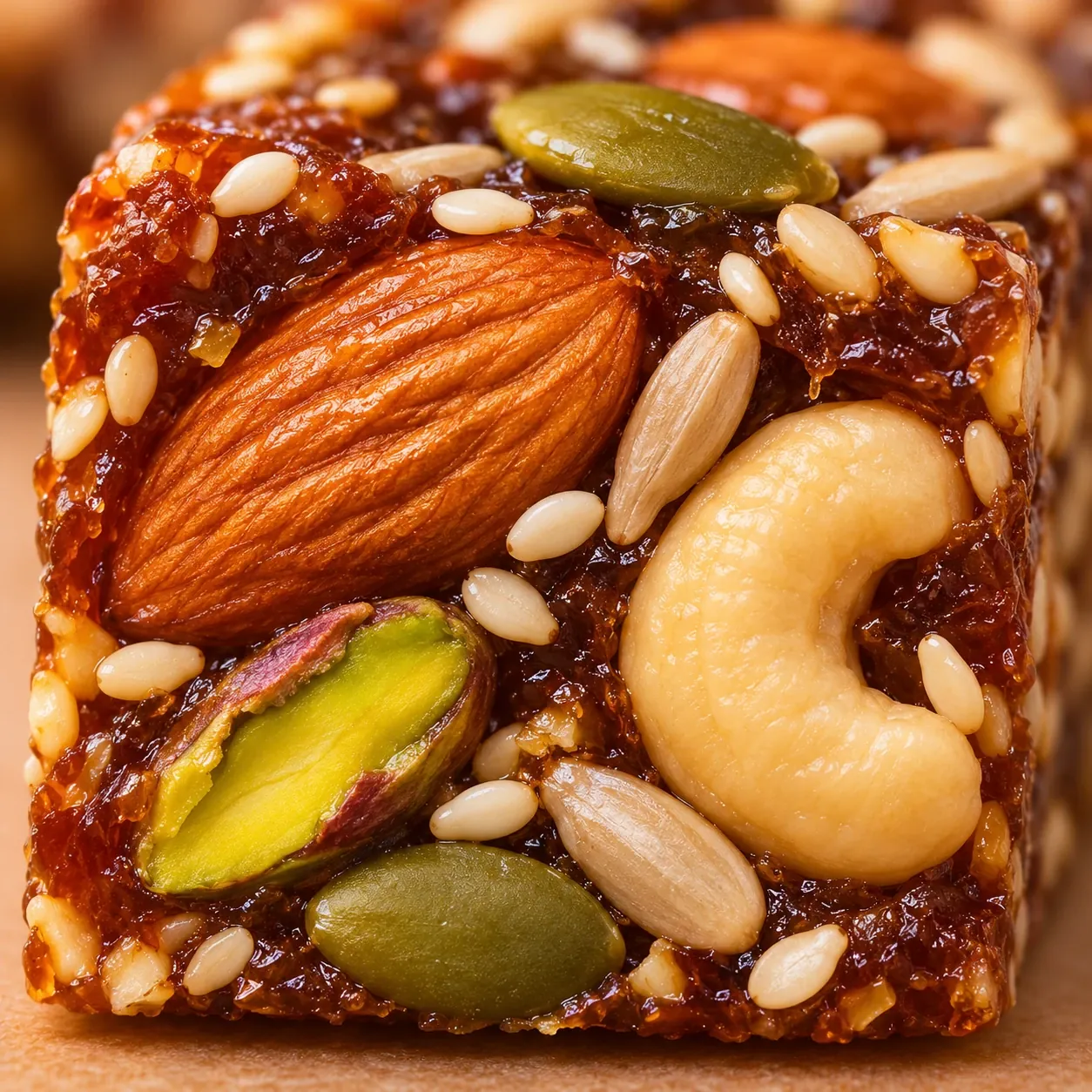
Date & Nut Bars
Held together by dates alone. Whole nuts you can see.