What is gur? How it is made, its kinds, and how to choose good gur in Pakistan
Gur is sugarcane juice boiled down until it sets, with nothing taken out. Here is how it is made in Pakistan, the kinds you will meet in the bazaar, and how to pick and keep a good one.
Gur is sugarcane juice that has been boiled until it turns thick and then left to set. Nothing is taken out of it and, when it is made properly, very little is added. That is the whole idea. In English it is called jaggery, but in a Pakistani kitchen it has always simply been gur, and it has been on the table far longer than the white sugar that later took its place.
This guide explains what gur is, how it is made in the villages of Punjab and Khyber Pakhtunkhwa, the different kinds you will see in the bazaar, how to tell a good block from a poor one, and how to keep and cook with it at home. It is written for people who buy and eat gur, not for chemists, so it stays with what you can see, smell and taste.
Gur in short
- Gur is whole sugarcane juice, boiled down and set. In English: jaggery.
- It is still sugar. It is chosen for its taste and its place in desi cooking.
- It comes as blocks (gur, bheli), small pieces (rori) and powder (shakkar).
- Natural gur is golden to brown. Very pale, bright gur has usually been treated.
- Keep it airtight, cool and dry. It soaks up damp from the air.
What gur is
Sugarcane juice is mostly water and sugar, with a small amount of everything else the plant carries. To make white sugar, a mill separates the pure sugar crystals and removes the dark syrup around them. To make gur, nobody separates anything. The juice is cleaned, boiled until most of the water has gone, and poured out to cool. What sets in the mould is the whole juice in solid form.
That is why gur is brown and white sugar is white, and why gur tastes of caramel and cane while white sugar tastes only sweet. It is also why two blocks of gur from two villages never taste quite the same. The cane, the soil, the fire and the hand of the person at the pan all leave their mark.
Gur is not only made from sugarcane. In other parts of South Asia it is also made from the sap of date palms and other palms. In Pakistan, though, when someone says gur they almost always mean cane gur, and that is the kind this article is about.
How gur is made in Pakistan
Gur making is a winter job. Cane is cut from late autumn onwards, and from then until early spring you can see smoke rising from small gur units, often called a gur gaanh or simply a karahi, at the edge of the fields. The method has changed very little.
Pressing the cane
Freshly cut cane is fed through a crusher. In the past the crusher, called a belna, was turned by a pair of bullocks walking in a circle. Today it is usually driven by a small engine or a tractor. The pale green juice runs into a tank and the crushed stalks, called bagasse, are spread in the sun to dry. Nothing is wasted: the dried stalks become the fuel for the fire.
Boiling and skimming
The juice is poured into a wide, shallow iron pan set over a furnace dug into the ground. As it heats, a grey-brown scum rises to the top. A worker skims this off again and again with a long-handled ladle. This step decides the quality of the gur more than any other. Juice that is skimmed patiently gives a cleaner, better-tasting block.
Traditionally the juice is cleared with something natural. In many areas the mucilage of wild okra stalks, known as sukhlai, is stirred in. It gathers the fine dirt so that it can be lifted out with the scum. Some makers use other things to get a paler colour, and that is where the trouble with modern gur begins. We come back to it below.
Thickening and setting
The boiling goes on for two to three hours. The juice darkens, the bubbles grow slow and heavy, and the smell changes from grassy to deep caramel. The maker tests it by dropping a little into cold water. When it forms a firm ball, it is ready.
The thick syrup is then poured into a flat wooden or cement tray and worked with a wooden paddle as it cools. This beating is what gives gur its fine, slightly crumbly grain. While it is still warm and soft it is scooped into moulds or shaped by hand into the familiar domes and balls. If the makers want shakkar, they keep stirring and rubbing until the mass breaks into powder.
The kinds of gur you will find
Walk through any bazaar in winter and you will be offered several things that are all, in the end, the same food in different shapes.
| Name | What it is | Best for |
|---|---|---|
| Gur (bheli, pesi) | Solid block or dome, golden to dark brown | Everyday use, chai, cooking, eating after a meal |
| Rori or small gur | Small balls or cubes, easy to portion | Serving at the table, chai |
| Shakkar | Soft, grainy powder made by stirring gur as it cools | Pinni, panjiri, parathas, sprinkling over rice or dahi |
| Desi khand | Coarser, lighter crystals made by partly draining the syrup | Sherbets, lighter sweets |
| Masala or nut gur | Gur set with peanuts, sesame, coconut, saunf or dry fruit | A winter sweet on its own |
| Rab or kakvi | Thick liquid gur, taken off the fire before it sets | Eating with roti, making sweets |
Charsadda, Mardan and the Peshawar valley are famous for their gur, and “Peshawari gur” is asked for by name in shops across the country. Punjab’s cane districts and upper Sindh make large amounts as well. If you have a favourite, it is probably the one you grew up with.
How to choose good gur
There is no laboratory in your kitchen, and no simple home test can prove that gur is pure. What you can do is use your eyes, hands, nose and tongue, the way people always have.
- Look at the colour. Natural gur ranges from honey gold to deep brown. Be careful with gur that is very pale, almost white-yellow and unusually bright. That look is often produced with bleaching chemicals or added powders, because many buyers wrongly think lighter means cleaner.
- Feel it. A good block is firm and dry on the outside and breaks with a clean, slightly grainy face. Gur that is soft, wet or sticky in dry weather has too much water in it or has been stored badly.
- Smell it. It should smell warm, like caramel and fresh cane. A sour, fermented or chemical smell is a reason to walk away.
- Taste a little. The sweetness should be round and deep, perhaps with a faint smoky or mineral edge. A sharply salty or bitter taste, or a gritty feel on the teeth, suggests poor skimming or something added.
- Ask where and when it was made. Fresh-season gur from a maker the shopkeeper knows is your best guarantee. Good shops are happy to tell you.
The light gur we use in our own kitchen is chosen in exactly this way, batch by batch. You can read about it, and about everything else we cook with, on our ingredients page.
How to store gur
Gur draws moisture from the air. Left open in a humid kitchen, and especially through the monsoon, a hard block will turn soft, then sticky, and may finally start to ferment or grow mould. Storing it well is simple.
- Break large blocks into pieces you will actually use, so you are not opening the whole lot every time.
- Put the pieces in an airtight glass jar or steel tin. A layer of butter paper between pieces stops them sticking together.
- Keep the jar in a cool, dark cupboard, away from the stove and the sink.
- Always use a dry spoon or dry hands.
- In very humid weather, the fridge is fine. Let the jar come to room temperature before opening it, so water does not form on the gur.
If gur has hardened into a rock, a few seconds of gentle warming or a quick grate will bring it back. If it smells sour or shows mould, throw it away.
Cooking with gur
Gur does things in cooking that white sugar cannot. It brings colour and a deep, toffee-like taste, and because it holds on to a little moisture, sweets made with it stay softer for longer.
- In chai. Gur wali chai is a winter habit across Punjab. Add the gur at the end, off the boil, because adding it early can make the milk split.
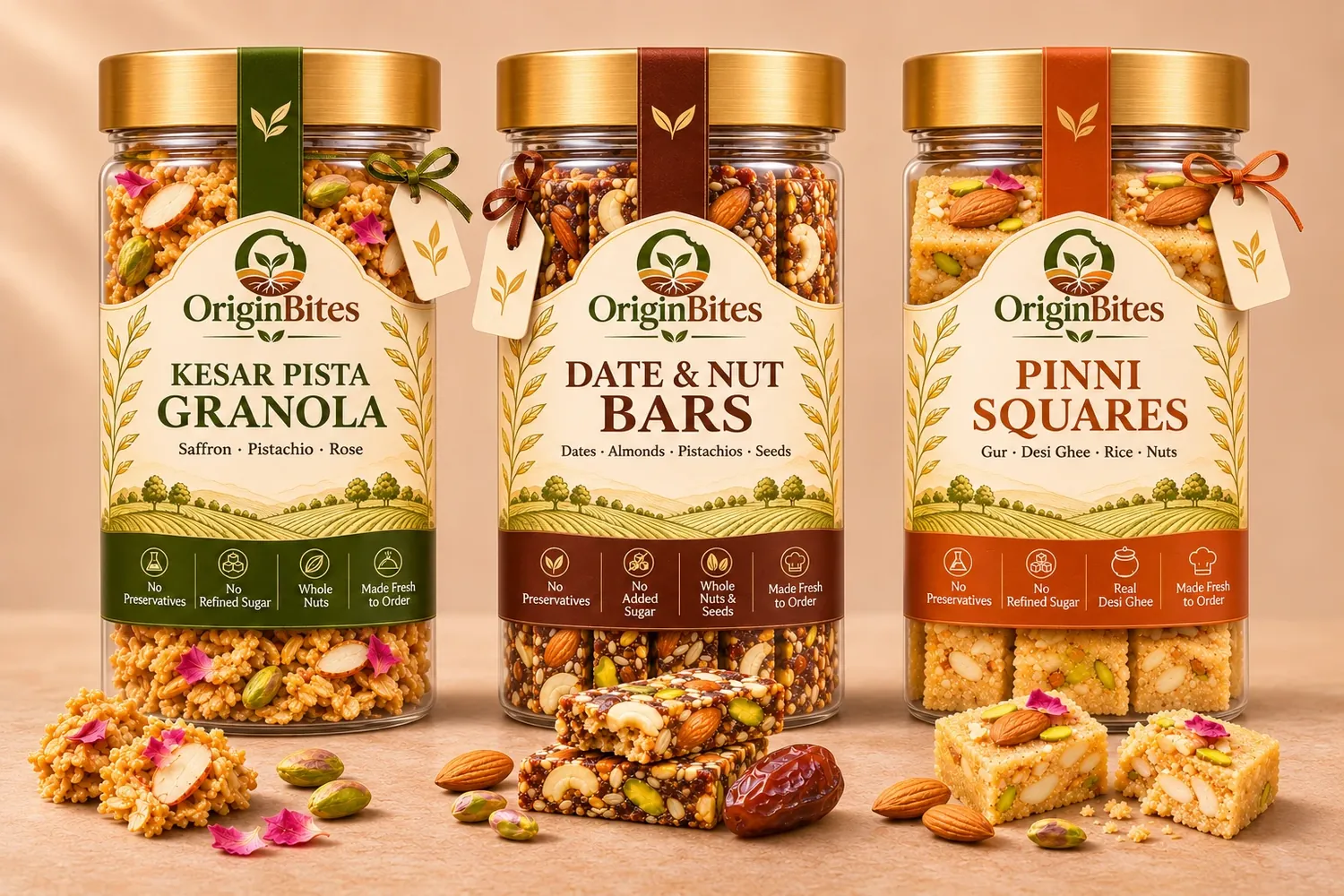
- In winter sweets. Pinni, panjiri, gajak, rewri and til ke laddu all depend on it. Our own Pinni Squares are sweetened with light gur melted into rice flour that has been roasted in desi ghee.
- With rice. Gur walay chawal, sweet rice cooked with gur, fennel and coconut, is a classic for guests.
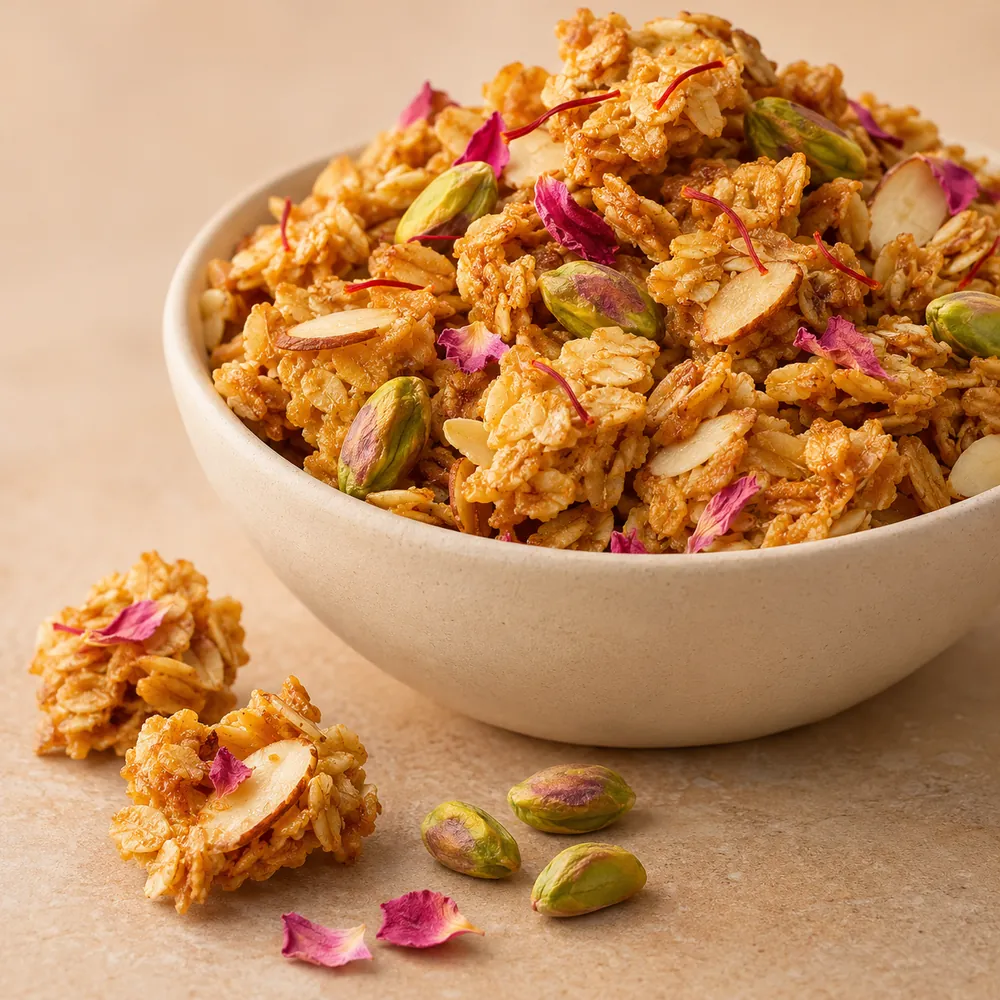
- In baking. Gur works well in anything that welcomes a caramel note. In our Kesar Pista Granola, melted gur and honey are what bind the oats into large clusters.
- In savoury food. A small piece balances sourness in imli chutney, achar and some dals, the way a pinch of sugar would.
When you replace white sugar with gur in a recipe, grate or chop it first and melt it gently with a spoonful of water. Strain the syrup if you see any specks. Start with the same weight as the sugar and adjust to taste.
Gur and white sugar are not opposites
It is common to hear that gur is “healthy” and sugar is “unhealthy”. That is not a claim we make. Gur is a sugar, and it should be eaten with the same sense as any other sweet thing. What is true is that it is a less processed food with a taste of its own, and that it belongs to a way of cooking that is worth keeping. We have written a separate, side-by-side comparison in gur and white sugar: how they differ.
Why gur still matters
For most of our history, gur was the sweetener of the subcontinent. It was made in the village, from the village’s own cane, and eaten within the year. A piece after lunch, a lump dropped into warm milk, shakkar folded into a hot paratha with ghee: these were ordinary pleasures, and they tied the kitchen to the field outside.
White sugar is cheaper, easier to store and easier to measure, and it has pushed gur to the edge of the table. But every winter the karahis are lit again, and people who know the taste go looking for it. Choosing gur is not a medical decision. It is a choice about flavour, about craft, and about keeping a food alive that our elders understood very well.
If you want to see what gur becomes in a traditional sweet, read our guide to pinni, the winter sweet of Punjab.
Common questions
Is gur the same as jaggery?
Yes. Jaggery is the English word for gur. In Pakistan the same food is also sold as shakkar when it is in powder form, and as bheli or rori when it is in blocks.
Is gur a kind of sugar?
Yes. Gur is made from sugarcane juice and is mostly sugar. It differs from white sugar in how it is made and how it tastes, not in being sugar-free. Anyone who has been told to limit sugar should treat gur the same way.
Why is some gur dark and some light?
Colour depends on the cane, how long the juice is boiled, how carefully it is skimmed, and whether anything was added to lighten it. Very pale, bright yellow gur has often been treated to look that way. A natural golden to brown colour is normal.
Which areas of Pakistan are known for gur?
Gur is made across the sugarcane belt. Charsadda, Mardan and Peshawar in Khyber Pakhtunkhwa are especially well known for it, and it is also made widely in central and southern Punjab and in Sindh.
How should I store gur at home?
Keep it in an airtight jar or tin in a cool, dry cupboard. Gur pulls water from the air, so in humid weather it turns soft and sticky if left open. Do not store it next to the stove.
Can I use gur in place of sugar in cooking?
In most desi sweets, chai, sauces and baking, yes. Gur adds its own caramel taste and a darker colour, and it holds a little more moisture, so results will not be identical to white sugar.
What is the difference between gur and shakkar?
They are the same product in two forms. Gur is poured into moulds and sets as a solid block. Shakkar is stirred and rubbed as it cools so it breaks into a soft, grainy powder.
This article is general information about food. It is not medical advice.
Share
Send on WhatsAppKeep reading.

Saffron (kesar): how it is grown, why it costs so much, and how to identify real saffron
Saffron is the dried threads of a small purple flower, picked by hand. Here is why it is the most expensive spice, how fakes are made, what real kesar looks and smells like, and how to use it well.
Read the article
Gur and white sugar: how they differ in making, taste and cooking
Gur and white sugar begin as the same cane juice and end as two very different foods. Here is an honest comparison of how each is made, how it tastes, how it cooks, and what the difference does and does not mean.
Read the article
Almonds, pistachios, cashews and walnuts: a dry fruit buying guide for Pakistan
Dry fruit is expensive and quality varies widely. Here is how to judge almonds, pistachios, cashews, walnuts and chilgoza in a Pakistani bazaar: the kinds, the grades, the tricks, and five checks that work on all of them.
Read the articleFrom our kitchen.
Kesar Pista Granola
Big clusters, not loose oats. Whole pistachios and sliced almonds.


Pinni Squares
Roasted in real desi ghee. Gur, not white sugar.
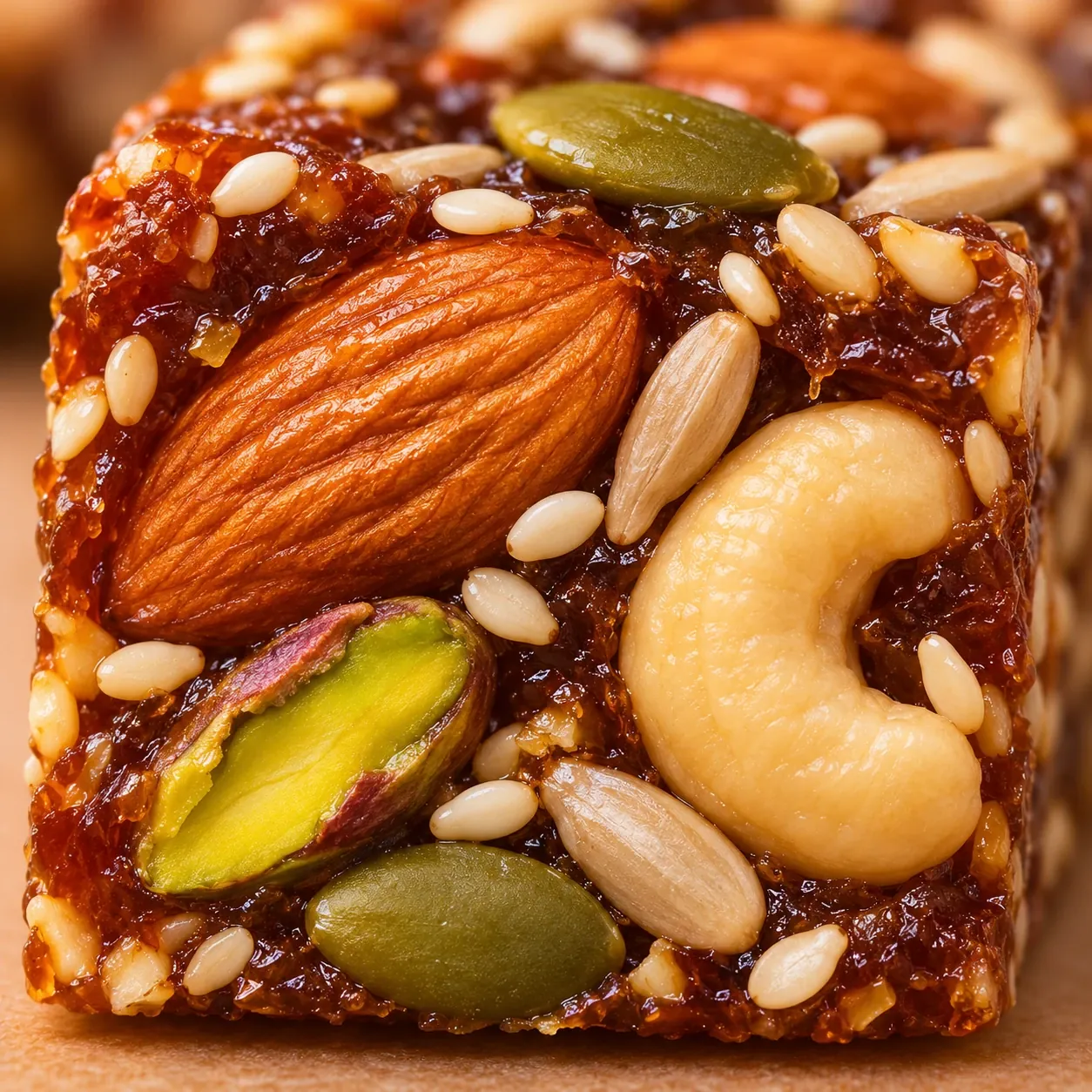
Date & Nut Bars
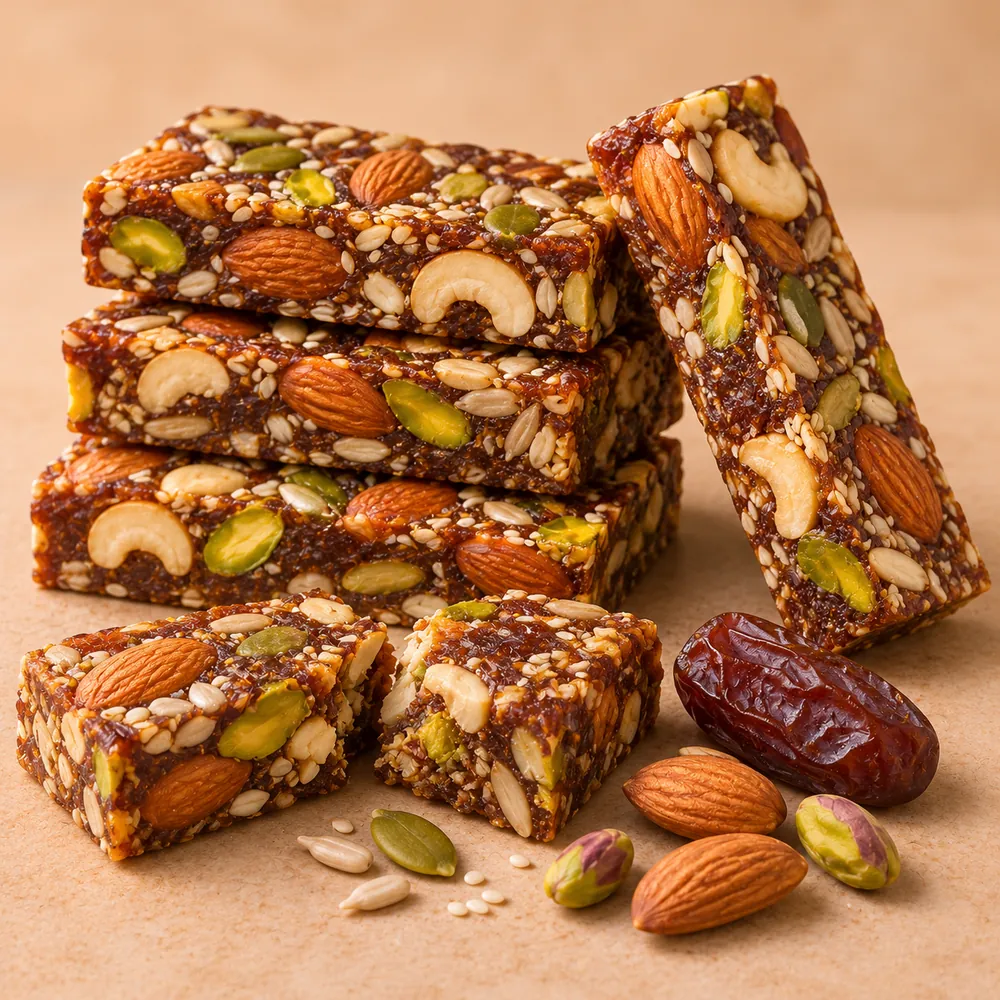
Held together by dates alone. Whole nuts you can see.