What are preservatives, and how was food kept before them?
Preservatives slow the spoiling of food. Some are factory additives with E numbers; others are salt, sugar, oil and sunshine. Here is how they work, which ones you will see on labels, and how our elders kept food without them.
A preservative is anything that slows down the spoiling of food. Some are additives made for the purpose, such as sodium benzoate and potassium sorbate, which appear on labels with E numbers. Others are as old as cooking itself: salt, sugar, vinegar, oil, smoke and the heat of the sun. All of them work by making life difficult for the bacteria, moulds and yeasts that cause food to go off, or by stopping fats from turning rancid.
The word “preservatives” tends to produce either alarm or a shrug. Neither is very useful. This guide explains what preservatives are, how they work, which ones you will meet on labels in Pakistan, and how food was kept for centuries without any of them.
Preservatives in short
- Food spoils because of microbes, air, moisture, heat and light.
- Preservatives slow that down. Some are additives; many are traditional.
- Common additives: benzoates, sorbates, sulphites, nitrites.
- Traditional methods: drying, salting, pickling, sugar, oil, ghee, smoke.
- The label names what is used. The other route is to eat food fresh.
Why food spoils
To understand preservatives, start with what they are fighting.
- Microbes. Bacteria, moulds and yeasts are everywhere. Given moisture, warmth and food, they multiply, and their activity is what we call rotting, souring or fermenting. Some are merely unpleasant. Some can make people ill.
- Oxygen. Air reacts with fats and makes them rancid, and it turns cut fruit brown. We explain rancidity in how to store nuts and dry fruit.
- Enzymes. Natural substances in food itself keep working after harvest, softening and browning it.
- Moisture, heat and light. These speed up all of the above.
Every method of preserving food, ancient or modern, works by removing or blocking one or more of these.
How food was kept before modern additives
Our ancestors had no fridge and no factory, yet they kept food through seasons of scarcity. The methods they developed are still in every Pakistani kitchen.
| Method | How it works | Examples in our kitchens |
|---|---|---|
| Drying | Removes the water microbes need | Sun-dried apricots, chuhara, raisins, dried red chillies, wari, dried methi, dried fish, grains and dals |
| Salting | Draws out water; microbes cannot grow in strong salt | Achar, salted lemons, dried meat (landi in the north), salted fish |
| Pickling in acid | Sourness stops most bacteria | Sirka pickles, lemon achar, chutneys with tamarind |
| Oil | Seals food from air | Mango achar under mustard oil |
| Sugar | Binds water so microbes cannot use it | Murabba, jams, sharbat syrups, gur itself |
| Fat | Removes water and seals | Desi ghee; meat cooked and stored under fat |
| Fermenting | Friendly microbes produce acid that keeps out the harmful ones | Dahi, kanji, some pickles |
| Smoking | Dries the surface and adds compounds that slow spoilage | Smoked fish; black cardamom dried over fire |
| Roasting and frying | Drives out moisture | Roasted chanay, flour roasted in ghee for pinni and panjiri |
Achar: several methods in one jar
A jar of mango achar is a small masterpiece of preservation. The fruit is salted and often sun-dried to remove water. The sourness of raw mango, sometimes helped by vinegar, makes it acidic. Mustard seeds, fenugreek and other spices add compounds that discourage microbes. And the whole thing sits under a layer of mustard oil that keeps air out. It lasts for a year or more, provided no wet spoon ever goes into the jar.
Ghee, gur and roasted flour
Many of our traditional sweets are themselves preserved foods. Desi ghee is butter with the water and milk solids removed, which is why it keeps for months without a fridge. Gur is cane juice concentrated until it is too sugary for most microbes. And flour roasted in ghee, the base of pinni and panjiri, is dry enough to keep for weeks in cool weather. Our elders did not think of these as “preserved”. They were simply foods that lasted.
Modern preservatives
Modern food manufacturing needs products to survive months of storage and transport. Traditional methods often change the taste too much, a jam needs a great deal of sugar, a pickle a great deal of salt, so manufacturers also use small amounts of specific additives that slow spoilage without altering the food much.
These are the ones you will see most often on labels in Pakistan.
| Preservative | E number | What it does | Commonly found in |
|---|---|---|---|
| Sodium benzoate, benzoic acid | E211, E210 | Stops yeasts and moulds in acidic foods | Soft drinks, squashes, ketchup, sauces, pickles, jams |
| Potassium sorbate, sorbic acid | E202, E200 | Stops moulds and yeasts | Cheese, baked goods, dried fruit, drinks |
| Sulphur dioxide and sulphites | E220 to E228 | Stops browning and microbial growth | Bright orange dried apricots, raisins, squashes, vinegar |
| Sodium nitrite | E250 | Prevents dangerous bacteria; keeps the pink colour | Sausages, salami, cured and processed meats |
| Calcium propionate | E282 | Stops mould | Packaged bread, buns, cakes |
| Citric acid | E330 | Makes food more acidic | Drinks, sweets, jams, tinned fruit |
| Ascorbic acid (vitamin C) | E300 | Antioxidant; stops browning | Juices, cut fruit, cured meats |
| BHA, BHT, TBHQ | E320, E321, E319 | Antioxidants that stop fats going rancid | Oils, snacks, crisps, instant noodles |
E numbers are simply codes, not a list of dangers. We explain the system fully in how to read a food label in Pakistan. Which additives are permitted, and in which foods and amounts, is decided by food authorities, and the rules differ between countries and change over time. For the current position in your province, the food authority’s own website is the place to check.
Are preservatives bad for you?
We are a food business, not a health authority, so we will not give a medical verdict. Here is what can fairly be said.
- Permitted preservatives have been assessed for safety and are allowed only up to set limits.
- They prevent real harm. Without any preservation, food poisoning and waste would be far more common.
- Some people are sensitive to particular ones. Sulphites, for example, can trigger reactions in some people with asthma, which is why many countries require them to be declared.
- Heavily processed foods tend to contain many additives, and diets built mostly on such foods are widely discouraged by health bodies, for reasons that go well beyond preservatives.
- Traditional preservatives are not automatically harmless either. A great deal of salt or sugar is not ideal for everyone.
The sensible position is neither panic nor indifference. Read the label, know what is in your food, and decide what you are comfortable with. If you have a medical condition or a known sensitivity, follow your doctor’s advice.
What “no preservatives” really means
The phrase is printed on a great many packs. It should mean that no preservative additive has been used. It does not necessarily mean the food is fresh.
A product can carry “no preservatives” and still last a year, because it is preserved another way.
- By sugar or salt. Jam, murabba, pickles.
- By drying. Biscuits, rusks, dried fruit, instant mixes.
- By heat and sealing. UHT milk, tinned food, bottled sauces.
- By freezing.
- By packing under gas that replaces the oxygen.
None of that is dishonest. But it means the claim alone tells you little. Look at the ingredient list, and look at both the manufacturing date and the expiry date to see how long the food is meant to last.
The other way: make it fresh
There is one more answer to the problem of spoilage, and it is the simplest: do not ask the food to last. Cook it, and eat it soon.
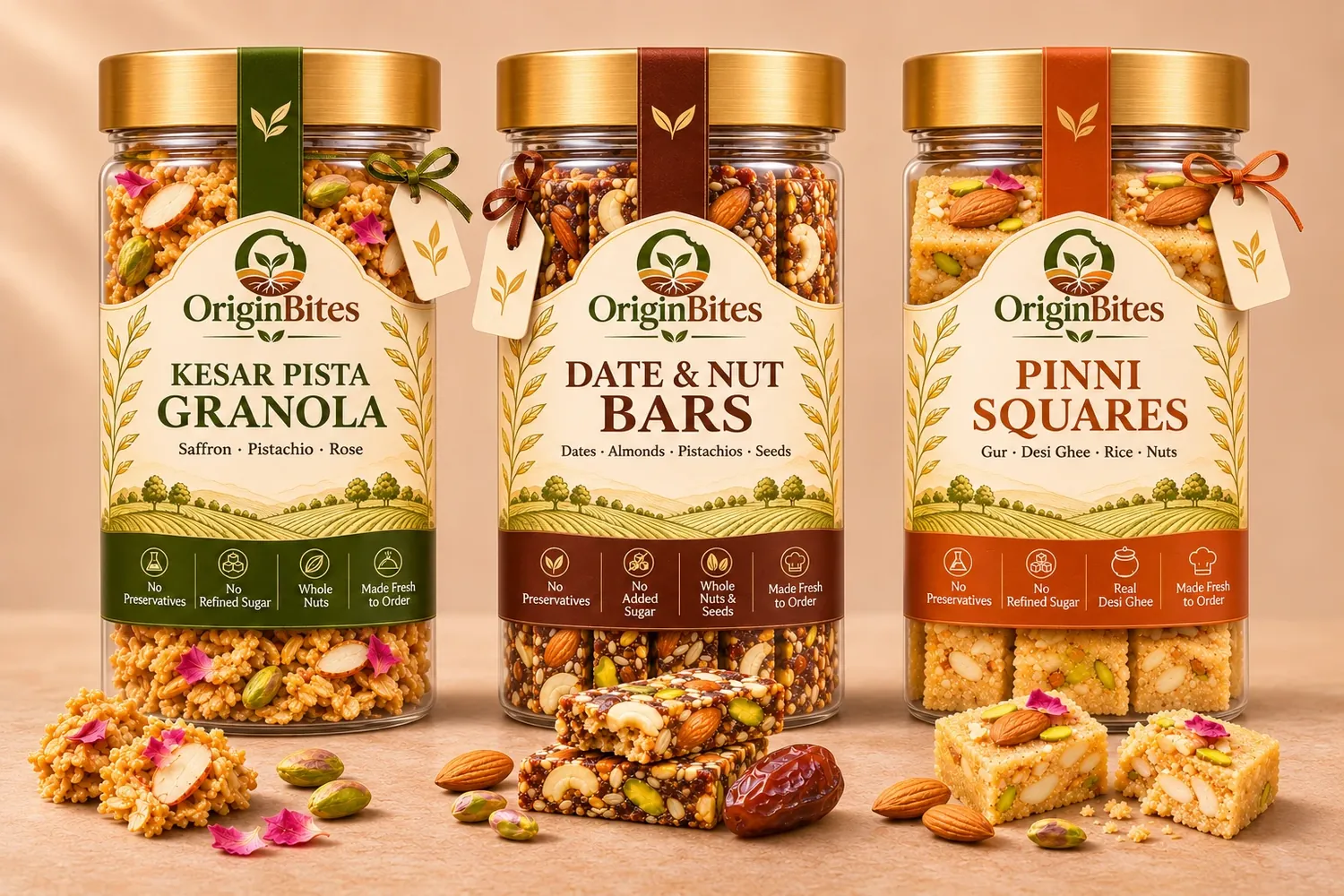
That is how most food was eaten for most of history, and it is how a home kitchen still works. It is also the principle our own kitchen is built on. Every batch of Kesar Pista Granola, Pinni Squares and Date & Nut Bars is made after the order is confirmed and sent within days, with the making date on the label. We add no preservatives because the food is not being asked to wait.
Our recipes also happen to be foods that keep reasonably well by their nature: they are dry, they are made with gur, honey and dates, and the pinni is made with ghee. That is traditional preservation at work. We still print a best-before date and ask you to keep the jar closed, cool and dry. More on this in why food made to order is different.
How to keep food at home without additives
- Keep it dry. Airtight jars; dry spoons; nothing warm sealed in a tin.
- Keep it cool and dark. Away from the stove and the window.
- Use the fridge and freezer. Cold is the most powerful preservative in a modern kitchen.
- Keep air out. Fill jars; press cling film onto the surface of chutneys; keep oil over achar.
- Buy less, more often. The freshest food is the food you finished last week.
- Trust your senses. Sour, musty, sharp or paint-like smells mean something has turned.
Common misunderstandings
- “All E numbers are preservatives.” No. Most are colours, thickeners, acids and so on.
- “Natural means no preservatives.” Salt, sugar and vinegar are natural and they are preservatives.
- “No preservatives means fresh.” Not necessarily.
- “Homemade pickles are preservative-free.” They are full of salt, acid and oil, which is exactly why they keep.
- “Preserved food is always inferior.” Achar, murabba, dried apricots and ghee are among the glories of our cooking.
Spotting preservatives on a label
Preservatives are listed in the ingredients, usually near the end because the amounts are small. They can appear in three ways.
- By job and name: “preservative (sodium benzoate)”.
- By job and number: “preservative (E211)” or “preservative (INS 211)”.
- By name only: “potassium sorbate”, “sulphur dioxide”.
The 200 series of E numbers is where most preservatives sit: E200 to E203 are sorbates, E210 to E213 benzoates, E220 to E228 sulphites, E249 to E252 nitrites and nitrates, E280 to E283 propionates. Antioxidants that protect fats are in the 300s.
A quick comparison at the shop
| Product | How it is usually kept |
|---|---|
| Bottled squash or sharbat | Sugar, acid and often sodium benzoate |
| Packaged bread | Often calcium propionate; bakery bread without it goes mouldy in days |
| Bright orange dried apricots | Sulphur dioxide; the brown sun-dried ones are untreated |
| Jam and murabba | Sugar and acid; sometimes a preservative as well |
| Tinned vegetables and fruit | Heat and sealing; often no preservative additive at all |
| Achar in a jar | Salt, oil, acid; commercial ones may add benzoate |
| Crisps and snacks | Low moisture, sealed packs and antioxidants to protect the oil |
Two packs of the same food can be kept in quite different ways. Reading both labels side by side is the fastest way to learn.
An old problem with many answers
Keeping food from spoiling is one of the oldest challenges people have faced, and every culture has found its answers. Ours are in the achar jar, the tin of ghee, the string of apricots drying on a roof in Hunza. Modern additives are simply the latest answer, suited to a world of factories and long supply chains.
Knowing how each one works lets you choose with open eyes: sometimes the packet, sometimes the pickle, and sometimes something made this week.
Common questions
What is a preservative?
Anything added to food, or done to it, to slow down spoiling by bacteria, moulds or yeasts, or to stop fats turning rancid. Salt, sugar and vinegar are traditional preservatives; sodium benzoate and potassium sorbate are common modern ones.
Are preservatives harmful?
Permitted preservatives are assessed by food safety authorities and allowed in limited amounts in particular foods. Some people are sensitive to certain ones, such as sulphites. We do not make a health judgement; the label tells you what is used so you can decide.
Which preservatives are common on Pakistani labels?
Sodium benzoate (E211), potassium sorbate (E202), sulphur dioxide and sulphites (E220 to E228), and in cured meats, nitrites (E250). Citric acid (E330) and ascorbic acid (E300) are also widely used.
Is salt a preservative?
Yes, one of the oldest. Salt draws water out of food and out of microbes, which stops them growing. That is how achar, salted fish and dried meat are kept.
How does achar keep without a fridge?
A combination of salt, acid from the fruit or added vinegar, spices such as mustard, and a layer of oil that keeps air out. Together they stop spoilage, provided no water gets into the jar.
What does 'no preservatives' on a label mean?
It should mean that no preservative additive has been used. The food may still be kept by other means, such as a lot of sugar or salt, drying, heat treatment or sealing. Check the ingredient list and the dates.
How do you keep OriginBites food fresh without preservatives?
By not asking it to last a long time. Every batch is made after an order is confirmed, sealed in a jar and sent within days, with the making date on the label.
This article is general information about food. It is not medical advice.
Share
Send on WhatsAppKeep reading.
How to read a food label in Pakistan: ingredients, E numbers and dates explained
The back of a food packet tells you far more than the front. Here is how to read the ingredient list, what E numbers really are, how to understand the dates, and which front-of-pack words mean little.
Read the article
Why food made to order is different from food made for a shelf
Most packaged food is designed to wait: in a warehouse, on a lorry, on a shelf. Food made to order is cooked after you ask for it. Here is what that changes, what it costs, and why we chose it.
Read the article
The traditional Pakistani breakfast: halwa puri, paratha, nihari and what each region eats
From a quick chai and paratha on a weekday to halwa puri or nihari on a Sunday, breakfast in Pakistan is generous and regional. Here are the classic dishes, where they come from, and how the morning table differs across the country.
Read the articleFrom our kitchen.
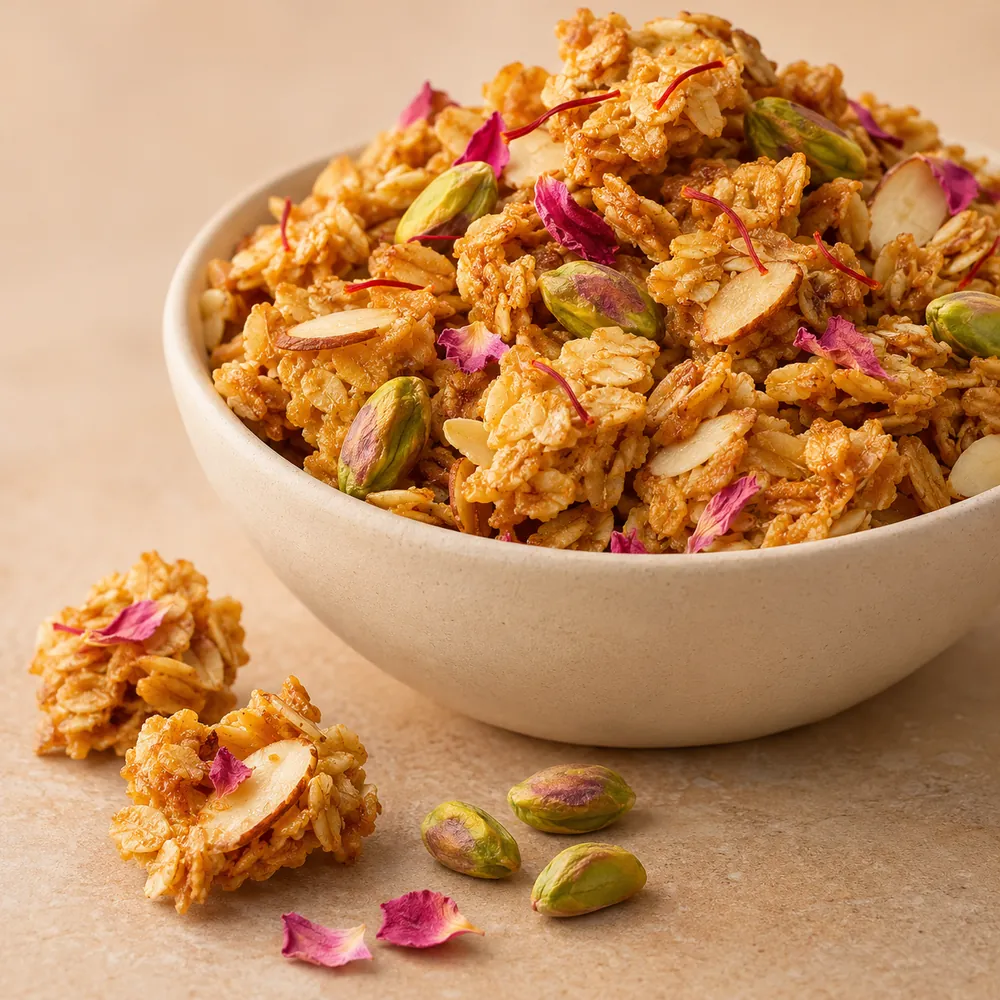
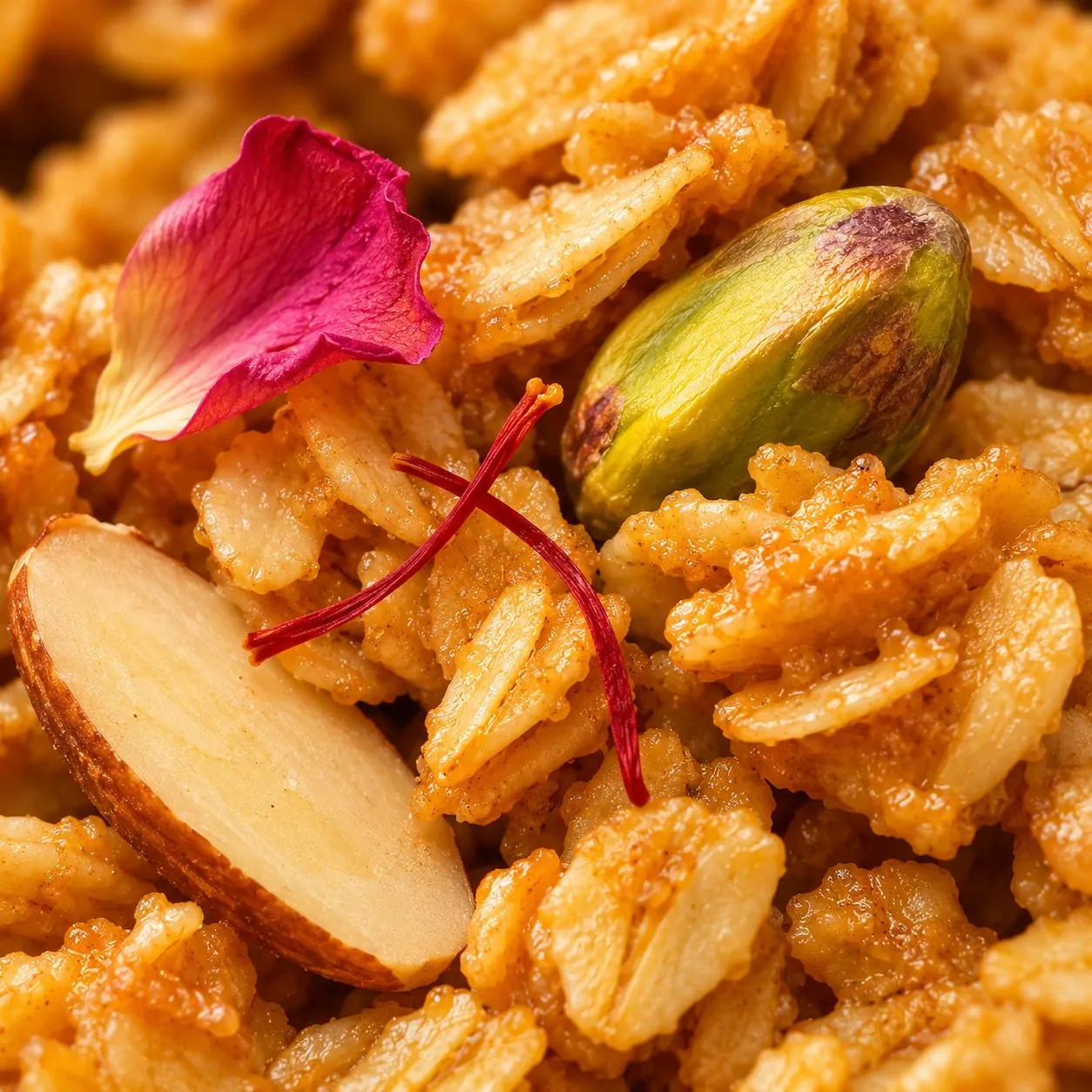
Kesar Pista Granola
Big clusters, not loose oats. Whole pistachios and sliced almonds.


Pinni Squares
Roasted in real desi ghee. Gur, not white sugar.
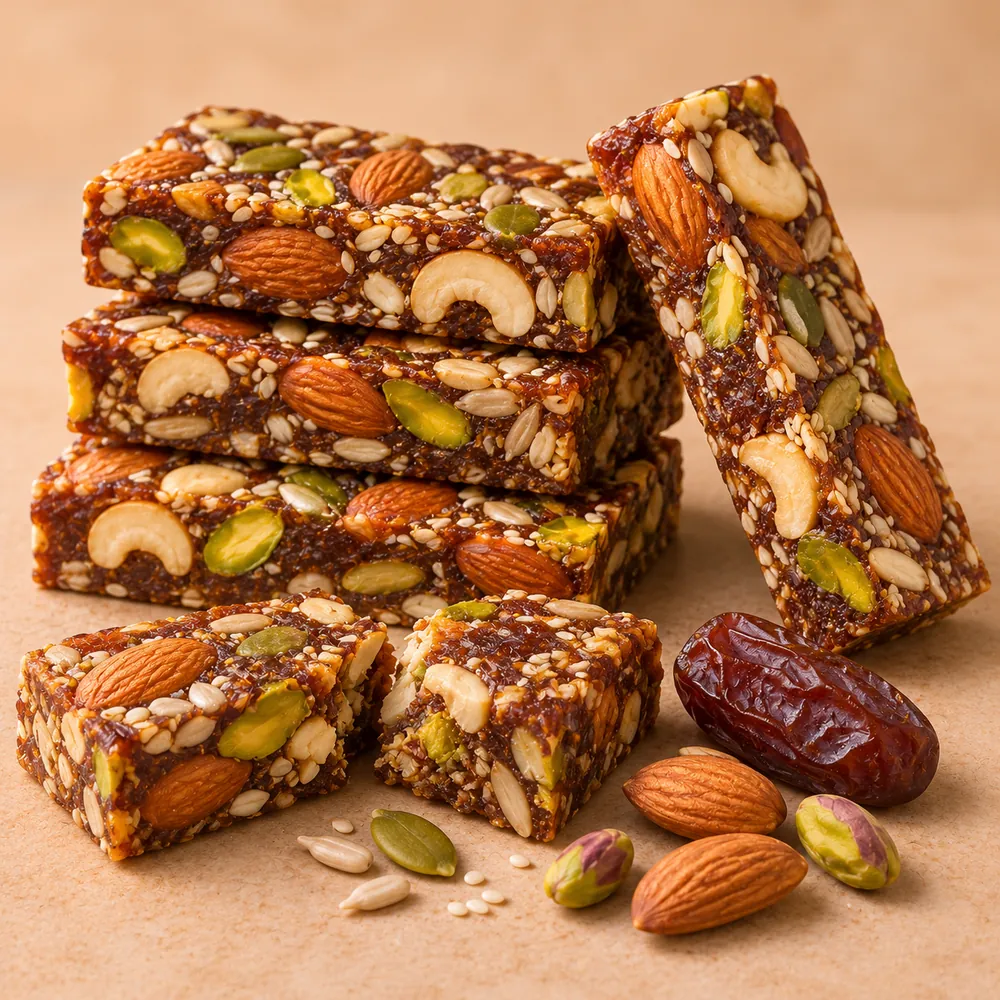
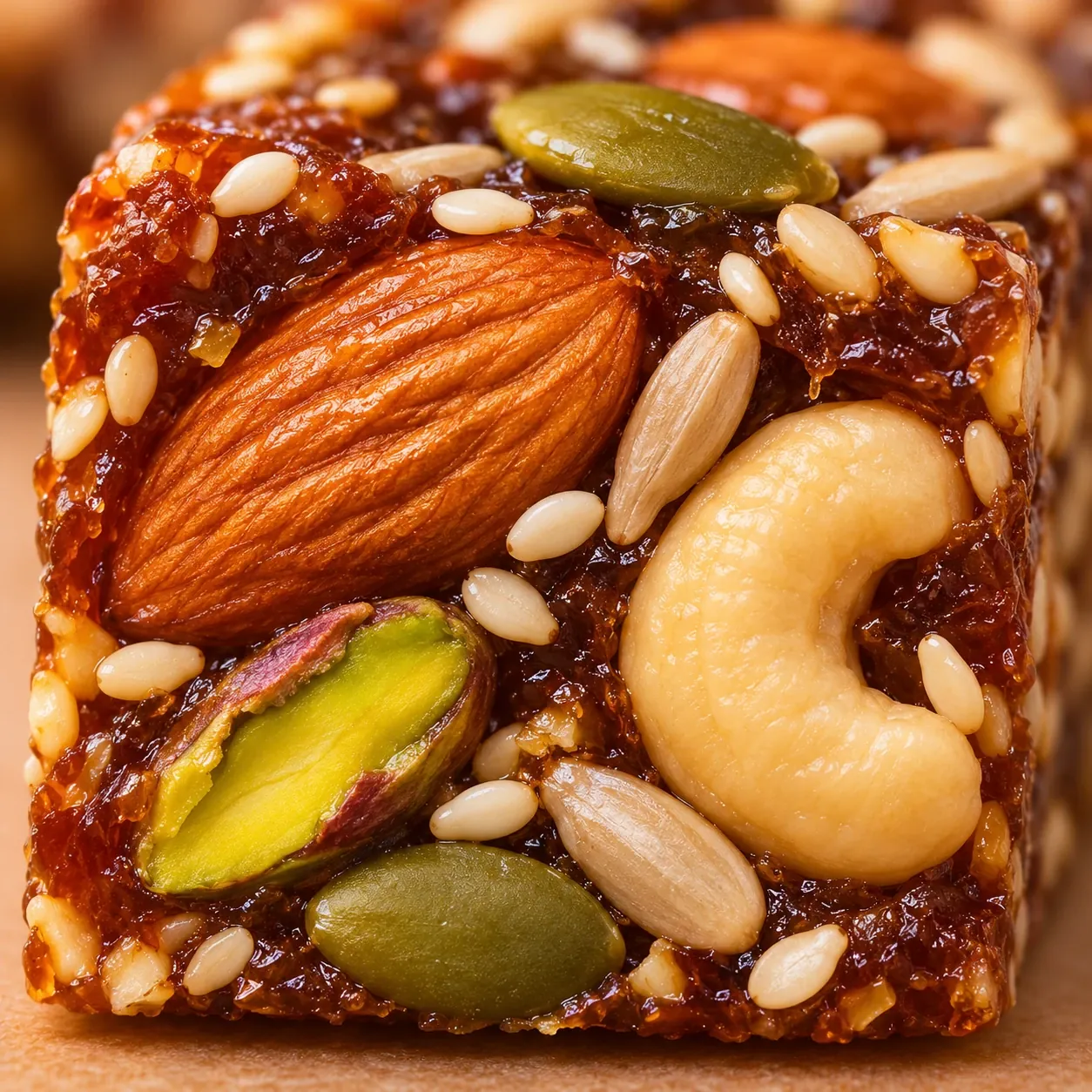
Date & Nut Bars
Held together by dates alone. Whole nuts you can see.