School lunch box ideas for Pakistan: simple homemade food children will actually eat
Packing a lunch box every morning is hard work. Here is a simple way to build one, thirty homemade ideas using food Pakistani children know, a weekly plan, and how to keep it safe in the heat.
A good school lunch box has four parts: something filling, a fruit or vegetable, a small extra, and water. Fill those from food your child already likes, such as a paratha roll, a boiled egg, sliced fruit and a handful of something crunchy, keep the portions small, and pack it so it stays cool and is easy to eat in ten minutes.
Every parent knows the morning scramble, and the disappointment of a box that comes home untouched. This guide gives a simple way to think about the lunch box, thirty ideas built on Pakistani home cooking, a plan for the week, and practical advice on food safety in our climate and on school nut rules.
Lunch boxes in short
- Four parts: filling, fruit or vegetable, small extra, water.
- Small portions that can be eaten quickly with fingers.
- Familiar food works better than clever food.
- In heat, keep it cold and avoid quick-spoiling fillings.
- Check your school’s rule on nuts before sending any.
Start with what a school break is really like
It helps to picture the situation. Break is short. A young child has perhaps ten or fifteen minutes, some of it spent washing hands, finding a seat and talking. There is no plate, no adult to help, and friends are waiting to play.
So a lunch box needs to be easy. Food that can be picked up with fingers and eaten in a few bites wins. Food that is messy, needs assembling, drips, or has gone soggy loses. And food that looks unfamiliar may not be touched at all, however carefully you made it.
A simple way to build a box
- Something filling. Bread, roti, paratha, rice or pasta, with some protein: egg, chicken, kabab, daal, chanay, cheese or dahi.
- A fruit or a vegetable. Whatever is in season, cut so it is easy to eat.
- A small extra. Something crunchy or a little sweet: roasted chanay, a homemade biscuit, a date, a small piece of something baked.
- Water. In a bottle the child can open.
You do not need all four every single day, and none of them needs to be elaborate. The pattern simply stops you staring into the fridge at half past six.
Thirty ideas, by part
Something filling
- Paratha roll. A soft paratha rolled around an omelette, shredded chicken, a shami kabab or aloo.
- Anda paratha. Egg cooked onto the paratha, cut into wedges.
- Aloo paratha. Cut into quarters, with a little dahi in a small pot if the weather is cool.
- Shami kabab sandwich. A kabab between two slices of bread with cucumber.
- Chicken sandwich. Boiled, shredded chicken with a little butter or dahi cheese. In summer, avoid mayonnaise.
- Egg sandwich. Mashed boiled egg with butter, salt and pepper.
- Cheese and cucumber sandwich. Simple and holds up well.
- Roti wrap. Leftover chicken or keema with a little chutney, rolled tightly.
- Chana chaat. Boiled chickpeas with chopped onion, tomato, lemon and chaat masala, packed dry with a spoon.
- Vegetable pulao or fried rice. In a small tub, with a spoon. Cool it fully before packing.
- Macaroni. With chicken and vegetables, lightly sauced so it is not wet.
- Besan chilla. A savoury gram flour pancake, rolled.
- Cutlets. Potato, vegetable or chicken, shallow-fried and cooled.
- Boiled eggs. Peeled, halved, with a pinch of salt.
- Mini pizza on naan or bread. Made the night before and eaten cold.
A fruit or a vegetable
- Apple slices. A squeeze of lemon stops them browning.
- Banana. Whole, in its skin.
- Kinnow or orange segments. Peeled, in winter.
- Grapes, guava pieces, pomegranate seeds. In a small tub.
- Mango cubes or melon. In summer, kept cold.
- Cucumber and carrot sticks. With a pinch of salt or chaat masala.
- Boiled corn or sweet potato (shakarkandi). In season.
A small extra
- Roasted chanay. Inexpensive, crunchy and filling.
- Dates. Two or three, seeds removed for young children. See dates in Pakistan.
- Homemade biscuits or a slice of plain cake.
- Popcorn. Made at home with a little salt. For older children only.
- Murmura or homemade nimko. A light chivda of puffed rice.
- Date and seed bars. Homemade, cut small. Our method is in date and nut bars; leave out the nuts and use seeds if your school does not allow nuts.
- Granola. A small tub, dry, where nuts are allowed. Crush clusters for small children.
- A small pot of dahi. In cool weather or with an ice pack. How to set your own is in how to make dahi at home.
A week of lunch boxes
| Day | Filling | Fruit or vegetable | Extra |
|---|---|---|---|
| Monday | Anda paratha wedges | Apple slices | Roasted chanay |
| Tuesday | Shami kabab sandwich | Cucumber sticks | Two dates |
| Wednesday | Vegetable pulao | Banana | Homemade biscuit |
| Thursday | Chicken roti wrap | Kinnow segments or grapes | Murmura |
| Friday | Chana chaat | Carrot sticks | A slice of plain cake |
Use it as a pattern, not a rule. Swap in whatever your child likes and whatever is in season. Repeating a favourite twice a week is perfectly fine.
Keeping food safe in the heat
For much of the school year in Pakistan, a lunch box sits in a warm bag in a warm classroom for three or four hours. That matters for food safety.
- Use an insulated lunch bag. It makes a real difference.
- Add something cold. A small ice pack, or a little bottle of water frozen overnight. By break it has thawed into a cold drink.
- Pack food cold or fully cooled. Hot food sealed in a box steams, turns soggy and stays in the temperature range where bacteria grow fastest.
- Be careful with quick-spoiling foods in summer. Mayonnaise, cream, cooked rice left warm, milk drinks, and meat fillings that were not chilled.
- Choose sturdy foods in the hottest months. Dry sandwiches, parathas, boiled eggs kept cold, whole fruit, dry snacks.
- Wash the box every day. With hot soapy water, and let it dry fully.
- Teach one rule. If it smells or tastes odd, do not eat it.
From November to February these worries ease, and dahi, rice and softer foods travel well.
Nuts and school allergy rules
Nut allergy in children can be serious, and even small traces can cause a reaction in a sensitive child. For that reason many schools ask parents not to send peanuts, tree nuts, or foods containing them. Some extend this to sesame.
- Find out your school’s rule and follow it exactly, even if your own child has no allergy.
- Read labels. Biscuits, bars, chocolate spreads and cereals often contain nuts. Our guide to reading food labels shows where allergens are listed.
- Where nuts are allowed, they are a useful, filling extra. For small children, avoid whole nuts, which are a choking risk; use them chopped or ground.
- If your own child has an allergy, tell the teacher in writing and teach your child not to share food.
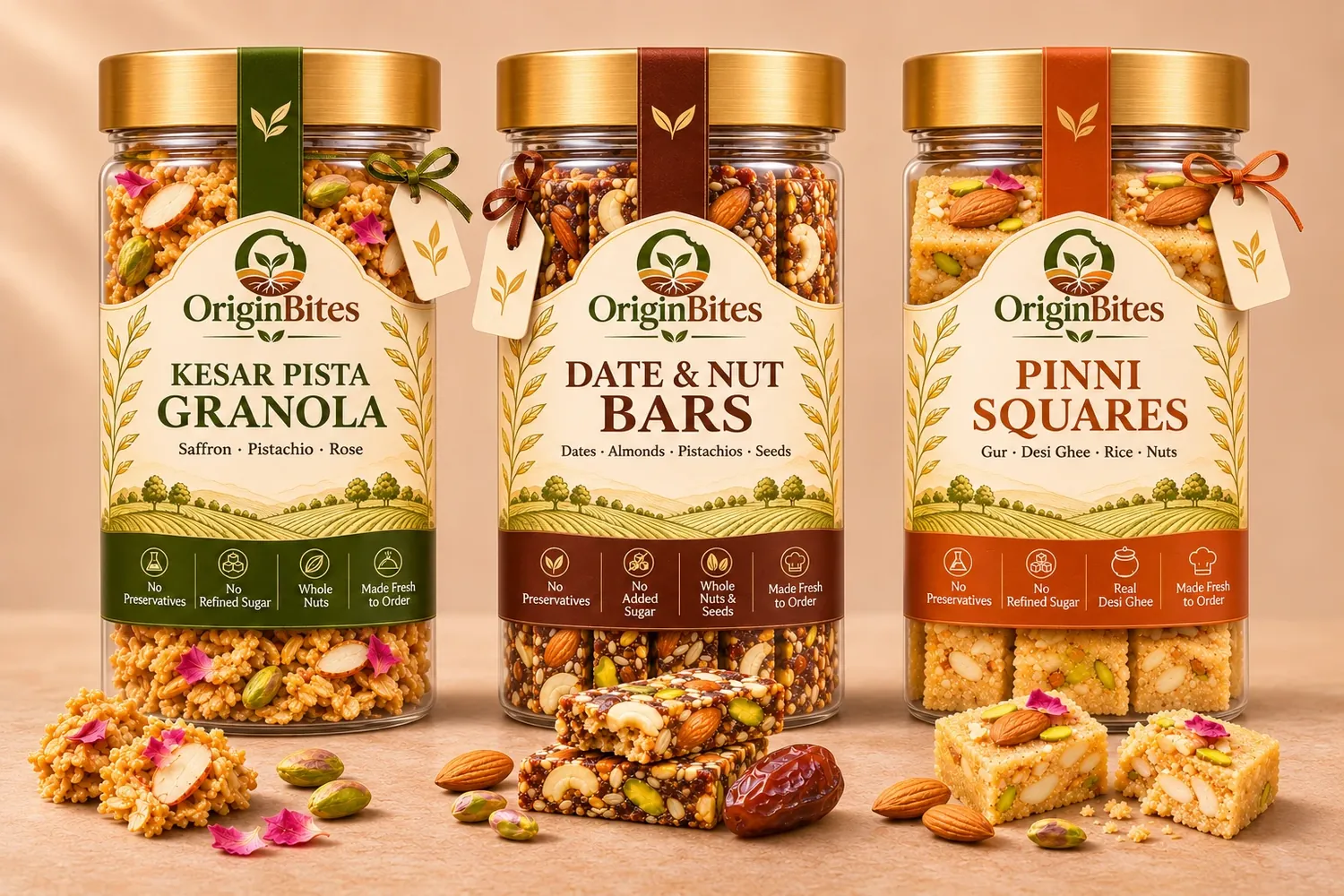
All of our own products contain tree nuts, and our bars contain sesame. They are not suitable for a nut-free school, and we say so plainly. Keep them for home, for weekends and for the car.
Getting the box eaten
- Pack less. An overfull box is discouraging. Start small and increase if it comes back empty.
- Offer a choice of two. “Egg roll or kabab sandwich tomorrow?” A child who chose is more likely to eat.
- Cut things small. Quarters, strips and cubes get eaten. Whole sandwiches often do not.
- Keep foods apart. Many children dislike food touching. A box with compartments, or small tubs inside, helps.
- Introduce new foods at home first. The lunch box is not the place for experiments.
- Ask without scolding. “What was hard to eat today?” often reveals a simple fix: the lid was too tight, the fruit had browned, there was no time.
- Do not use sweets as a reward for finishing. It teaches the wrong lesson about both.
Making mornings easier
- Plan the week on Sunday. Five fillings, written on the fridge.
- Cook once, use twice. Extra kababs, cutlets or shredded chicken at dinner become tomorrow’s filling.
- Freeze in batches. Shami kababs, cutlets and parathas freeze well and reheat in minutes.
- Prepare the night before. Wash and cut sturdy fruit and vegetables, fill the water bottle, portion the dry snack.
- Keep a “lunch box shelf”. Boxes, small tubs, the insulated bag and the dry snacks in one place.
- Add crisp things in the morning. Anything crunchy goes soft if boxed overnight with moist food.
Homemade and packaged
There is no shame in a packet on a difficult morning. But packaged snacks aimed at children are often mostly refined flour, sugar and oil, with a long list of additives so that they can sit on a shelf for months. If you do buy them, turn the pack over and read the first three ingredients and the dates.
Homemade food need not be complicated. A boiled egg, a banana and a paratha is a complete lunch box. The advantage is simply that you know what is in it and when it was made. We have written more about that difference in why food made to order is different.
A note on nutrition
We are a food business, not dietitians, and this article does not give medical or nutritional advice. Children’s needs vary with age, activity and health. If your child has a medical condition, an allergy, or you are worried about their eating or growth, please speak to a doctor.
Lunch boxes through the seasons
| Season | What works | What to avoid |
|---|---|---|
| Summer (April to September) | Dry sandwiches, parathas, whole fruit, cucumber, roasted chanay, a frozen water bottle | Mayonnaise, cream, milk drinks, rice left warm |
| Monsoon | Freshly made food, boxed dry; crisp items in a separate tub | Anything fried the night before; it turns soft |
| Winter (November to February) | Rice dishes, dahi, boiled eggs, kinnow, guava, a warm paratha roll wrapped in foil | Very little; this is the easy season |
Choosing the box and bottle
- Compartments. A box divided into two or three sections keeps wet and dry apart and stops food touching.
- A lid the child can open and close alone. Test it at home. Many lunches come back uneaten because the lid was too tight.
- Steel or good food-grade plastic. Steel is durable and does not hold smells. If you use plastic, replace it when it becomes scratched or cloudy.
- A leak-proof small tub for dahi, chaat or cut fruit.
- An insulated bag with room for an ice pack.
- A water bottle with a wide mouth, so it can be washed properly. Wash it daily and let it dry.
- A name on everything.
Keep it simple
The lunch boxes children remember fondly are rarely the elaborate ones. They are the ordinary, reliable ones: a warm paratha roll made by someone who knew how they liked it. Aim for that, most days, and forgive yourself the rest.
Common questions
What should go in a school lunch box?
A simple pattern works well: something filling such as a paratha roll or sandwich, a fruit or vegetable, something crunchy or small on the side, and water. You do not need all four every day.
How do I keep lunch box food safe in hot weather?
Use an insulated bag, add a small frozen water bottle or ice pack, avoid foods that spoil quickly in summer such as mayonnaise and cream, and pack food cold or completely cooled.
Can I pack the lunch box the night before?
Yes, for most things. Cut fruit, dry snacks, sandwiches without wet fillings and cooked items can be boxed and kept in the fridge overnight. Add anything crisp in the morning.
Are nuts allowed in school lunch boxes?
It depends on the school. Many schools ask parents not to send nuts or nut products because of children with allergies. Check your school's rule and follow it.
My child brings the lunch box back full. What can I do?
Pack smaller amounts, involve the child in choosing between two options, make food easy to eat with fingers, and ask what stopped them eating. Often the reason is time or embarrassment, not the food.
Is it fine to send packaged snacks?
Occasionally, yes. Read the ingredient list and check the dates. Homemade food gives you more control over what your child eats.
How much food should I pack?
Less than you think. A young child often has only ten to fifteen minutes to eat. A small, manageable box that comes back empty is better than a large one that comes back untouched.
This article is general information about food. It is not medical advice.
Share
Send on WhatsAppKeep reading.
How to store nuts and dry fruit at home so they stay fresh
Nuts go stale because of heat, light, air and damp. Here is how to keep almonds, pistachios, walnuts, cashews and dates fresh through a Pakistani summer and monsoon, and how to tell when they have turned.
Read the article
Date and nut bars: what goes in them and how to make them at home
A date and nut bar is soft dates pressed around nuts and seeds, with nothing else needed to hold it together. Here is how it works, which Pakistani dates to use, and a simple recipe for home.
Read the article
Ten ways to eat granola that are not a bowl of milk
Granola is not only for a bowl of cold milk. Here are ten ways to eat it that suit a Pakistani kitchen, from thick dahi and seasonal fruit to kheer, lassi and a paratha roll, with tips to keep the crunch.
Read the articleFrom our kitchen.
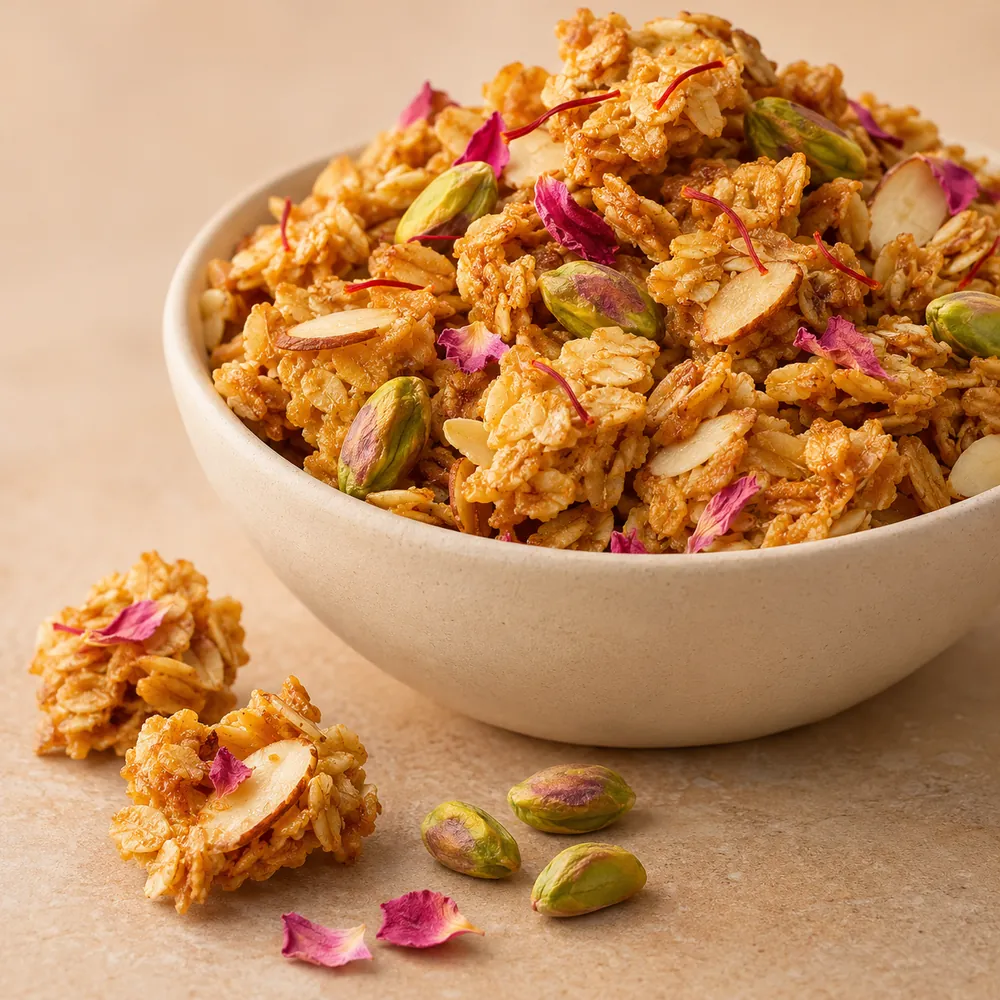
Kesar Pista Granola
Big clusters, not loose oats. Whole pistachios and sliced almonds.


Pinni Squares
Roasted in real desi ghee. Gur, not white sugar.
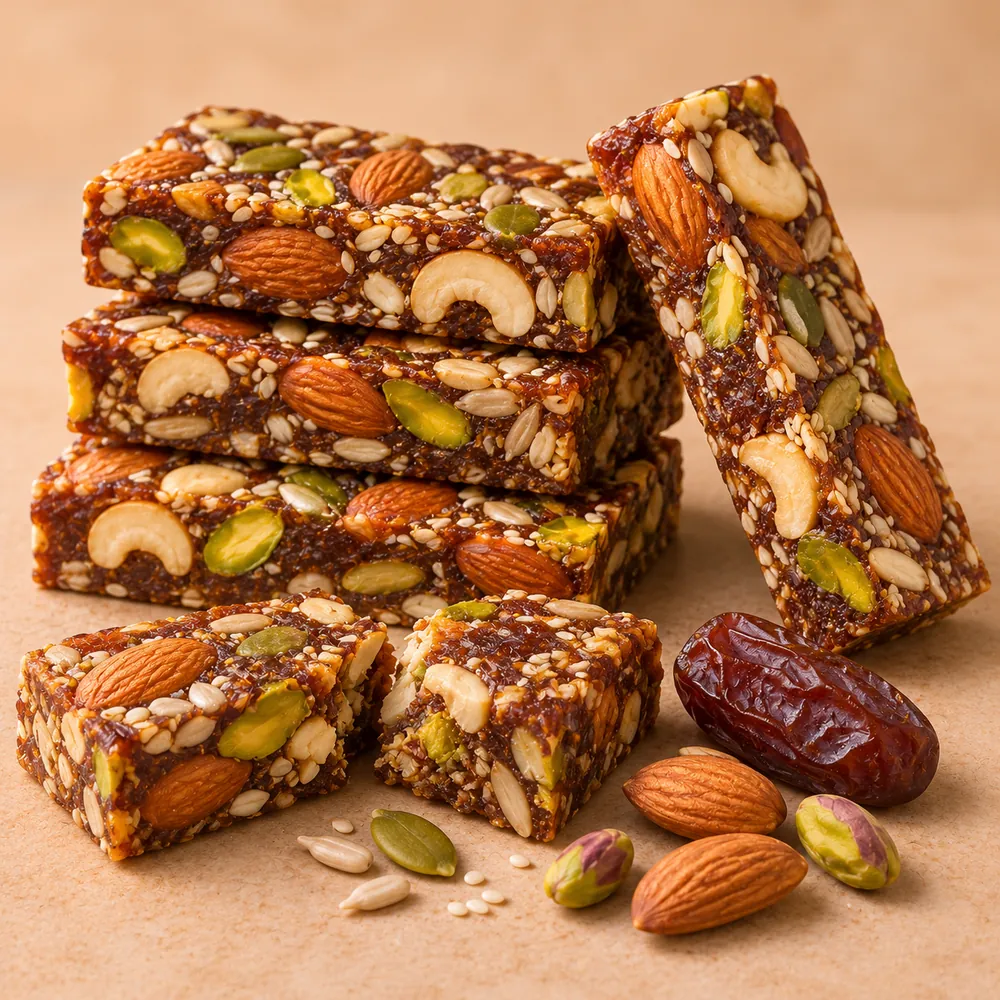
Date & Nut Bars
Held together by dates alone. Whole nuts you can see.