Types of oats: rolled, instant and steel-cut explained, and how oats differ from daliya
Rolled, quick, instant, steel-cut: they are all the same grain, cut and pressed differently. Here is how each is made, how it cooks, which to buy for porridge, baking and granola, and why daliya is not oats.
The main types of oats are steel-cut, rolled, quick and instant. They all come from the same grain. The only difference is how much the grain has been cut, steamed and flattened, and that decides how long it takes to cook and what texture you get. Steel-cut oats are chopped and chewy. Rolled oats are steamed and pressed flat. Quick and instant oats are rolled thinner and cut smaller so they cook in a minute or two.
Oats were not a traditional food in Pakistan, where the morning porridge was daliya. But they are now sold in every supermarket, and many people buy the first tin they see without knowing there is a choice. This guide explains each type, what it is good for, how to cook it, and how oats differ from the grains we already know.
Oats in short
- Oats are a grain, called jai in Urdu. Not barley (jau), not daliya (wheat).
- Steel-cut: chopped, chewy, slow.
- Rolled: steamed and pressed, the all-rounder.
- Quick and instant: thin and small, fast and soft.
- For granola and baking, use rolled oats.
What oats are
Oats are the seeds of a cereal grass, Avena sativa. Each seed grows inside a tough outer husk that people cannot eat. Once the husk is removed, what is left is the whole oat kernel, called a groat. Everything sold as oats starts as groats.
In Pakistan oats are grown mainly as green fodder for animals, not as a food crop. Most of the oats sold for people to eat are imported, already milled, in tins and packets.
Jai, jau and daliya
Three words are often mixed up.
- Jai is oats.
- Jau is barley, a different grain, used for sattu and barley water.
- Daliya is broken or cracked wheat. It is what most Pakistani families mean by porridge.
Some shops label oats as “jau ka daliya”, which is wrong on both counts. If you want oats, look for the English word on the pack.
How oats are milled
After harvest, the oats are cleaned and the husks are removed. The groats are then heated with steam. This step, called stabilising, matters a great deal. Oats contain more natural oil than most grains, and an enzyme in the raw groat makes that oil turn rancid quickly. Steaming stops the enzyme, so the oats keep for months and taste sweet and nutty.
From there the groats go one of several ways. They may be left whole, chopped with steel blades, or steamed again and passed between heavy rollers. The thinner they are rolled and the smaller they are cut, the faster they cook.
The types of oats, compared
| Type | How it is made | Texture when cooked | Cooking time | Best for |
|---|---|---|---|---|
| Oat groats | Whole kernel, husk removed | Chewy, like wheat berries | 45 minutes or more | Pulao-style dishes, soups |
| Steel-cut (Irish, pinhead) | Groats chopped into two or three pieces | Chewy, nutty, grains stay separate | 20 to 30 minutes | Hearty porridge, savoury oats |
| Rolled (old-fashioned) | Whole groats steamed and pressed flat | Creamy with some bite | 5 to 10 minutes | Porridge, granola, biscuits, overnight oats |
| Quick oats | Cut smaller, rolled thinner | Soft and smooth | 1 to 3 minutes | Fast porridge, thickening |
| Instant oats | Pre-cooked, dried, rolled very thin | Very soft, almost a paste | Just add hot water or milk | Speed; often sold flavoured |
| Oat flour | Oats ground to powder | – | – | Baking, roti blends, thickening |
| Oat bran | The outer layer of the groat | Smooth, fine | 2 to 3 minutes | Mixing into porridge and baking |
Times vary with the brand and how thick you like it, so treat them as a guide and follow the pack.
Which oats to buy for what
For everyday porridge
Rolled oats are the best all-round choice. They cook quickly but still have texture, and they are the most versatile if you buy only one kind. Quick oats suit busy mornings and small children who prefer a smoother bowl.
For granola, biscuits and bars
Use rolled oats, and only rolled oats. They hold their flat shape in the oven and turn crisp. Instant oats break down into dust and steel-cut oats stay hard as gravel. This is why our Kesar Pista Granola is made with rolled oats. There is more on the baking in granola explained.
For a chewy, savoury dish
Steel-cut oats behave more like a grain than a flake. They are good cooked with onions, tomatoes, green chillies and vegetables into something close to a khichdi or upma.
For soaking overnight
Rolled oats soften well in milk or dahi left in the fridge overnight. Steel-cut oats stay too firm unless they are soaked for a very long time.
When time is shortest
Instant oats, but read the label. Plain instant oats are simply oats. Flavoured sachets often contain a good deal of sugar, flavouring and salt. The ingredient list will tell you, and our label guide shows where to look.
How to cook oats well
Basic porridge with rolled oats
- Use one part oats to two parts liquid: water, milk or half and half.
- Add a small pinch of salt. It makes a real difference to the flavour.
- Bring to a gentle simmer and stir now and then for five to seven minutes, until creamy.
- Take it off the heat, cover, and leave for two minutes. It thickens as it stands.
- Sweeten and top as you like.
For more flavour, toast the dry oats in the pan for a minute or two, with or without a little ghee, before adding the liquid. They will smell nutty.
Steel-cut oats
Use one part oats to three or four parts water. Simmer for twenty to thirty minutes, stirring occasionally, until tender but still chewy. To save time, bring them to the boil at night, turn off the heat, cover the pan and finish them in a few minutes the next morning.
Toppings that suit a Pakistani kitchen
- Sliced banana, chopped dates and a few almonds.
- A spoon of shakkar and a little desi ghee, in the spirit of meetha daliya.
- Ground cardamom and crushed pistachios.
- Seasonal fruit: mango in summer, apple and pomegranate in autumn.
- A spoon of thick dahi and honey.
- A handful of granola on top for crunch.
Savoury oats
Oats do not have to be sweet. Fry cumin, onion, green chilli and tomato in a little oil, add rolled or steel-cut oats and water, and cook until soft. Finish with lemon and fresh coriander. It is quick, filling, and tastes like home.
Oats and daliya, side by side
| Oats (jai) | Daliya | |
|---|---|---|
| Grain | Oats | Wheat |
| Form | Flattened flakes or chopped pieces | Cracked, uneven granules |
| Cooked texture | Creamy, slightly sticky | Grainy, separate, with more bite |
| Taste | Mild, slightly sweet and nutty | Wheaty, earthy |
| Usual dishes | Porridge, granola, baking | Sweet or savoury porridge, daliya khichdi, haleem |
| Where it comes from | Mostly imported | Local wheat |
| Gluten | No wheat gluten, but often cross-contaminated | Contains gluten |
Neither is “better”. Daliya is local, inexpensive and part of our cooking. Oats are creamier and bake well. Many households keep both.
Buying oats in Pakistan
- Check which type it is. The front may just say “oats”. Look for “rolled”, “quick cooking”, “instant” or “steel-cut”.
- Read the ingredients. Plain oats should list one thing: oats.
- Look at the dates. Imported tins may have travelled for months. Choose the most recent manufacturing date.
- Prefer sealed tins or thick bags. Oats pick up moisture and smells easily.
- Smell them when you open the pack. Fresh oats smell faintly sweet and grassy. A sharp, soapy or paint-like smell means the oil has turned.
How to store oats
- Move opened oats to an airtight jar or tin.
- Keep them in a cool, dry, dark cupboard, away from the stove.
- In the monsoon, check for dampness and insects, and keep the lid tight.
- For long storage, oats keep well in the fridge or freezer in a sealed bag.
- Do not top up old oats with new. Finish, wash and dry the jar first.
The same rules protect nuts and other dry goods. See how to store nuts and dry fruit at home.
A note on gluten and health claims
Oats do not contain the gluten found in wheat, but ordinary oats are very often contaminated with wheat in the field, in transport or in the mill. Anyone who must avoid gluten strictly should buy only oats that are certified gluten-free, and should follow their doctor’s advice.
Oats are often sold with health promises on the box. We do not repeat them. Oats are a wholesome, filling grain, and how they fit into your diet is a matter for you and, if needed, your doctor. What we can tell you is what they are and how to cook them well.
Common mistakes with oats
- Using instant oats for baking or granola.
- Leaving out the pinch of salt, which makes porridge taste flat.
- Boiling hard, which makes porridge gluey. A gentle simmer is enough.
- Buying flavoured sachets without reading how much sugar is in them.
- Keeping an open bag in a damp kitchen.
- Expecting oats to behave like daliya. They are a different grain.
Oats in desi cooking
Because oats are new to our kitchens, most people use them only for porridge. They are more useful than that.
- In roti and paratha. Replace a quarter of the atta with oat flour, or with rolled oats ground in a blender. The dough needs a little more water and the roti comes out softer.
- In kabab and cutlets. A spoonful of quick oats binds shami kabab, aloo tikki and chicken cutlets in place of breadcrumbs or roasted gram flour.
- In soup and haleem-style dishes. A handful of oats thickens a soup and gives body without changing the taste much.
- As a meetha dish. Cook rolled oats in milk with a little ghee, shakkar and cardamom, exactly as you would make meetha daliya, and finish with almonds.
- In chilla. Mix oat flour with besan, onion, green chilli and coriander for a savoury pancake.
- In baking. Naan khatai and oat biscuits made with part oat flour have a pleasant, sandy crumb.
Making oat flour at home
You do not need to buy it. Put rolled oats in a dry blender or spice grinder and run it for thirty seconds to a minute, until fine. Sieve if you want it smooth. Make small amounts, because ground oats go stale faster than whole flakes.
How much to cook
Oats swell a good deal. About half a cup of dry rolled oats makes a generous bowl of porridge for one adult. For children, start with a quarter of a cup. It is easy to cook far too much the first time.
One grain, used your way
Oats may have come from abroad, but they take very well to our flavours: cardamom, shakkar, ghee, dates, nuts, even cumin and green chilli. Buy rolled oats to begin with, learn how you like them, and then try the others. Once you know the difference between the types, the shelf stops being confusing.
For ideas on what to do with oats once they have become granola, see ten ways to eat granola that are not a bowl of milk.
Common questions
What are oats called in Urdu?
Oats are called jai. They are often confused with jau, which is barley, and with daliya, which is cracked wheat.
Are oats and daliya the same?
No. Daliya is broken wheat. Oats are a different grain. They look a little alike when cooked as porridge, but they taste and behave differently.
Which oats are best for porridge?
Rolled oats give a creamy porridge with some texture in about five to ten minutes. Steel-cut oats give a chewier, nuttier porridge but take much longer. Instant oats are fastest and softest.
Which oats should I use for granola and baking?
Rolled oats, sometimes called old-fashioned oats. They hold their shape when baked. Instant oats turn powdery and steel-cut oats stay too hard.
Are oats gluten-free?
Oats do not contain wheat gluten themselves, but they are very often grown, transported and milled alongside wheat. Unless a pack is certified gluten-free, people who must avoid gluten should not rely on it.
Do oats need to be cooked?
Rolled and instant oats have already been steamed in the mill, so they can be eaten soaked, as in overnight oats or muesli. Steel-cut oats need cooking.
How should oats be stored?
In an airtight container in a cool, dry cupboard. Oats contain natural oil and can go stale, so buy amounts you will use within a few months.
This article is general information about food. It is not medical advice.
Share
Send on WhatsAppKeep reading.

Saffron (kesar): how it is grown, why it costs so much, and how to identify real saffron
Saffron is the dried threads of a small purple flower, picked by hand. Here is why it is the most expensive spice, how fakes are made, what real kesar looks and smells like, and how to use it well.
Read the article
Gur and white sugar: how they differ in making, taste and cooking
Gur and white sugar begin as the same cane juice and end as two very different foods. Here is an honest comparison of how each is made, how it tastes, how it cooks, and what the difference does and does not mean.
Read the article
Almonds, pistachios, cashews and walnuts: a dry fruit buying guide for Pakistan
Dry fruit is expensive and quality varies widely. Here is how to judge almonds, pistachios, cashews, walnuts and chilgoza in a Pakistani bazaar: the kinds, the grades, the tricks, and five checks that work on all of them.
Read the articleFrom our kitchen.
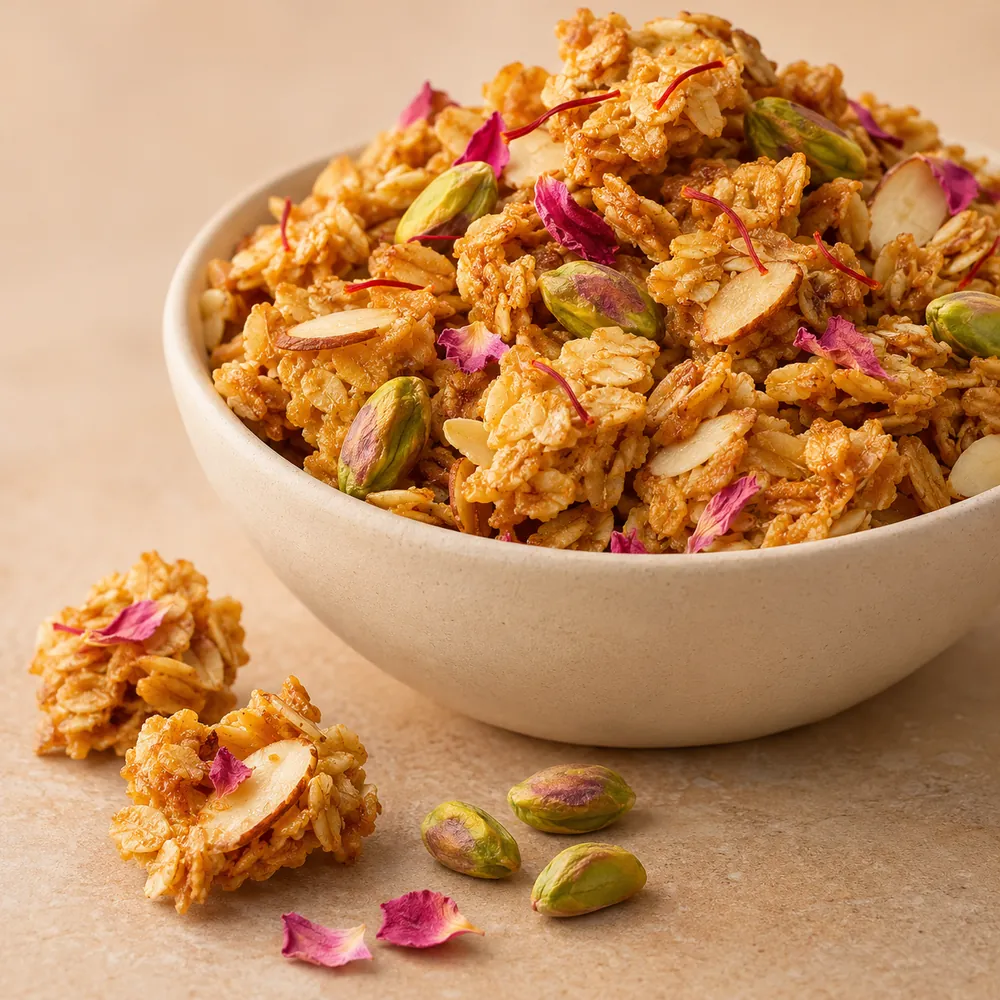
Kesar Pista Granola
Big clusters, not loose oats. Whole pistachios and sliced almonds.


Pinni Squares
Roasted in real desi ghee. Gur, not white sugar.
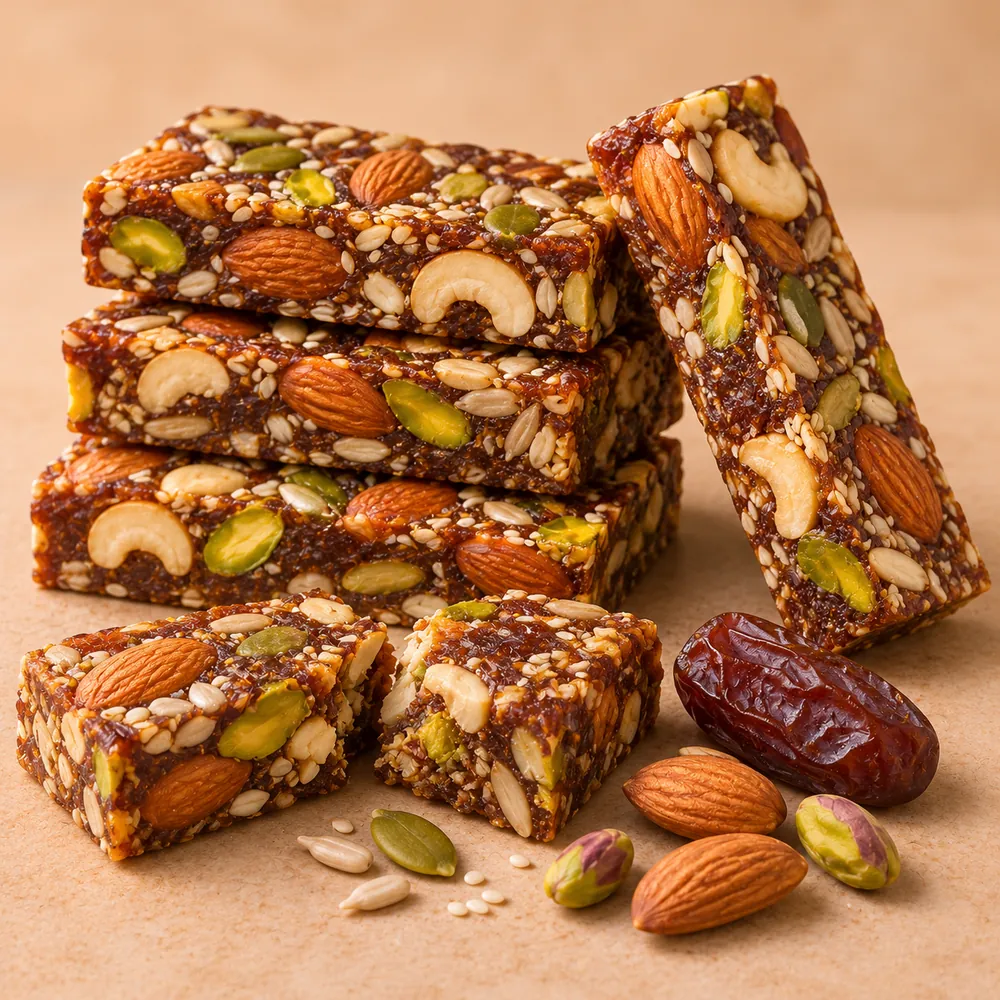
Date & Nut Bars
Held together by dates alone. Whole nuts you can see.